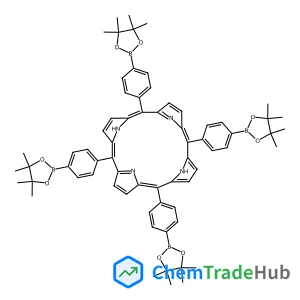
5,10,15,20-tetrakis(4-boronic acid pinacol ester phenyl) porphyrin
CAS Number:
1332748-00-1
Molecular Formula:
C68H74B4N4O8
Tatyana G. Terentyeva, Wim Van Rossom, Qingmin Ji
Amorphous silica particles are used extensively in industrial processes as well as in scientific and biomedical research. Flake–shell silica nanoparticles, prepared by self-templating hydrothermal synthesis, exhibit large surface areas and pore volumes, hollow spherical morphology, as well as hydrophilic surfaces, affording great potential for their application in enzyme immobilization. In this work we show that the shell, which is composed of a network of silica flakes, promotes uptake of enzymes of different sizes, i.e., lysozyme, lipase, and chymotrypsin. Moreover, the capsules provide a favorable porous structure for diffusion of small substrate molecules while permitting enzymes to retain their activity. The silica composition of the capsules provides structural stability, biocompatibility and allows easy functionalization. Amine and dextran functionalities were introduced to modify the shell morphology and to control enzyme loading and activity. The efficient protein immobilization on these inorganic capsules should lead to their application in biocatalysis, biosensing and drug delivery.

Planta Medica

Nature

Science

Organic Preparations and Procedures International

Israel Journal of Chemistry

Pure and Applied Chemistry

Proceedings of the National Academy of Sciences of the United States of America

Russian Chemical Reviews

European Journal of Wood and Wood Products

Journal of Heterocyclic Chemistry
When handling 4-Methyl-6-(trifluoromethyl)quinoline (CAS: 40716-16-3), safety go...
4-(3,5-Difluorophenyl)aniline is an aromatic organic compound with the CAS numbe...
5-{[4-(Trifluoromethyl)phenyl]sulfanyl}-1,2,3-thiadiazole-4-carboxylic acid can ...
The market for 4-Benzylaniline hydrochloride (CAS: 6317-57-3) is steadily growin...
[3-(Diethylsulfamoyl)phenyl]boronic acid is generally considered safe when handl...
3-Bromo-2,5-dimethoxyaniline is mainly used in the pharmaceutical and chemical i...
N-Methyl-1-(5-methyl-1H-indol-3-yl)methanamine (CAS: 915922-67-7) is subject to ...
This compound is primarily used in the pharmaceutical industry for the synthesis...
2-Methyl-2-propanyl [(1S,3R)-3-aminocyclohexyl]carbamate (CAS: 1298101-47-9) sho...
Ethyl 2-bromo-4,4,4-trifluorobutanoate (CAS: 367-33-9) is utilized in the pharma...
Journal of Materials Chemistry A, B & C cover high quality studies across all fields of materials chemistry. The journals focus on those theoretical or experimental studies that report new understanding, applications, properties and synthesis of materials. The journals have a strong history of publishing quality reports of interest to interdisciplinary communities and providing an efficient and rigorous service through peer review and publication. The journals are led by an international team of Editors-in-Chief and Associate Editors who are all active researchers in their fields. Journal of Materials Chemistry A, B & C are separated by the intended application of the material studied. Broadly, applications in energy and sustainability are of interest to Journal of Materials Chemistry A, applications in biology and medicine are of interest to Journal of Materials Chemistry B, and applications in optical, magnetic and electronic devices are of interest to Journal of Materials Chemistry C. More than one Journal of Materials Chemistry journal may be suitable for certain fields and researchers are encouraged to submit their paper to the journal that they feel best fits for their particular article. Example topic areas within the scope of Journal of Materials Chemistry B are listed below. This list is neither exhaustive nor exclusive. Antifouling coatings Biocompatible materials Bioelectronics Bioimaging Biomimetics Biomineralisation Bionics Biosensors Diagnostics Drug delivery Gene delivery Immunobiology Nanomedicine Regenerative medicine & Tissue engineering Scaffolds Soft robotics Stem cells Therapeutic devices image block All articles published in Journal of Materials Chemistry B from 2019 onwards will be indexed in MEDLINE®. Articles that primarily focus on providing insight into the underlying science and performance of biomaterials within a biological environment are more suited to our companion journal, Biomaterials Science.
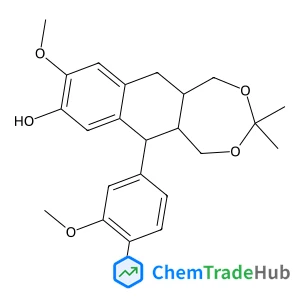
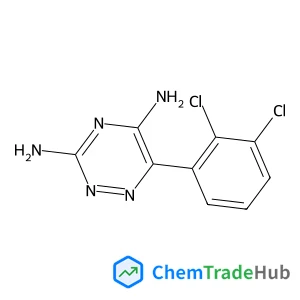
![[3-(2,6-Dichlorophenyl)-5-isopropyl-1,2-oxazol-4-yl]methanol structure](https://static.chemtradehub.com/structs/278/278597-30-1-5c79.webp "[3-(2,6-Dichlorophenyl)-5-isopropyl-1,2-oxazol-4-yl]methanol structure")