












Detecting reactive islands using Lagrangian descriptors and the relevance to transition path sampling
Literature Information
Publication Date
2018-01-18
DOI
10.1039/C7CP05912D
Impact Factor
3.676
Authors
Sarbani Patra, Srihari Keshavamurthy
View Original
Abstract
It has been known for sometime now that isomerization reactions, classically, are mediated by phase space structures called reactive islands (RI). RIs provide one possible route to correct for the nonstatistical effects in the reaction dynamics. In this work, we map out the reactive islands for the two dimensional Müller–Brown model potential and show that the reactive islands are intimately linked to the issue of rare event sampling. In particular, we establish the sensitivity of the so called committor probabilities, useful quantities in the transition path sampling technique, to the hierarchical RI structures. Mapping out the RI structure for high dimensional systems, however, is a challenging task. Here, we show that the technique of Lagrangian descriptors is able to effectively identify the RI hierarchy in the model system. Based on our results, we suggest that the Lagrangian descriptors can be useful for detecting RIs in high dimensional systems.
Related Literature
Excited-state N–H⋯S hydrogen bond between indole and dimethyl sulfide: time-dependent density functional theory study
Yufang Liu, Kai Jiang, Deheng Shi, Jinfeng Sun
2011-07-25
Paper
DOI: 10.1039/C1CP20729F
Structures, spectroscopic properties and redox potentials of quaterpyridyl Ru(ii) photosensitizer and its derivatives for solar energy cell: a density functional study
Qing-Jiang Pan, Yuan-Ru Guo, Li Li, Samuel O. Odoh, Hong-Gang Fu, Hong-Xing Zhang
2011-07-07
Paper
DOI: 10.1039/C1CP00030F
Resonant dissociative electron attachments to cysteine and cystine
Yong-Feng Wang, Shan Xi Tian, Jinlong Yang
2011-07-25
Paper
DOI: 10.1039/C1CP21267B
Molecules for organic electronics studied one by one
Jörg Meyer, Anja Wadewitz, Lokamani, Cormac Toher, Roland Gresser, Karl Leo, Moritz Riede, Francesca Moresco
2011-07-28
Paper
DOI: 10.1039/C1CP20999J
Improving the gas–solids contact efficiency in a fluidized bed of CO2 adsorbent fine particles
J. M. Valverde, F. Pontiga, C. Soria-Hoyo, M. A. S. Quintanilla, H. Moreno, F. J. Duran, M. J. Espin
2011-07-11
Communication
DOI: 10.1039/C1CP21939A
Effects of cross-links, pressure and temperature on the thermal properties and glass transition behaviour of polybutadiene
Bounphanh Tonpheng, Junchun Yu, Ove Andersson
2011-07-21
Paper
DOI: 10.1039/C1CP20785G
Bias-controlled selective excitation of vibrational modes in molecular junctions: a route towards mode-selective chemistry
Roie Volkovich, Rainer Härtle, Michael Thoss, Uri Peskin
2011-07-20
Paper
DOI: 10.1039/C1CP21161G
Broadening of the derivative discontinuity in density functional theory
P. Schmitteckert
2011-07-27
Paper
DOI: 10.1039/C1CP21247H
Excitons in semiconducting carbon nanotubes: diameter-dependent photoluminescence spectra
Yoshihiko Kanemitsu
2011-07-07
Perspective
DOI: 10.1039/C1CP21235D
You might also like
Compound Q&A
What are the main uses of 1-(3-Aminophenyl)-3-[(3R)-1-(3,3-dimethyl-2-oxobutyl)-2-oxo-5-(2-pyridinyl)-2,3-dihydro-1H-1,4-benzodiazepin-3-yl]urea (CAS: 155412-88-7)?
This compound is mainly used as an intermediate in the synthesis of antipsychoti...
155412-88-71-(3-Aminophenyl)-3-...
Compound Q&A
How should waste containing 1-(D-Ribofuranosyl)-1,4-dihydro-3-pyridinecarboxamide (CAS: 19132-12-8) be handled?
Waste containing 1-(D-Ribofuranosyl)-1,4-dihydro-3-pyridinecarboxamide (CAS: 191...
19132-12-81-(D-Ribofuranosyl)-...
Compound Q&A
What regulatory guidelines apply to 2-Methyl-2-propanyl 3-bromo-3-(hydroxymethyl)-1-azetidinecarboxylate (CAS: 2007919-81-3)?
2-Methyl-2-propanyl 3-bromo-3-(hydroxymethyl)-1-azetidinecarboxylate (CAS: 20079...
2007919-81-32-Methyl-2-propanyl ...
Compound Q&A
What is N-(4-Chloro-2-pyridinyl)acetamide (CAS: 245056-66-0)?
N-(4-Chloro-2-pyridinyl)acetamide (CAS: 245056-66-0) is a chemical compound with...
245056-66-0N-(4-Chloro-2-pyridi...
Compound Q&A
What is 5-Chloro-2-hydroxybenzoic acid (CAS: 321-14-2)?
5-Chloro-2-hydroxybenzoic acid, also known as 5-chlorosalicylic acid, is an arom...
321-14-25-Chloro-2-hydroxybe...
Compound Q&A
What precautions should be taken when handling 1,1-Dichloro-1-fluoroethane (CAS: 1717-00-6)?
When handling 1,1-Dichloro-1-fluoroethane (CAS: 1717-00-6), it is important to u...
1717-00-61,1-Dichloro-1-fluor...
Compound Q&A
What are the physical and chemical properties of Fmoc-(2S,3R)-3-phenylpyrrolidine-2-carboxylic acid (CAS: 281655-32-1)?
Fmoc-(2S,3R)-3-phenylpyrrolidine-2-carboxylic acid is a white crystalline solid ...
281655-32-1Fmoc-(2S,3R)-3-pheny...
Compound Q&A
What are the main uses of 4-Amino-5-bromo-2-pyridinecarboxylic acid (CAS: 1363381-01-4)?
4-Amino-5-bromo-2-pyridinecarboxylic acid is primarily used as a precursor in th...
1363381-01-44-Amino-5-bromo-2-py...
Compound Q&A
What precautions should be taken when handling (S)-tert-butyl 2-((2-(4-bromophenyl)-2-oxoethyl)carbamoyl)pyrrolidine-1-carboxylate (CAS: 1007881-98-2)?
Handling this compound should be done with personal protective equipment (PPE) i...
1007881-98-2(S)-tert-butyl 2-((2...
Compound Q&A
What precautions should be taken when handling 8-bromo-2,2-dimethyl-3,4-dihydro-2H-1,4-benzoxazin-3-one (CAS: 688363-73-7)?
When handling 8-bromo-2,2-dimethyl-3,4-dihydro-2H-1,4-benzoxazin-3-one, use prop...
688363-73-78-bromo-2,2-dimethyl...
Source Journal
Physical Chemistry Chemical Physics

CiteScore:
5.5
Self-citation Rate:
10.3%
Articles per Year:
3036
Physical Chemistry Chemical Physics (PCCP) is an international journal co-owned by 19 physical chemistry and physics societies from around the world. This journal publishes original, cutting-edge research in physical chemistry, chemical physics and biophysical chemistry. To be suitable for publication in PCCP, articles must include significant innovation and/or insight into physical chemistry; this is the most important criterion that reviewers and Editors will judge against when evaluating submissions. The journal has a broad scope and welcomes contributions spanning experiment, theory, computation and data science. Topical coverage includes spectroscopy, dynamics, kinetics, statistical mechanics, thermodynamics, electrochemistry, catalysis, surface science, quantum mechanics, quantum computing and machine learning. Interdisciplinary research areas such as polymers and soft matter, materials, nanoscience, energy, surfaces/interfaces, and biophysical chemistry are welcomed if they demonstrate significant innovation and/or insight into physical chemistry. Joined experimental/theoretical studies are particularly appreciated when complementary and based on up-to-date approaches.
Recommended Compounds
![4-Chloro-3-(trifluoromethyl)-1H-pyrrolo[2,3-b]pyridine structure](https://static.chemtradehub.com/structs/869/869335-75-1-a9d0.webp "4-Chloro-3-(trifluoromethyl)-1H-pyrrolo[2,3-b]pyridine structure")
4-Chloro-3-(trifluoromethyl)-1H-pyrrolo[2,3-b]pyridine
CAS Number:
869335-75-1
Molecular Formula:
C8H4ClF3N2

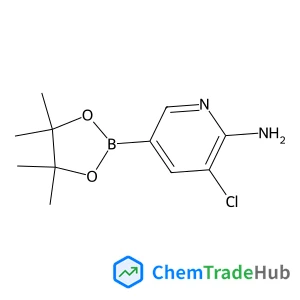
3-Chloro-5-(4,4,5,5-tetramethyl-1,3,2-dioxaborolan-2-yl)-2-pyridinamine
CAS Number:
1032758-99-8
Molecular Formula:
C11H16BClN2O2
Recommended Suppliers




Disclaimer
This page provides academic journal information for reference and research purposes only. We are not affiliated with any journal publishers and do not handle publication submissions. For publication-related inquiries, please contact the respective journal publishers directly.
If you notice any inaccuracies in the information displayed, please contact us at support@chemtradehub.com. We will promptly review and address your concerns.