












Bias-controlled selective excitation of vibrational modes in molecular junctions: a route towards mode-selective chemistry
Literature Information
Publication Date
2011-07-20
DOI
10.1039/C1CP21161G
Impact Factor
3.676
Authors
Roie Volkovich, Rainer Härtle, Michael Thoss, Uri Peskin
View Original
Abstract
We show that individual vibrational modes in single-molecule junctions with asymmetric molecule–lead coupling can be selectively excited by applying an external bias voltage. Thereby, a non-statistical distribution of vibrational energy can be generated, that is, a mode with a higher frequency can be stronger excited than a mode with a lower frequency. This is of particular interest in the context of mode-selective chemistry, where one aims to break specific (not necessarily the weakest) chemical bond in a molecule. Such mode-selective vibrational excitation is demonstrated for two generic model systems representing asymmetric molecular junctions and/or scanning tunneling microscopy experiments. To this end, we employ two complementary theoretical approaches, a nonequilibrium Green's function approach and a master equation approach. The comparison of both methods reveals good agreement in describing resonant electron transport through a single-molecule contact, where differences between the approaches highlight the role of non-resonant transport processes, in particular co-tunneling and off-resonant electron–hole pair creation processes.
Related Literature
Chemical ionization of glyoxal and formaldehyde with H3O+ ions using SIFT-MS under variable system humidity
Andreas Mauracher, Patrik Španěl
2020-04-29
Paper
DOI: 10.1039/D0CP00297F
Hybrid density functional studies of native defects and H impurities in wurtzite CdSe
Bo Kong, Xin-You An, Ti-Xian Zeng, Jihua Zhang
2020-03-11
Paper
DOI: 10.1039/C9CP06094D
Ab initio investigation of the formation mechanism of nano-interfaces between 3d-late transition-metals and ZrO2 nanoclusters
Larissa Zibordi-Besse, Lucas G. Verga, Vivianne K. Ocampo-Restrepo, Juarez L. F. Da Silva
2020-03-25
Paper
DOI: 10.1039/D0CP00584C
Study of the surface species during thermal and plasma-enhanced atomic layer deposition of titanium oxide films using in situ IR-spectroscopy and in vacuo X-ray photoelectron spectroscopy
Elisabeth Levrau, Matthias M. Minjauw, Michiel Van Daele, Rita Vos, Jolien Dendooven, Christophe Detavernier
2020-04-08
Paper
DOI: 10.1039/D0CP00395F
Graphdiyne coordinated transition metals as single-atom catalysts for nitrogen fixation
Yanan Tang, Weiguang Chen, Yi Li, Renyi Li, Yaqiang Ma, Xianqi Dai
2020-04-01
Paper
DOI: 10.1039/D0CP00722F
Atomistic insights into the separation mechanism of multilayer graphene membranes for water desalination
Jing Zhang, Chen Chen, Jianuan Pan, Li Zhang, Lijun Liang, Zhe Kong, Xinping Wang, Wei Zhang, Jia-Wei Shen
2020-03-03
Paper
DOI: 10.1039/D0CP00071J
Clarifying the impacts of surface hydroxyls on CO oxidation on CeO2(100) surfaces: a DFT+U study
Hui Zhou, Dong Wang, Xue-Qing Gong
2020-03-09
Paper
DOI: 10.1039/D0CP00204F
Deciphering the pH-dependence of ground- and excited-state equilibria of thienoguanine
Pascal Didier, Jagannath Kuchlyan, Lara Martinez-Fernandez, Pauline Gosset, Jérémie Léonard, Yitzhak Tor, Roberto Improta, Yves Mély
2020-03-25
Paper
DOI: 10.1039/C9CP06931C
The role of an unintentional carbon dopant in resolving the controversial conductivity aspects in BiFeO3
Shaan Ameer, Kajal Jindal, Monika Tomar, Pradip K. Jha, Vinay Gupta
2020-04-27
Paper
DOI: 10.1039/C9CP06614D
You might also like
Compound Q&A
What are the main uses of 1-(3-Aminophenyl)-3-[(3R)-1-(3,3-dimethyl-2-oxobutyl)-2-oxo-5-(2-pyridinyl)-2,3-dihydro-1H-1,4-benzodiazepin-3-yl]urea (CAS: 155412-88-7)?
This compound is mainly used as an intermediate in the synthesis of antipsychoti...
155412-88-71-(3-Aminophenyl)-3-...
Compound Q&A
How should waste containing 1-(D-Ribofuranosyl)-1,4-dihydro-3-pyridinecarboxamide (CAS: 19132-12-8) be handled?
Waste containing 1-(D-Ribofuranosyl)-1,4-dihydro-3-pyridinecarboxamide (CAS: 191...
19132-12-81-(D-Ribofuranosyl)-...
Compound Q&A
What regulatory guidelines apply to 2-Methyl-2-propanyl 3-bromo-3-(hydroxymethyl)-1-azetidinecarboxylate (CAS: 2007919-81-3)?
2-Methyl-2-propanyl 3-bromo-3-(hydroxymethyl)-1-azetidinecarboxylate (CAS: 20079...
2007919-81-32-Methyl-2-propanyl ...
Compound Q&A
What is N-(4-Chloro-2-pyridinyl)acetamide (CAS: 245056-66-0)?
N-(4-Chloro-2-pyridinyl)acetamide (CAS: 245056-66-0) is a chemical compound with...
245056-66-0N-(4-Chloro-2-pyridi...
Compound Q&A
What is 5-Chloro-2-hydroxybenzoic acid (CAS: 321-14-2)?
5-Chloro-2-hydroxybenzoic acid, also known as 5-chlorosalicylic acid, is an arom...
321-14-25-Chloro-2-hydroxybe...
Compound Q&A
What precautions should be taken when handling 1,1-Dichloro-1-fluoroethane (CAS: 1717-00-6)?
When handling 1,1-Dichloro-1-fluoroethane (CAS: 1717-00-6), it is important to u...
1717-00-61,1-Dichloro-1-fluor...
Compound Q&A
What are the physical and chemical properties of Fmoc-(2S,3R)-3-phenylpyrrolidine-2-carboxylic acid (CAS: 281655-32-1)?
Fmoc-(2S,3R)-3-phenylpyrrolidine-2-carboxylic acid is a white crystalline solid ...
281655-32-1Fmoc-(2S,3R)-3-pheny...
Compound Q&A
What are the main uses of 4-Amino-5-bromo-2-pyridinecarboxylic acid (CAS: 1363381-01-4)?
4-Amino-5-bromo-2-pyridinecarboxylic acid is primarily used as a precursor in th...
1363381-01-44-Amino-5-bromo-2-py...
Compound Q&A
What precautions should be taken when handling (S)-tert-butyl 2-((2-(4-bromophenyl)-2-oxoethyl)carbamoyl)pyrrolidine-1-carboxylate (CAS: 1007881-98-2)?
Handling this compound should be done with personal protective equipment (PPE) i...
1007881-98-2(S)-tert-butyl 2-((2...
Compound Q&A
What precautions should be taken when handling 8-bromo-2,2-dimethyl-3,4-dihydro-2H-1,4-benzoxazin-3-one (CAS: 688363-73-7)?
When handling 8-bromo-2,2-dimethyl-3,4-dihydro-2H-1,4-benzoxazin-3-one, use prop...
688363-73-78-bromo-2,2-dimethyl...
Source Journal
Physical Chemistry Chemical Physics

CiteScore:
5.5
Self-citation Rate:
10.3%
Articles per Year:
3036
Physical Chemistry Chemical Physics (PCCP) is an international journal co-owned by 19 physical chemistry and physics societies from around the world. This journal publishes original, cutting-edge research in physical chemistry, chemical physics and biophysical chemistry. To be suitable for publication in PCCP, articles must include significant innovation and/or insight into physical chemistry; this is the most important criterion that reviewers and Editors will judge against when evaluating submissions. The journal has a broad scope and welcomes contributions spanning experiment, theory, computation and data science. Topical coverage includes spectroscopy, dynamics, kinetics, statistical mechanics, thermodynamics, electrochemistry, catalysis, surface science, quantum mechanics, quantum computing and machine learning. Interdisciplinary research areas such as polymers and soft matter, materials, nanoscience, energy, surfaces/interfaces, and biophysical chemistry are welcomed if they demonstrate significant innovation and/or insight into physical chemistry. Joined experimental/theoretical studies are particularly appreciated when complementary and based on up-to-date approaches.
Recommended Compounds
![2,6-Bis({(2R)-2-[hydroxy(diphenyl)methyl]-1-pyrrolidinyl}methyl)-4-methylphenol structure](https://static.chemtradehub.com/structs/877/877395-58-9-70bf.webp "2,6-Bis({(2R)-2-[hydroxy(diphenyl)methyl]-1-pyrrolidinyl}methyl)-4-methylphenol structure")
2,6-Bis({(2R)-2-[hydroxy(diphenyl)methyl]-1-pyrrolidinyl}methyl)-4-methylphenol
CAS Number:
877395-58-9
Molecular Formula:
C43H46N2O3
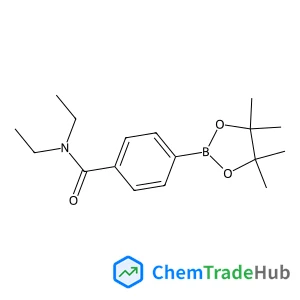
N,N-Diethyl-4-(4,4,5,5-tetramethyl-1,3,2-dioxaborolan-2-yl)benzamide
CAS Number:
325142-99-2
Molecular Formula:
C17H26BNO3
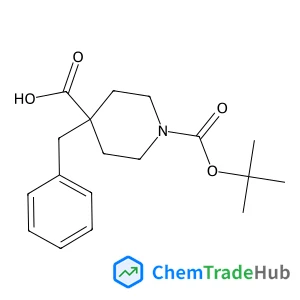
4-Benzyl-1-(tert-butoxycarbonyl)piperidine-4-carboxylic acid
CAS Number:
170838-87-6
Molecular Formula:
C18H25NO4
Recommended Suppliers



Disclaimer
This page provides academic journal information for reference and research purposes only. We are not affiliated with any journal publishers and do not handle publication submissions. For publication-related inquiries, please contact the respective journal publishers directly.
If you notice any inaccuracies in the information displayed, please contact us at support@chemtradehub.com. We will promptly review and address your concerns.