












Size-dependent Raman shift of semiconductor nanomaterials determined using bond number and strength
Literature Information
Publication Date
2017-09-26
DOI
10.1039/C7CP05495E
Impact Factor
3.676
Authors
H. Li, X. W. He, H. J. Xiao, H. N. Du, J. Wang, H. X. Zhang
View Original
Abstract
Significant variations in Raman shifts with decreasing material size, D, have been detected in Raman spectroscopy. In this study, we propose a simple and unified model to determine and explain the size-dependent Raman shift, ω(D), of low-dimensional semiconductor nanomaterials. ω(D) was found to be a function of bond number in a system, with an obvious decline in Raman shift observed when size dropped to the nanoscale. This arose from a decrease in coordination number, Z(D), and increase in single bond strength, ε(D). The predicted results show good agreement with experimental data for a series of semiconductor nanomaterials, showing that bond number can be used to calculate Raman shifts of nanomaterials. Moreover, this theoretical model was successfully applied to both single crystals and some binary semiconductor nanomaterials. Furthermore, bond number, which is directly related to the nanomaterial shape and size, becomes the only parameter required to determine ω(D) in this model, as both Z(D) and ε(D) can be determined from the bond number. This indicates that the established model has the potential to determine Raman shifts of nanomaterials with different shapes and sizes.
Related Literature
Development of sodium alginate–aloe vera hydrogel films enriched with organic fibers: study of the physical, mechanical, and barrier properties for food-packaging applications
Alina Hadi, Anjum Nawab, Feroz Alam, Sara Naqvi
2023-10-30
Paper
DOI: 10.1039/D3FB00122A
Structure and properties of biobased polyamide 36,9/cellulose nanocomposites
Biqiong Chen
2023-10-20
Paper
DOI: 10.1039/D3SU00302G
Developing 3D computational models to capture the spatial, temporal and thermal behavior as laser beams propagate through photo-thermally responsive gels
Victor V. Yashin, Fariha Mahmood, Kalaichelvi Saravanamuttu, Anna C. Balazs
2023-11-16
Paper
DOI: 10.1039/D3LF00156C
Elucidating multiple reaction pathways for the degradation of antibiotics in water by a self-active single-atom zinc catalyst on biochar
Jieming Yuan, Yunkyoung Han, Krishnamoorthy Sathiyan, Virender K. Sharma, Abdol Hadi Mokarizadeh, Mesfin Tsige, Jiechao Jiang, Xingmao Ma
2023-10-17
Paper
DOI: 10.1039/D3SU00265A
Bias switchable narrowband/broadband NIR organic photodetector fabricated with a scalable technique
Lai-Hung Lai, Wei-Hsiang Lin, Chin-Chuan Hsieh, Maria Antonietta Loi
2023-09-11
Paper
DOI: 10.1039/D3LF00089C
Understanding improved capacity retention at 4.3 V in modified single crystal Ni-rich NMC//graphite pouch cells at elevated temperature
Satish Bolloju, Eleni Fiamegkou, Nickil Shah, Mateusz Jan Zuba, Tien-Lin Lee, Pardeep K. Thakur, Melanie J. Loveridge
2023-09-21
Paper
DOI: 10.1039/D3LF00093A
Recovery of anthocyanins from Eugenia spp. fruit peels: a comparison between heat- and ultrasound-assisted extraction
M. Beatriz P. P. Oliveira
2023-10-30
Paper
DOI: 10.1039/D3FB00115F
Interactions between liquid ammonia and graphitic materials
Cheng-Wei Lin, Zhiyin Yang, Ailun Huang, Xueying Chang, Chenxiang Wang, Fan Yang, Chen Wei, Markus Thiel, Yuto Katsuyama, Lihua Jin
2023-12-18
Paper
DOI: 10.1039/D3LF00194F
You might also like
Compound Q&A
What industries use (1R,3S)-1,3-Cyclopentanediol (CAS: 16326-97-9)?
(1R,3S)-1,3-Cyclopentanediol finds applications in various industries. In the ph...
16326-97-9(1R,3S)-1,3-Cyclopen...
Compound Q&A
What precautions should be taken when handling N'-[4-(Dimethylamino)phenyl]-N,N-dimethyl-1,4-benzenediamine (CAS: 637-31-0)?
When handling N'-[4-(Dimethylamino)phenyl]-N,N-dimethyl-1,4-benzenediamine, it i...
637-31-0N'-[4-(Dimethylamino...
Compound Q&A
Are there alternatives to 5-(2,4-Difluorophenyl)-2-methoxypyrimidine (CAS: 1352318-16-1) in synthesis?
There are several alternatives to 5-(2,4-Difluorophenyl)-2-methoxypyrimidine in ...
1352318-16-15-(2,4-Difluoropheny...
Compound Q&A
What regulatory guidelines apply to 1-(3-Methoxyphenoxy)propan-2-ol (CAS: 382141-68-6)?
1-(3-Methoxyphenoxy)propan-2-ol (CAS: 382141-68-6) must comply with the Globally...
382141-68-61-(3-Methoxyphenoxy)...
Compound Q&A
Is Tetrodotoxin Citrate (CAS: 18660-81-6) safe?
Tetrodotoxin Citrate is extremely dangerous and should be handled with extreme c...
18660-81-6Tetrodotoxin Citrate
Compound Q&A
What are the main uses of 2-Methyl-2-propanyl [(1R,3S)-3-hydroxycyclopentyl]carbamate (CAS: 225641-84-9)?
2-Methyl-2-propanyl [(1R,3S)-3-hydroxycyclopentyl]carbamate (CAS: 225641-84-9) i...
225641-84-92-Methyl-2-propanyl ...
Compound Q&A
How should waste containing 4-(2-Hydroxyhexafluoroisopropyl)Benzoic Acid (CAS: 16261-80-6) be handled?
Waste containing 4-(2-Hydroxyhexafluoroisopropyl)Benzoic Acid (CAS: 16261-80-6) ...
16261-80-64-(2-Hydroxyhexafluo...
Compound Q&A
How is 2-Methyl-2-proanyl {(2S)-1-[(benzyloxy)amino]-3-hydroxy-3-methyl-1-oxo-2-butanyl}carbamate (CAS: 102507-19-7) typically synthesized?
2-Methyl-2-proanyl {(2S)-1-[(benzyloxy)amino]-3-hydroxy-3-methyl-1-oxo-2-butanyl...
102507-19-72-Methyl-2-propanyl ...
Compound Q&A
What is Benzeneethanamine, α-ethyl-, hydrochloride (1:1) (CAS: 20735-15-3)?
Benzeneethanamine, α-ethyl-, hydrochloride (1:1) is an organic compound with the...
20735-15-3Benzeneethanamine, α...
Compound Q&A
Are there alternatives to 3-{(E)-[4-(Dimethylamino)phenyl]diazenyl}benzoic acid (CAS: 20691-84-3) in synthesis?
In the synthesis of compounds similar to 3-{(E)-[4-(Dimethylamino)phenyl]diazeny...
20691-84-33-{(E)-[4-(Dimethyla...
Source Journal
Physical Chemistry Chemical Physics

CiteScore:
5.5
Self-citation Rate:
10.3%
Articles per Year:
3036
Physical Chemistry Chemical Physics (PCCP) is an international journal co-owned by 19 physical chemistry and physics societies from around the world. This journal publishes original, cutting-edge research in physical chemistry, chemical physics and biophysical chemistry. To be suitable for publication in PCCP, articles must include significant innovation and/or insight into physical chemistry; this is the most important criterion that reviewers and Editors will judge against when evaluating submissions. The journal has a broad scope and welcomes contributions spanning experiment, theory, computation and data science. Topical coverage includes spectroscopy, dynamics, kinetics, statistical mechanics, thermodynamics, electrochemistry, catalysis, surface science, quantum mechanics, quantum computing and machine learning. Interdisciplinary research areas such as polymers and soft matter, materials, nanoscience, energy, surfaces/interfaces, and biophysical chemistry are welcomed if they demonstrate significant innovation and/or insight into physical chemistry. Joined experimental/theoretical studies are particularly appreciated when complementary and based on up-to-date approaches.
Recommended Compounds
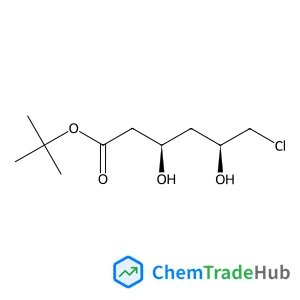
2-Methyl-2-propanyl (3R,5S)-6-chloro-3,5-dihydroxyhexanoate
CAS Number:
154026-93-4
Molecular Formula:
C10H19ClO4
![N-[(5,6-Dichloro-1H-benzimidazol-2-yl)methyl]-9-(1-methyl-1H-pyrazol-4-yl)-2-(4-morpholinyl)-9H-purin-6-amine structure](https://static.chemtradehub.com/structs/238/2387704-62-1-25f4.webp "N-[(5,6-Dichloro-1H-benzimidazol-2-yl)methyl]-9-(1-methyl-1H-pyrazol-4-yl)-2-(4-morpholinyl)-9H-purin-6-amine structure")
N-[(5,6-Dichloro-1H-benzimidazol-2-yl)methyl]-9-(1-methyl-1H-pyrazol-4-yl)-2-(4-morpholinyl)-9H-purin-6-amine
CAS Number:
2387704-62-1
Molecular Formula:
C21H20Cl2N10O
Recommended Suppliers





Disclaimer
This page provides academic journal information for reference and research purposes only. We are not affiliated with any journal publishers and do not handle publication submissions. For publication-related inquiries, please contact the respective journal publishers directly.
If you notice any inaccuracies in the information displayed, please contact us at support@chemtradehub.com. We will promptly review and address your concerns.