












Noble gas bond and the behaviour of XeO3 under pressure
Literature Information
Publication Date
2017-09-21
DOI
10.1039/C7CP05385A
Impact Factor
3.676
Authors
Xianlong Wang
View Original
Abstract
Over the past few decades, the concept of hydrogen bonds, in which hydrogen is electrophilic, has been extended to halogen bonds, chalcogen bonds and pnicogen bonds. Herein, we show that such a non-covalent bonding also exists in noble gas compounds. Using first principles calculations, we illustrate the O⋯Xe–O bond in molecular crystal XeO3 and its effect on the behavior of this compound under pressure. Our calculations show that the covalent Xe–O bond lengths were elongated with increasing pressure and correspondingly the Xe–O stretching vibration frequencies were red shifted, which is similar to the change of H-bonds under pressure. The O⋯Xe–O bond and related hopping of O between neighboring Xe sites also correspond to the structural changes in the XeO3 compounds at about 2 GPa. Our study extends the concept of hydrogen bonding to include all p-block elements and show a new bonding type for Noble gas elements in which it acts as an electrophilic species.
Related Literature
New buffer systems for photopainting of single biomolecules
Christoph Naderer, Heinrich Krobath, Dmitry Sivun, Georgii Gvindzhiliia, Thomas A. Klar, Jaroslaw Jacak
2023-10-07
Paper
DOI: 10.1039/D3LF00125C
Simultaneous production of proteases and antioxidant biopeptides by solid-state fermentation
Luciane Maria Colla, Christian Oliveira Reinehr, Paola Gouvêa Manfredini, Vítor Augusto Farina Cavanhi, Jorge Alberto Vieira Costa
2023-08-29
Paper
DOI: 10.1039/D3FB00077J
Bias switchable narrowband/broadband NIR organic photodetector fabricated with a scalable technique
Lai-Hung Lai, Wei-Hsiang Lin, Chin-Chuan Hsieh, Maria Antonietta Loi
2023-09-11
Paper
DOI: 10.1039/D3LF00089C
Exploring sustenance: cereal legume combinations for vegan meat development
Kannan Vignesh, Dev Kumar Yadav, D. D. Wadikar, A. D. Semwal
2023-10-26
Review Article
DOI: 10.1039/D3FB00074E
Acid-derived bacterial cellulose nanocrystals as organic filler for the generation of high-oxygen barrier bio-nanocomposite coatings
Daniele Carullo, Cesare Rovera, Tommaso Bellesia, Nadia Santo, Diego Romano, Stefano Farris
2023-10-24
Paper
DOI: 10.1039/D3FB00147D
A metamaterial based sensor for moisture and density of cereal flours
Aswathi P. V., Anju Sebastian, Lulu Varghese, Joseph V. P., Jolly Andrews
2023-11-07
Paper
DOI: 10.1039/D3FB00126A
Encapsulation of fish oil and essential fatty acids by spray drying
Afroza Sultana, Shuji Adachi, Hidefumi Yoshii
2023-08-25
Review Article
DOI: 10.1039/D3FB00099K
Use of machine learning for monitoring the growth stages of an agricultural crop
Shara Ahmed, Nabanita Basu, Catherine E. Nicholson, Simon R. Rutter, John R. Marshall, Justin J. Perry, John R. Dean
2023-10-26
Paper
DOI: 10.1039/D3FB00101F
You might also like
Compound Q&A
What industries use (1R,3S)-1,3-Cyclopentanediol (CAS: 16326-97-9)?
(1R,3S)-1,3-Cyclopentanediol finds applications in various industries. In the ph...
16326-97-9(1R,3S)-1,3-Cyclopen...
Compound Q&A
What precautions should be taken when handling N'-[4-(Dimethylamino)phenyl]-N,N-dimethyl-1,4-benzenediamine (CAS: 637-31-0)?
When handling N'-[4-(Dimethylamino)phenyl]-N,N-dimethyl-1,4-benzenediamine, it i...
637-31-0N'-[4-(Dimethylamino...
Compound Q&A
Are there alternatives to 5-(2,4-Difluorophenyl)-2-methoxypyrimidine (CAS: 1352318-16-1) in synthesis?
There are several alternatives to 5-(2,4-Difluorophenyl)-2-methoxypyrimidine in ...
1352318-16-15-(2,4-Difluoropheny...
Compound Q&A
What regulatory guidelines apply to 1-(3-Methoxyphenoxy)propan-2-ol (CAS: 382141-68-6)?
1-(3-Methoxyphenoxy)propan-2-ol (CAS: 382141-68-6) must comply with the Globally...
382141-68-61-(3-Methoxyphenoxy)...
Compound Q&A
Is Tetrodotoxin Citrate (CAS: 18660-81-6) safe?
Tetrodotoxin Citrate is extremely dangerous and should be handled with extreme c...
18660-81-6Tetrodotoxin Citrate
Compound Q&A
What are the main uses of 2-Methyl-2-propanyl [(1R,3S)-3-hydroxycyclopentyl]carbamate (CAS: 225641-84-9)?
2-Methyl-2-propanyl [(1R,3S)-3-hydroxycyclopentyl]carbamate (CAS: 225641-84-9) i...
225641-84-92-Methyl-2-propanyl ...
Compound Q&A
How should waste containing 4-(2-Hydroxyhexafluoroisopropyl)Benzoic Acid (CAS: 16261-80-6) be handled?
Waste containing 4-(2-Hydroxyhexafluoroisopropyl)Benzoic Acid (CAS: 16261-80-6) ...
16261-80-64-(2-Hydroxyhexafluo...
Compound Q&A
How is 2-Methyl-2-proanyl {(2S)-1-[(benzyloxy)amino]-3-hydroxy-3-methyl-1-oxo-2-butanyl}carbamate (CAS: 102507-19-7) typically synthesized?
2-Methyl-2-proanyl {(2S)-1-[(benzyloxy)amino]-3-hydroxy-3-methyl-1-oxo-2-butanyl...
102507-19-72-Methyl-2-propanyl ...
Compound Q&A
What is Benzeneethanamine, α-ethyl-, hydrochloride (1:1) (CAS: 20735-15-3)?
Benzeneethanamine, α-ethyl-, hydrochloride (1:1) is an organic compound with the...
20735-15-3Benzeneethanamine, α...
Compound Q&A
Are there alternatives to 3-{(E)-[4-(Dimethylamino)phenyl]diazenyl}benzoic acid (CAS: 20691-84-3) in synthesis?
In the synthesis of compounds similar to 3-{(E)-[4-(Dimethylamino)phenyl]diazeny...
20691-84-33-{(E)-[4-(Dimethyla...
Source Journal
Physical Chemistry Chemical Physics

CiteScore:
5.5
Self-citation Rate:
10.3%
Articles per Year:
3036
Physical Chemistry Chemical Physics (PCCP) is an international journal co-owned by 19 physical chemistry and physics societies from around the world. This journal publishes original, cutting-edge research in physical chemistry, chemical physics and biophysical chemistry. To be suitable for publication in PCCP, articles must include significant innovation and/or insight into physical chemistry; this is the most important criterion that reviewers and Editors will judge against when evaluating submissions. The journal has a broad scope and welcomes contributions spanning experiment, theory, computation and data science. Topical coverage includes spectroscopy, dynamics, kinetics, statistical mechanics, thermodynamics, electrochemistry, catalysis, surface science, quantum mechanics, quantum computing and machine learning. Interdisciplinary research areas such as polymers and soft matter, materials, nanoscience, energy, surfaces/interfaces, and biophysical chemistry are welcomed if they demonstrate significant innovation and/or insight into physical chemistry. Joined experimental/theoretical studies are particularly appreciated when complementary and based on up-to-date approaches.
Recommended Compounds
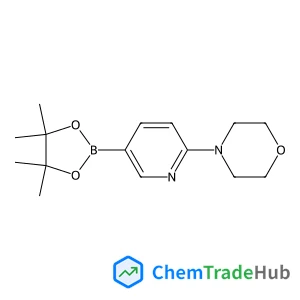
4-(5-(4,4,5,5-tetramethyl-1,3,2-dioxaborolan-2-yl)pyridin-2-yl)morpholine
CAS Number:
485799-04-0
Molecular Formula:
C15H23BN2O3
![N-[(9H-Fluoren-9-ylmethoxy)carbonyl]-beta-phenyl-L-phenylalanine structure](https://static.chemtradehub.com/structs/201/201484-50-6-c2fc.webp "N-[(9H-Fluoren-9-ylmethoxy)carbonyl]-beta-phenyl-L-phenylalanine structure")
N-[(9H-Fluoren-9-ylmethoxy)carbonyl]-beta-phenyl-L-phenylalanine
CAS Number:
201484-50-6
Molecular Formula:
C30H25NO4
Recommended Suppliers





Disclaimer
This page provides academic journal information for reference and research purposes only. We are not affiliated with any journal publishers and do not handle publication submissions. For publication-related inquiries, please contact the respective journal publishers directly.
If you notice any inaccuracies in the information displayed, please contact us at support@chemtradehub.com. We will promptly review and address your concerns.