













Doping disorder and the reduction–doping process in LiSrPO4
Literature Information
Publication Date
2017-09-22
DOI
10.1039/C7CP04566B
Impact Factor
3.676
Authors
Ricardo D. S. Santos, Marcos V. dos S. Rezende
View Original
Abstract
A systematic theoretical study was performed on trivalent and divalent rare-earth (RE) dopant ions in the LiSrPO4 structure, using atomistic simulations based on lattice energy minimization. It was found that RE3+ and RE2+ ions are most energetically favorable for incorporation at the Sr site. For RE3+ ion incorporation, charge compensation by vacancies or anti-site defects are both probable. In order to investigate the reduction–doping process (Europium reduction), two schemes (open atmosphere and H2 reducing atmosphere) were considered. A H2 reduction atmosphere was found to be the most effective agent for Eu reduction. Results reveal that the most probable charge compensation mechanism and the host site preference for rare-earth doping ions play important roles in the investigation of the mechanism of the luminescence properties of LiSrPO4.
Related Literature
Recent advancements towards the green synthesis of carbon quantum dots as an innovative and eco-friendly solution for metal ion sensing and monitoring
Jyoti Dhariwal, Gyandshwar K. Rao, Dipti Vaya
2023-12-14
Critical Review
DOI: 10.1039/D3SU00375B
Interactions between liquid ammonia and graphitic materials
Cheng-Wei Lin, Zhiyin Yang, Ailun Huang, Xueying Chang, Chenxiang Wang, Fan Yang, Chen Wei, Markus Thiel, Yuto Katsuyama, Lihua Jin
2023-12-18
Paper
DOI: 10.1039/D3LF00194F
Extraction of cellulose from restaurant food waste
Matthew T. Garnett, Harrish Kumar Senthil Kumar, Bryan S. Beckingham, Symone L. M. Alexander
2023-11-25
Paper
DOI: 10.1039/D3SU00192J
Chemical composition and bioactivity of hemp, reed canary grass and common reed grown on boreal marginal lands
Jenni Tienaho, Hanna Brännström, Risto Korpinen, Juha-Matti Pihlava, Jarkko Hellström, Paula Jylhä, Jaana Liimatainen, Veikko Möttönen, Jyri Maunuksela, Petri Kilpeläinen
2023-10-06
Paper
DOI: 10.1039/D3SU00255A
Exploring metal oxides for the hydrogen evolution reaction (HER) in the field of nanotechnology
Mir Sayed Shah Danish
2023-11-10
Perspective
DOI: 10.1039/D3SU00179B
Towards sustainable synthesis: a life cycle assessment of polymer of intrinsic microporosity (PIM-1) by green mechanosynthesis
Ching Yoong Loh, Rui Huang, Roy Bell, Ming Xie
2023-10-26
Paper
DOI: 10.1039/D3SU00340J
Sustainability-driven photocatalysis: oxygen-doped g-C3N4 for organic contaminant degradation
Soumya Ranjan Mishra, Vishal Gadore, Md. Ahmaruzzaman
2023-12-04
Tutorial Review
DOI: 10.1039/D3SU00384A
Effect of temperature and packaging materials on the shelf-life stability and in vitro properties of microencapsulated and spray-dried synbiotic legume-based instant beverage powder
Smriti Chaturvedi, Snehasis Chakraborty
2023-10-27
Paper
DOI: 10.1039/D3FB00094J
You might also like
Compound Q&A
What industries use (1R,3S)-1,3-Cyclopentanediol (CAS: 16326-97-9)?
(1R,3S)-1,3-Cyclopentanediol finds applications in various industries. In the ph...
16326-97-9(1R,3S)-1,3-Cyclopen...
Compound Q&A
What precautions should be taken when handling N'-[4-(Dimethylamino)phenyl]-N,N-dimethyl-1,4-benzenediamine (CAS: 637-31-0)?
When handling N'-[4-(Dimethylamino)phenyl]-N,N-dimethyl-1,4-benzenediamine, it i...
637-31-0N'-[4-(Dimethylamino...
Compound Q&A
Are there alternatives to 5-(2,4-Difluorophenyl)-2-methoxypyrimidine (CAS: 1352318-16-1) in synthesis?
There are several alternatives to 5-(2,4-Difluorophenyl)-2-methoxypyrimidine in ...
1352318-16-15-(2,4-Difluoropheny...
Compound Q&A
What regulatory guidelines apply to 1-(3-Methoxyphenoxy)propan-2-ol (CAS: 382141-68-6)?
1-(3-Methoxyphenoxy)propan-2-ol (CAS: 382141-68-6) must comply with the Globally...
382141-68-61-(3-Methoxyphenoxy)...
Compound Q&A
Is Tetrodotoxin Citrate (CAS: 18660-81-6) safe?
Tetrodotoxin Citrate is extremely dangerous and should be handled with extreme c...
18660-81-6Tetrodotoxin Citrate
Compound Q&A
What are the main uses of 2-Methyl-2-propanyl [(1R,3S)-3-hydroxycyclopentyl]carbamate (CAS: 225641-84-9)?
2-Methyl-2-propanyl [(1R,3S)-3-hydroxycyclopentyl]carbamate (CAS: 225641-84-9) i...
225641-84-92-Methyl-2-propanyl ...
Compound Q&A
How should waste containing 4-(2-Hydroxyhexafluoroisopropyl)Benzoic Acid (CAS: 16261-80-6) be handled?
Waste containing 4-(2-Hydroxyhexafluoroisopropyl)Benzoic Acid (CAS: 16261-80-6) ...
16261-80-64-(2-Hydroxyhexafluo...
Compound Q&A
How is 2-Methyl-2-proanyl {(2S)-1-[(benzyloxy)amino]-3-hydroxy-3-methyl-1-oxo-2-butanyl}carbamate (CAS: 102507-19-7) typically synthesized?
2-Methyl-2-proanyl {(2S)-1-[(benzyloxy)amino]-3-hydroxy-3-methyl-1-oxo-2-butanyl...
102507-19-72-Methyl-2-propanyl ...
Compound Q&A
What is Benzeneethanamine, α-ethyl-, hydrochloride (1:1) (CAS: 20735-15-3)?
Benzeneethanamine, α-ethyl-, hydrochloride (1:1) is an organic compound with the...
20735-15-3Benzeneethanamine, α...
Compound Q&A
Are there alternatives to 3-{(E)-[4-(Dimethylamino)phenyl]diazenyl}benzoic acid (CAS: 20691-84-3) in synthesis?
In the synthesis of compounds similar to 3-{(E)-[4-(Dimethylamino)phenyl]diazeny...
20691-84-33-{(E)-[4-(Dimethyla...
Source Journal
Physical Chemistry Chemical Physics

CiteScore:
5.5
Self-citation Rate:
10.3%
Articles per Year:
3036
Physical Chemistry Chemical Physics (PCCP) is an international journal co-owned by 19 physical chemistry and physics societies from around the world. This journal publishes original, cutting-edge research in physical chemistry, chemical physics and biophysical chemistry. To be suitable for publication in PCCP, articles must include significant innovation and/or insight into physical chemistry; this is the most important criterion that reviewers and Editors will judge against when evaluating submissions. The journal has a broad scope and welcomes contributions spanning experiment, theory, computation and data science. Topical coverage includes spectroscopy, dynamics, kinetics, statistical mechanics, thermodynamics, electrochemistry, catalysis, surface science, quantum mechanics, quantum computing and machine learning. Interdisciplinary research areas such as polymers and soft matter, materials, nanoscience, energy, surfaces/interfaces, and biophysical chemistry are welcomed if they demonstrate significant innovation and/or insight into physical chemistry. Joined experimental/theoretical studies are particularly appreciated when complementary and based on up-to-date approaches.
Recommended Compounds
![N-[(9H-Fluoren-9-ylmethoxy)carbonyl]-beta-phenyl-L-phenylalanine structure](https://static.chemtradehub.com/structs/201/201484-50-6-c2fc.webp "N-[(9H-Fluoren-9-ylmethoxy)carbonyl]-beta-phenyl-L-phenylalanine structure")
N-[(9H-Fluoren-9-ylmethoxy)carbonyl]-beta-phenyl-L-phenylalanine
CAS Number:
201484-50-6
Molecular Formula:
C30H25NO4
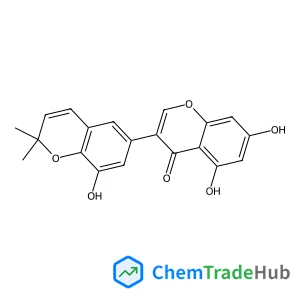
5,7,8'-Trihydroxy-2',2'-dimethyl-2'H,4H-3,6'-bichromen-4-one
CAS Number:
129280-33-7
Molecular Formula:
C20H16O6
Recommended Suppliers




Disclaimer
This page provides academic journal information for reference and research purposes only. We are not affiliated with any journal publishers and do not handle publication submissions. For publication-related inquiries, please contact the respective journal publishers directly.
If you notice any inaccuracies in the information displayed, please contact us at support@chemtradehub.com. We will promptly review and address your concerns.