












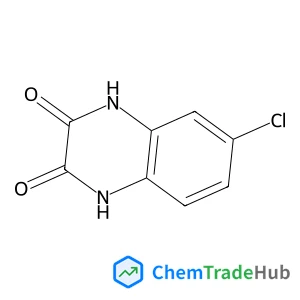
6-CHLORO-2,3-DIOXO-1,2,3,4-TETRAHYDROQUINOXALINE, 97
CAS Number:
169-14-2
Molecular Formula:
C8H5ClN2O2
Shi-Yu Liu, Yang Meng, Shiyang Liu, De-Jun Li, Yaping Li, Yingdi Liu, Yaogen Shen, Sanwu Wang
With extensive first-principles density-functional calculations, we construct a three-dimensional compositional phase diagram of Ba1−xCaxZryTi1−yO3 (BCZT) with the Ca and Zr content in the ranges of 0 ≤ xCa ≤ 0.2 and 0 ≤ yZr ≤ 1. Our calculations show that, when the Zr content increases, the difference in energy and difference in the structural parameters of the cubic, tetragonal, orthorhombic, and rhombohedral phases of BCZT are reduced. Eventually, all four phases merge into a multiphase with coexisting cubic structures (MPCCS) under Zr-rich conditions, indicating that BCZT undergoes phase transition from a normal ferroelectric (NFE) to a relaxor ferroelectric (RFE), consistent with experimental observations. The 3D diagram shows that the regions of merged and separated energy surfaces correspond to the regions of the RFE and NFE, respectively, which suggests that a MPCCS corresponds to a RFE. In addition, with the MPCCS model and Landau–Devonshire theory, we provide an interpretation of the high electromechanical properties of the BCZT relaxor ferroelectric and apply it to the classical local random field and micro–macro domain transition models.
Ryan Guterman, Tristan D. Harrison, Paul J. Ragogna
DOI: 10.1039/C7PY00438A
Barbara E. Rolfe, Pamela J. Russell, Brian W.-C. Tse
DOI: 10.1039/C4PY00999A
Tugrul Cem Bicak, Saniye Soylemez, Ece Buber
DOI: 10.1039/C7PY00807D
Peng-Yun Li, Jia-Min Li, Lian-Wei Li, Xiao-Dong Ye, Wei-Dong He
DOI: 10.1039/C7PY00551B
Csaba Fodor, Tímea Stumphauser, Ralf Thomann, Yi Thomann, Béla Iván
DOI: 10.1039/C6PY00848H
Takaya Terashima, Mitsuo Sawamoto, Heather D. Maynard
DOI: 10.1039/C4PY01346H
Tianchi Xu, Lifen Zhang, Zhenping Cheng, Xiulin Zhu
DOI: 10.1039/C7PY00709D
Yuping Zhao, Guiqiang He, Weihong Guo, Lili Bao, Meijun Yi, Yongkuan Gong, Shiping Zhang
DOI: 10.1039/C6PY00845C
4-Nitrophenyl phosphate disodium salt hexahydrate is primarily used as a substra...
2-(Trifluoromethyl)-1,3-oxazole-4-carboxylic Acid (CAS: 1060816-01-4) is widely ...
2-Fluoro-4-biphenylcarboxylic acid should be stored in a cool, dry place at room...
Prednisolone-21-Carboxylic Acid is primarily used in the pharmaceutical industry...
4-(Hydrazinomethyl)-1,2,3-benzenetriol (CAS: 3614-72-0) should be stored in a co...
4-Amino-1-methyl-1H-pyrazole-5-carboxylic acid hydrochloride (CAS: 92534-70-8) i...
Dehydropachymic acid (CAS: 77012-31-8) is regulated by various agencies. It fall...
The market and research trends for 6-[(2,2-Dimethylpropanoyl)amino]nicotinic aci...
1,10-Phenanthroline-2,9-dicarbaldehyde should be stored in a cool, dry place awa...
5-Carbamoyl-11-oxo-10,11-dihydro-5H-dibenzo[b,f]azepin-10-yl acetate can be synt...

Physical Chemistry Chemical Physics (PCCP) is an international journal co-owned by 19 physical chemistry and physics societies from around the world. This journal publishes original, cutting-edge research in physical chemistry, chemical physics and biophysical chemistry. To be suitable for publication in PCCP, articles must include significant innovation and/or insight into physical chemistry; this is the most important criterion that reviewers and Editors will judge against when evaluating submissions. The journal has a broad scope and welcomes contributions spanning experiment, theory, computation and data science. Topical coverage includes spectroscopy, dynamics, kinetics, statistical mechanics, thermodynamics, electrochemistry, catalysis, surface science, quantum mechanics, quantum computing and machine learning. Interdisciplinary research areas such as polymers and soft matter, materials, nanoscience, energy, surfaces/interfaces, and biophysical chemistry are welcomed if they demonstrate significant innovation and/or insight into physical chemistry. Joined experimental/theoretical studies are particularly appreciated when complementary and based on up-to-date approaches.


![[(1S,2S,3R,4S,7R,9S,10S,12R,15S)-4,12-Diacetyloxy-15-[(2R,3S)-3-benzamido-3-phenyl-2-(2,2,2-trichloroethoxycarbonyloxy)propanoyl]oxy-1,9-dihydroxy-10,14,17,17-tetramethyl-11-oxo-6-oxatetracyclo[11.3.1.03,10.04,7]heptadec-13-en-2-yl] benzoate structure](https://static.chemtradehub.com/structs/100/100431-55-8-7104.webp "[(1S,2S,3R,4S,7R,9S,10S,12R,15S)-4,12-Diacetyloxy-15-[(2R,3S)-3-benzamido-3-phenyl-2-(2,2,2-trichloroethoxycarbonyloxy)propanoyl]oxy-1,9-dihydroxy-10,14,17,17-tetramethyl-11-oxo-6-oxatetracyclo[11.3.1.03,10.04,7]heptadec-13-en-2-yl] benzoate structure")





