












Poly(N-vinylimidazole)-l-poly(propylene glycol) amphiphilic conetworks and gels: molecularly forced blends of incompatible polymers with single glass transition temperatures of unusual dependence on the composition
Literature Information
Publication Date
2016-08-09
DOI
10.1039/C6PY00848H
Impact Factor
5.582
Authors
Csaba Fodor, Tímea Stumphauser, Ralf Thomann, Yi Thomann, Béla Iván
View Original
Abstract
A series of macroscopically homogeneous poly(N-vinylimidazole)-l-poly(propylene glycol) (PVIm-l-PPG) (“l” stands for “linked by”) amphiphilic conetworks (APCNs) composed of otherwise incompatible polymers were successfully synthesized in a broad composition range (34–88 wt% PPG) by free radical copolymerization of hydrophilic N-vinylimidazole (VIm) and hydrophobic poly(propylene glycol) dimethacrylate (PPGDMA) macromolecular cross-linkers. Strikingly, while PVIm and PPGDMA homopolymers are immiscible and their blends have two distinct glass transition temperatures (Tg), the PVIm-l-PPG conetworks possess only one Tg indicating the absence of considerable phase separation in the conetworks, which was also confirmed by AFM measurements. This is in sharp contrast to the two Tgs of APCNs reported so far in the literature, on the one hand. On the other hand, the Tg values do not follow known correlations between Tg and composition, like the Fox equation or additive rule, widely applied for compatible polymers. These results indicate a strong interpolymer interaction on the molecular level between the PVIm and PPG chains in these new APCNs resulting in single Tg. Thermogravimetric analysis (TGA) shows that degradation of the conetworks occurs at high temperatures in two stages without sharp changes, but with a transition period in between. The DTG curves indicate that the components retain their chemical integrity to certain extent in these APCNs. The amphiphilic nature of the PVIm-l-PPG conetworks was confirmed by their composition dependent swelling in both polar (water, ethanol) and nonpolar (THF) solvents, that is in spite of the lack of phase separation, these new materials behave as either hydrogels or hydrophobic gels (organogels) depending on the swelling medium in a broad composition range.
Related Literature
Development of a gold nanoparticle-based lateral-flow strip for the detection of cannabidiol in functional beverages
Shuai Lv, Xinxin Xu, Lingling Guo, Liguang Xu, Liqiang Liu, Chuanlai Xu
2023-02-21
Paper
DOI: 10.1039/D3AN00084B
Mobile multi-configuration clinical translational Raman system for oral cancer application
Siddra Maryam, Sanathana Konugolu Venkata Sekar, M. Daniyal Ghauri, Edward Fahy, Marcelo Saito Nogueira, Huihui Lu, Flavien Beffara, Georges Humbert, Patrick Sheahan, Ray Burke, Kiang Wei Kho, Rekha Gautam, Stefan Andersson-Engels
2023-03-06
Paper
DOI: 10.1039/D2AN01921C
Recurrent neural networks for time domain modelling of FTIR spectra: application to brain tumour detection
Georgios Antoniou, Justin J. A. Conn, Benjamin R. Smith, Paul M. Brennan
2023-03-24
Paper
DOI: 10.1039/D2AN02041F
Rapid determination of serum amyloid A using an upconversion luminescent lateral flow immunochromatographic strip
Xinwen Sun, Xiaoru Dai, Shisheng Ling, Wenkun Dong, Dong Chen, Mengting Li, Xvsheng Qiao, Zhiyu Wang, Xianping Fan, Guodong Qian
2023-05-13
Paper
DOI: 10.1039/D3AN00482A
An aptamer triple helix molecular switch for sensitive electrochemical assay of lipocalin 1 biomarker via dual signal amplifications
Jianglong Yao, Yujie Liu, Bingying Jiang, Ruo Yuan, Yun Xiang
2023-05-17
Paper
DOI: 10.1039/D3AN00524K
Alternative platform for COVID-19 diagnosis based on AuNP-modified lab-on-paper
Pornchanok Punnoy, Tatiya Siripongpreda, Trairak Pisitkun
2023-05-16
Paper
DOI: 10.1039/D3AN00595J
Characterization of bispecific antigen-binding biotherapeutic fragmentation sites using microfluidic capillary electrophoresis coupled to mass spectrometry (mCZE-MS)
Ruhi Desai, Weidong Cui, John J. Harrahy, Alexander R. Ivanov
2023-01-03
Paper
DOI: 10.1039/D2AN01724E
Characterization of freeze-dried oxidized human red blood cells for pre-transfusion testing by synchrotron FTIR microspectroscopy live-cell analysis
Diana Alves, Jitraporn Vongsvivut, Rosemary L. Sparrow, Bayden R. Wood, Gil Garnier
2023-03-07
Paper
DOI: 10.1039/D2AN02001G
Saline dry fixation for improved cell composition analysis using Raman spectroscopy
Riley Wong, H. Georg Schulze, Martha Z. Vardaki, Michael W. Blades
2023-05-14
Paper
DOI: 10.1039/D2AN01916G
You might also like
Compound Q&A
What are the main uses of 4-Nitrophenyl phosphate disodium salt hexahydrate (CAS: 333338-18-4)?
4-Nitrophenyl phosphate disodium salt hexahydrate is primarily used as a substra...
333338-18-44-Nitrophenyl phosph...
Compound Q&A
What are the main uses of 2-(Trifluoromethyl)-1,3-oxazole-4-carboxylic Acid (CAS: 1060816-01-4)?
2-(Trifluoromethyl)-1,3-oxazole-4-carboxylic Acid (CAS: 1060816-01-4) is widely ...
1060816-01-42-(Trifluoromethyl)-...
Compound Q&A
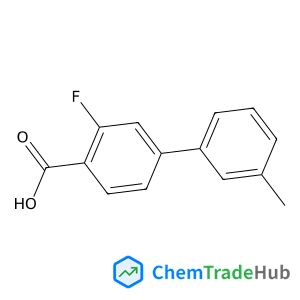
How should 2-Fluoro-4-biphenylcarboxylic acid (CAS: 137045-30-8) be stored?
2-Fluoro-4-biphenylcarboxylic acid should be stored in a cool, dry place at room...
137045-30-82-Fluoro-4-biphenylc...
Compound Q&A
What industries use Prednisolone-21-Carboxylic Acid (CAS: 61549-70-0)?
Prednisolone-21-Carboxylic Acid is primarily used in the pharmaceutical industry...
61549-70-0Prednisolone-21-Carb...
Compound Q&A
How should 4-(Hydrazinomethyl)-1,2,3-benzenetriol (CAS: 3614-72-0) be stored?
4-(Hydrazinomethyl)-1,2,3-benzenetriol (CAS: 3614-72-0) should be stored in a co...
3614-72-04-(Hydrazinomethyl)-...
Compound Q&A
What industries use 4-Amino-1-methyl-1H-pyrazole-5-carboxylic acid hydrochloride (CAS: 92534-70-8)?
4-Amino-1-methyl-1H-pyrazole-5-carboxylic acid hydrochloride (CAS: 92534-70-8) i...
92534-70-84-Amino-1-methyl-1H-...
Compound Q&A
What regulatory guidelines apply to dehydropachymic acid (CAS: 77012-31-8)?
Dehydropachymic acid (CAS: 77012-31-8) is regulated by various agencies. It fall...
77012-31-8Dehydropachymic acid
Compound Q&A
What is the market or research trend for 6-[(2,2-Dimethylpropanoyl)amino]nicotinic acid (CAS: 898561-66-5)?
The market and research trends for 6-[(2,2-Dimethylpropanoyl)amino]nicotinic aci...
898561-66-56-[(2,2-Dimethylprop...
Compound Q&A
How should 1,10-Phenanthroline-2,9-dicarbaldehyde (CAS: 57709-62-3) be stored?
1,10-Phenanthroline-2,9-dicarbaldehyde should be stored in a cool, dry place awa...
57709-62-31,10-Phenanthroline-...
Compound Q&A
How is 5-Carbamoyl-11-oxo-10,11-dihydro-5H-dibenzo[b,f]azepin-10-yl acetate (CAS: 113952-21-9) typically synthesized?
5-Carbamoyl-11-oxo-10,11-dihydro-5H-dibenzo[b,f]azepin-10-yl acetate can be synt...
113952-21-95-Carbamoyl-11-oxo-1...
Source Journal
Polymer Chemistry

CiteScore:
8.6
Self-citation Rate:
7.3%
Articles per Year:
457
Polymer Chemistry welcomes submissions in all areas of polymer science that have a strong focus on macromolecular chemistry. Manuscripts may cover a broad range of fields, yet no direct application focus is required.
Recommended Compounds
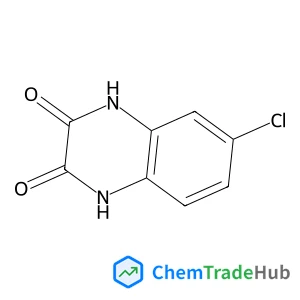
6-CHLORO-2,3-DIOXO-1,2,3,4-TETRAHYDROQUINOXALINE, 97
CAS Number:
169-14-2
Molecular Formula:
C8H5ClN2O2
Recommended Suppliers







Disclaimer
This page provides academic journal information for reference and research purposes only. We are not affiliated with any journal publishers and do not handle publication submissions. For publication-related inquiries, please contact the respective journal publishers directly.
If you notice any inaccuracies in the information displayed, please contact us at support@chemtradehub.com. We will promptly review and address your concerns.