












Extending charge separation lifetime and distance in patterned dye-sensitized SnO2–TiO2 μm-thin films
Literature Information
Publication Date
2017-08-10
DOI
10.1039/C7CP04486K
Impact Factor
3.676
Authors
Valeria Saavedra Becerril, Elin Sundin, Mokhtar Mapar, Maria Abrahamsson
View Original
Abstract
A simple method for the preparation of patterned dye-sensitized SnO2–TiO2 thin films, designed to prolong the lifetime of the interfacial charge separated state is presented. Using microfluidic technology, the thin films were sensitized with the organic sensitizer D35 such that they contain SnO2–TiO2 areas with dye and SnO2 dye-free areas at which injected electrons can be accumulated. Single wavelength transient absorption spectroscopy confirmed significantly extended charge separation lifetime at the dye-semiconductor interface. Sufficiently high density of injected electrons results in substantial decrease of charge recombination rate constants (kcr); a factor of ∼50 compared to dye-sensitized TiO2 thin films and a factor of ∼2000 compared to dye-sensitized SnO2 thin films. Furthermore, the potential of this approach was confirmed by photoinduced conduction band mediated electron transfer from the dye to a model electron acceptor, Co protoporphyrin IX, which was adsorbed to the SnO2-only regions.
Related Literature
The energy dissipation and Mullins effect of tough polymer/graphene oxide hybrid nanocomposite hydrogels
Ziqing Tang, Feng Chen, Qiang Chen, Lin Zhu, Xiaoqiang Yan, Hong Chen, Baiping Ren, Jia Yang, Gang Qin, Jie Zheng
2017-07-12
Paper
DOI: 10.1039/C7PY01068K
The effect of the backbone structure on the thermoelectric properties of donor–acceptor conjugated polymers
Luhai Wang, Chengjun Pan, Ansheng Liang, Xiaoyan Zhou, Wenqiao Zhou, Tao Wan, Lei Wang
2017-07-20
Communication
DOI: 10.1039/C7PY01005B
Well-defined triblock copolymers of polyethylene with polycaprolactone or polystyrene using a novel difunctional polyhomologation initiator
Reem A. Alshumrani, Nikos Hadjichristidis
2017-08-04
Paper
DOI: 10.1039/C7PY01079F
Bioinspired polydopamine-induced assembly of ultrafine Fe(OH)3 nanoparticles on halloysite toward highly efficient fire retardancy of epoxy resin via an action of interfacial catalysis
Zhi Li, De-Yi Wang
2017-06-06
Paper
DOI: 10.1039/C7PY00660H
Synthesis of molecularly imprinted polymers by photo-iniferter polymerization under visible light
Mariano J. Garcia-Soto, Karsten Haupt, Carlo Gonzato
2017-07-20
Paper
DOI: 10.1039/C7PY01113J
You might also like
Compound Q&A
What are the main uses of 4-Nitrophenyl phosphate disodium salt hexahydrate (CAS: 333338-18-4)?
4-Nitrophenyl phosphate disodium salt hexahydrate is primarily used as a substra...
333338-18-44-Nitrophenyl phosph...
Compound Q&A
What are the main uses of 2-(Trifluoromethyl)-1,3-oxazole-4-carboxylic Acid (CAS: 1060816-01-4)?
2-(Trifluoromethyl)-1,3-oxazole-4-carboxylic Acid (CAS: 1060816-01-4) is widely ...
1060816-01-42-(Trifluoromethyl)-...
Compound Q&A
How should 2-Fluoro-4-biphenylcarboxylic acid (CAS: 137045-30-8) be stored?
2-Fluoro-4-biphenylcarboxylic acid should be stored in a cool, dry place at room...
137045-30-82-Fluoro-4-biphenylc...
Compound Q&A
What industries use Prednisolone-21-Carboxylic Acid (CAS: 61549-70-0)?
Prednisolone-21-Carboxylic Acid is primarily used in the pharmaceutical industry...
61549-70-0Prednisolone-21-Carb...
Compound Q&A
How should 4-(Hydrazinomethyl)-1,2,3-benzenetriol (CAS: 3614-72-0) be stored?
4-(Hydrazinomethyl)-1,2,3-benzenetriol (CAS: 3614-72-0) should be stored in a co...
3614-72-04-(Hydrazinomethyl)-...
Compound Q&A
What industries use 4-Amino-1-methyl-1H-pyrazole-5-carboxylic acid hydrochloride (CAS: 92534-70-8)?
4-Amino-1-methyl-1H-pyrazole-5-carboxylic acid hydrochloride (CAS: 92534-70-8) i...
92534-70-84-Amino-1-methyl-1H-...
Compound Q&A
What regulatory guidelines apply to dehydropachymic acid (CAS: 77012-31-8)?
Dehydropachymic acid (CAS: 77012-31-8) is regulated by various agencies. It fall...
77012-31-8Dehydropachymic acid
Compound Q&A
What is the market or research trend for 6-[(2,2-Dimethylpropanoyl)amino]nicotinic acid (CAS: 898561-66-5)?
The market and research trends for 6-[(2,2-Dimethylpropanoyl)amino]nicotinic aci...
898561-66-56-[(2,2-Dimethylprop...
Compound Q&A
How should 1,10-Phenanthroline-2,9-dicarbaldehyde (CAS: 57709-62-3) be stored?
1,10-Phenanthroline-2,9-dicarbaldehyde should be stored in a cool, dry place awa...
57709-62-31,10-Phenanthroline-...
Compound Q&A
How is 5-Carbamoyl-11-oxo-10,11-dihydro-5H-dibenzo[b,f]azepin-10-yl acetate (CAS: 113952-21-9) typically synthesized?
5-Carbamoyl-11-oxo-10,11-dihydro-5H-dibenzo[b,f]azepin-10-yl acetate can be synt...
113952-21-95-Carbamoyl-11-oxo-1...
Source Journal
Physical Chemistry Chemical Physics

CiteScore:
5.5
Self-citation Rate:
10.3%
Articles per Year:
3036
Physical Chemistry Chemical Physics (PCCP) is an international journal co-owned by 19 physical chemistry and physics societies from around the world. This journal publishes original, cutting-edge research in physical chemistry, chemical physics and biophysical chemistry. To be suitable for publication in PCCP, articles must include significant innovation and/or insight into physical chemistry; this is the most important criterion that reviewers and Editors will judge against when evaluating submissions. The journal has a broad scope and welcomes contributions spanning experiment, theory, computation and data science. Topical coverage includes spectroscopy, dynamics, kinetics, statistical mechanics, thermodynamics, electrochemistry, catalysis, surface science, quantum mechanics, quantum computing and machine learning. Interdisciplinary research areas such as polymers and soft matter, materials, nanoscience, energy, surfaces/interfaces, and biophysical chemistry are welcomed if they demonstrate significant innovation and/or insight into physical chemistry. Joined experimental/theoretical studies are particularly appreciated when complementary and based on up-to-date approaches.
Recommended Compounds
![(2E)-3-(3-Chlorophenyl)-N-{2-[4-(methylsulfonyl)-1-piperazinyl]-2-oxoethyl}acrylamide structure](https://static.chemtradehub.com/structs/250/2505001-54-5-c1e9.webp "(2E)-3-(3-Chlorophenyl)-N-{2-[4-(methylsulfonyl)-1-piperazinyl]-2-oxoethyl}acrylamide structure")
(2E)-3-(3-Chlorophenyl)-N-{2-[4-(methylsulfonyl)-1-piperazinyl]-2-oxoethyl}acrylamide
CAS Number:
2505001-54-5
Molecular Formula:
C16H20ClN3O4S
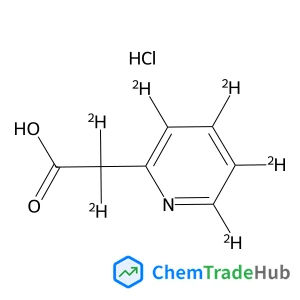
2,2-dideuterio-2-(3,4,5,6-tetradeuterio-2-pyridyl)acetic acid;hydrochloride
CAS Number:
1329799-67-8
Molecular Formula:
C7H2ClD6NO2
Recommended Suppliers





Disclaimer
This page provides academic journal information for reference and research purposes only. We are not affiliated with any journal publishers and do not handle publication submissions. For publication-related inquiries, please contact the respective journal publishers directly.
If you notice any inaccuracies in the information displayed, please contact us at support@chemtradehub.com. We will promptly review and address your concerns.