












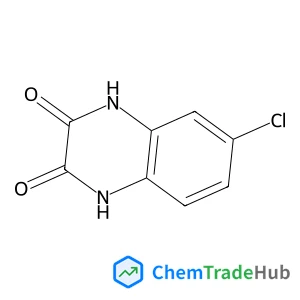
6-CHLORO-2,3-DIOXO-1,2,3,4-TETRAHYDROQUINOXALINE, 97
CAS Number:
169-14-2
Molecular Formula:
C8H5ClN2O2
S. V. Kruppa, F. Bäppler, W. Klopper, S. P. Walg, W. R. Thiel, R. Diller
The binuclear complex [Ag2(dcpm)2](PF6)2 (dcpm = bis(dicyclohexylphosphino)methane) exhibits a structure with a close silver–silver contact mediated by the bridging ligand and thus a weak argentophilic interaction. Upon electronic excitation this cooperative effect is strongly increased and determines the optical and luminescence properties of the compound. We have studied here the ultrafast electronic dynamics in parallel in gas phase by transient photodissociation and in solution by transient absorption. In particular, we report the diverse photofragmentation pathways of isolated [Ag2(dcpm)2]2+ in an ion trap and its gas phase UV photodissociation spectrum. By pump–probe fragmentation action spectroscopy (λex = 260 nm) in the gas phase, we have obtained fragment-specific transients which exhibit a common ultrafast multiexponential decay. This is fitted to four time constants (0.6/5.8/100/>1000 ps), highlighting complex intrinsic photophysical processes. Remarkably, multiexponential dynamics (0.9/8.5/73/604 ps) are as well found for the relaxation dynamics in acetonitrile solution. Ab initio calculations at the level of approximate coupled-cluster singles-doubles (CC2) theory of ground and electronically excited states of the reduced model system [Ag2(dmpm)2]2+ (dmpm = bis(dimethylphosphino)methane) indicate a shortening of the Ag–Ag distance upon excitation by 0.3–0.4 Å. In C2 geometry two close-lying singlet states S1 (1MC(dσ*–pπ), 1B, 4.13 eV) and S2 (1MC(dσ*–pσ), 1A, 4.45 eV) are found. The nearly dark S1 state has not been reported so far. The excitation of the S2 state carries a large oscillator strength for the calculated vertical transition (266 nm). Two related triplets are calculated at T1 (3.87 eV) and T2 (3.90 eV). From these findings we suggest possible relaxation pathways with the two short time constants ascribed to ISC/IVR and propose from the obtained similar values in gas phase that the fast solution dynamics is dominated by intramolecular processes. A further relaxation by IC/IVR in the triplet manifold is likely to account for the observed intermediate time constants. For the acetonitrile relaxation dynamics additional modifications are invoked based on solvent-induced shifts of the energy levels and the possible formation of solvent and counterion exciplexes on a longer timescale.
Wei Zhu, Zheng-Dong Ding, Xuan Wang, Tao Li, Rui Shen, Yunxing Li, Zaijun Li, Xuehong Ren, Zhi-Guo Gu
DOI: 10.1039/C7PY00876G
Yang Zheng, Yucheng Huang, Zaid M. Abbas, Brian C. Benicewicz
DOI: 10.1039/C6PY01319H
Laetitia Vlaminck, Maria M. Velencoso, Filip E. Du Prez, Frederik R. Wurm
DOI: 10.1039/C7PY00813A
DOI: 10.1039/C5PY01937K
Csaba Fodor, Tímea Stumphauser, Ralf Thomann, Yi Thomann, Béla Iván
DOI: 10.1039/C6PY00848H
Sang Thi Duong, Michiya Fujiki
DOI: 10.1039/C7PY00958E
Limiao Lin, Chun-Ting He, Jiaxiang Qin, Zhong Li, Shuanjin Wang, Min Xiao, Yuezhong Meng
DOI: 10.1039/C7PY00403F
Benoit Louage, Liesa Tack, Yadong Wang, Bruno G. De Geest
DOI: 10.1039/C6PY02192A
Mariano J. Garcia-Soto, Karsten Haupt, Carlo Gonzato
DOI: 10.1039/C7PY01113J
4-Nitrophenyl phosphate disodium salt hexahydrate is primarily used as a substra...
2-(Trifluoromethyl)-1,3-oxazole-4-carboxylic Acid (CAS: 1060816-01-4) is widely ...
2-Fluoro-4-biphenylcarboxylic acid should be stored in a cool, dry place at room...
Prednisolone-21-Carboxylic Acid is primarily used in the pharmaceutical industry...
4-(Hydrazinomethyl)-1,2,3-benzenetriol (CAS: 3614-72-0) should be stored in a co...
4-Amino-1-methyl-1H-pyrazole-5-carboxylic acid hydrochloride (CAS: 92534-70-8) i...
Dehydropachymic acid (CAS: 77012-31-8) is regulated by various agencies. It fall...
The market and research trends for 6-[(2,2-Dimethylpropanoyl)amino]nicotinic aci...
1,10-Phenanthroline-2,9-dicarbaldehyde should be stored in a cool, dry place awa...
5-Carbamoyl-11-oxo-10,11-dihydro-5H-dibenzo[b,f]azepin-10-yl acetate can be synt...

Physical Chemistry Chemical Physics (PCCP) is an international journal co-owned by 19 physical chemistry and physics societies from around the world. This journal publishes original, cutting-edge research in physical chemistry, chemical physics and biophysical chemistry. To be suitable for publication in PCCP, articles must include significant innovation and/or insight into physical chemistry; this is the most important criterion that reviewers and Editors will judge against when evaluating submissions. The journal has a broad scope and welcomes contributions spanning experiment, theory, computation and data science. Topical coverage includes spectroscopy, dynamics, kinetics, statistical mechanics, thermodynamics, electrochemistry, catalysis, surface science, quantum mechanics, quantum computing and machine learning. Interdisciplinary research areas such as polymers and soft matter, materials, nanoscience, energy, surfaces/interfaces, and biophysical chemistry are welcomed if they demonstrate significant innovation and/or insight into physical chemistry. Joined experimental/theoretical studies are particularly appreciated when complementary and based on up-to-date approaches.

![[(1S,2S,3R,4S,7R,9S,10S,12R,15S)-4,12-Diacetyloxy-15-[(2R,3S)-3-benzamido-3-phenyl-2-(2,2,2-trichloroethoxycarbonyloxy)propanoyl]oxy-1,9-dihydroxy-10,14,17,17-tetramethyl-11-oxo-6-oxatetracyclo[11.3.1.03,10.04,7]heptadec-13-en-2-yl] benzoate structure](https://static.chemtradehub.com/structs/100/100431-55-8-7104.webp "[(1S,2S,3R,4S,7R,9S,10S,12R,15S)-4,12-Diacetyloxy-15-[(2R,3S)-3-benzamido-3-phenyl-2-(2,2,2-trichloroethoxycarbonyloxy)propanoyl]oxy-1,9-dihydroxy-10,14,17,17-tetramethyl-11-oxo-6-oxatetracyclo[11.3.1.03,10.04,7]heptadec-13-en-2-yl] benzoate structure")
![(2E)-3-(3-Chlorophenyl)-N-{2-[4-(methylsulfonyl)-1-piperazinyl]-2-oxoethyl}acrylamide structure](https://static.chemtradehub.com/structs/250/2505001-54-5-c1e9.webp "(2E)-3-(3-Chlorophenyl)-N-{2-[4-(methylsulfonyl)-1-piperazinyl]-2-oxoethyl}acrylamide structure")






