


![5-Bromo-3-isopropyl-1H-pyrrolo[2,3-b]pyridine structure](https://static.chemtradehub.com/structs/125/1256819-54-1-8620.webp "5-Bromo-3-isopropyl-1H-pyrrolo[2,3-b]pyridine structure")
Rendering cross-conjugated azophenine derivatives emissive to probe the silent photophysical properties of emeraldine
Literature Information
Publication Date
2017-07-18
DOI
10.1039/C7CP04102K
Impact Factor
3.676
Authors
Hu Lei, Adam Langlois, Daniel Fortin, Paul-Ludovic Karsenti, Shawkat M. Aly, Pierre D. Harvey
View Original
Abstract
An azophenine derivative was synthesized by coupling truxene and azophenine via the copper-free Sonagashira reaction using Pd2(dba)3 and As(PPh)3 as catalysts. The crystal structure of this heavy azophenine model (∼4000) was made and the identity of the structure was confirmed. By introducing truxene groups into this cross-conjugated structure, the deactivating rotations around the NH–C6H4 bonds were slowed down, which rendered this derivative near-IR emissive at 298 K. This species provided then the appropriate spectral and kinetic signatures for knowing where and what to look for in emeraldine, which was called non-emissive. Besides, two other compounds were also synthesized as models for this azophenine derivative for comparison and interpretation purposes.
Recommended Journals

Journal of Organometallic Chemistry

Proceedings of the National Academy of Sciences of the United States of America

Science

Pure and Applied Chemistry

Kinetics and Catalysis

Science Progress

Journal of Physics and Chemistry of Solids

Israel Journal of Chemistry

Nature

Organic Preparations and Procedures International
Related Literature
1,3-Dipolar cycloaddition of nitrones to oxa(aza)bicyclic alkenes
Yongqi Yao, Wen Yang, Qifu Lin, Weitao Yang, Huanyong Li, Lin Wang, Fenglong Gu, Dingqiao Yang
2019-08-15
Research Article
DOI: 10.1039/C9QO00660E
Polyoxygenated meroterpenoids and a bioactive illudalane derivative from a co-culture of Armillaria sp. and Epicoccum sp.
Hong-Tao Li, Linhuan Tang, Tao Liu, Ruining Yang, Yabin Yang, Hao Zhou, Zhong-Tao Ding
2019-10-14
Research Article
DOI: 10.1039/C9QO01087D
TFA-promoted sulfonation/cascade cyclization of 2-propynolphenols with sodium sulfinates to 4-sulfonyl 2H-chromenes under metal-free conditions
Tao Yang, Peihao Kou, Fengyan Jin, Xian-Rong Song, Jiang Bai, Haixin Ding, Qiang Xiao, Yong-Min Liang
2019-07-19
Research Article
DOI: 10.1039/C9QO00712A
Guest-length driven high fidelity self-sorting in supramolecular capsule formation of calix[5]arenes in water
Ilenia Pisagatti, Lucia Barbera, Giuseppe Gattuso, Melchiorre F. Parisi, Silvano Geremia, Neal Hickey, Anna Notti
2019-10-14
Research Article
DOI: 10.1039/C9QO01188A
1,1′-Bi(2-naphthol-4,5-dicarboximide)s: blue emissive axially chiral scaffolds with aggregation-enhanced emission properties
Meng-Ting Chen, Yang Zhang, Myroslav O. Vysotsky, Joachim O. Lindner, Meng-Hua Li, Mei-Jin Lin, Frank Würthner
2019-10-10
Research Article
DOI: 10.1039/C9QO01090D
Diastereoselective bicyclization of enynols via gold catalysis
Chiara Cecchini, Gianpiero Cera, Matteo Lanzi, Luciano Marchiò, Max Malacria, Giovanni Maestri
2019-09-06
Research Article
DOI: 10.1039/C9QO00963A
You might also like
Compound Q&A
Is 6-(3-Fluorophenyl)picolinic acid (CAS: 887982-40-3) safe?
6-(3-Fluorophenyl)picolinic acid is generally considered safe for laboratory use...
887982-40-36-(3-Fluorophenyl)pi...
Compound Q&A
What industries use (3R)-3-Pyrrolidinol (CAS: 2799-21-5)?
(3R)-3-Pyrrolidinol is used in the pharmaceutical industry as a precursor for dr...
2799-21-5(3R)-3-Pyrrolidinol
Compound Q&A
What precautions should be taken when handling (4R,5R)-4,5-Diethoxycarbonyl-2,2-dimethyldioxolane (CAS: 59779-75-8)?
When handling (4R,5R)-4,5-Diethoxycarbonyl-2,2-dimethyldioxolane (CAS: 59779-75-...
59779-75-8(4R,5R)-4,5-Diethoxy...
Compound Q&A
How is 1-(6-Chloroimidazo[1,2-b]pyridazin-3-yl)ethanone (CAS: 90734-71-7) typically synthesized?
1-(6-Chloroimidazo[1,2-b]pyridazin-3-yl)ethanone is often synthesized via a mult...
90734-71-71-(6-Chloroimidazo[1...
Compound Q&A
What is the market or research trend for N-Ethyl-3,4-dimethylbenzylamine (CAS: 39180-83-1)?
The market for N-Ethyl-3,4-dimethylbenzylamine (CAS: 39180-83-1) remains steady,...
39180-83-1N-Ethyl-3,4-dimethyl...
Compound Q&A
What is Tert-butyl 3-(pyrrolidin-1-yl)azetidine-1-carboxylate (CAS: 1019008-21-9)?
Tert-butyl 3-(pyrrolidin-1-yl)azetidine-1-carboxylate is a chemical compound wit...
1019008-21-9Tert-butyl 3-(pyrrol...
Compound Q&A
What regulatory guidelines apply to 1-Bromo-3-chloro-2,4-dimethoxybenzene (CAS: 1228956-93-1)?
1-Bromo-3-chloro-2,4-dimethoxybenzene (CAS: 1228956-93-1) falls under the classi...
1228956-93-11-Bromo-3-chloro-2,4...
Compound Q&A
Is 8-Bromo-2-methyl-3,4-dihydroisoquinolin-1(2H)-one (CAS: 1368622-07-4) safe?
The safety of 8-Bromo-2-methyl-3,4-dihydroisoquinolin-1(2H)-one (CAS: 1368622-07...
1368622-07-48-Bromo-2-methyl-3,4...
Compound Q&A
Is Benzyl [(3S)-2,6-dioxo-3-piperidinyl]carbamate (CAS: 22785-43-9) safe?
Benzyl [(3S)-2,6-dioxo-3-piperidinyl]carbamate is generally safe when handled wi...
22785-43-9Benzyl [(3S)-2,6-dio...
Compound Q&A
How should 1-{[4-(4,4,5,5-Tetramethyl-1,3,2-dioxaborolan-2-yl)phenyl]sulfonyl}pyrrolidine (CAS: 928657-21-0) be stored?
1-{[4-(4,4,5,5-Tetramethyl-1,3,2-dioxaborolan-2-yl)phenyl]sulfonyl}pyrrolidine s...
928657-21-01-{[4-(4,4,5,5-Tetra...
Source Journal
Physical Chemistry Chemical Physics

CiteScore:
5.5
Self-citation Rate:
10.3%
Articles per Year:
3036
Physical Chemistry Chemical Physics (PCCP) is an international journal co-owned by 19 physical chemistry and physics societies from around the world. This journal publishes original, cutting-edge research in physical chemistry, chemical physics and biophysical chemistry. To be suitable for publication in PCCP, articles must include significant innovation and/or insight into physical chemistry; this is the most important criterion that reviewers and Editors will judge against when evaluating submissions. The journal has a broad scope and welcomes contributions spanning experiment, theory, computation and data science. Topical coverage includes spectroscopy, dynamics, kinetics, statistical mechanics, thermodynamics, electrochemistry, catalysis, surface science, quantum mechanics, quantum computing and machine learning. Interdisciplinary research areas such as polymers and soft matter, materials, nanoscience, energy, surfaces/interfaces, and biophysical chemistry are welcomed if they demonstrate significant innovation and/or insight into physical chemistry. Joined experimental/theoretical studies are particularly appreciated when complementary and based on up-to-date approaches.
Recommended Compounds
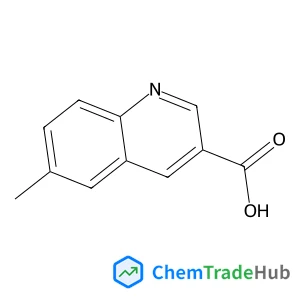
![Methyl 2-[5-(3-Phenoxyphenyl)-2H-tetrazol-2-yl]acetate structure](https://static.chemtradehub.com/structs/130/1305320-60-8-84b4.webp "Methyl 2-[5-(3-Phenoxyphenyl)-2H-tetrazol-2-yl]acetate structure")
Methyl 2-[5-(3-Phenoxyphenyl)-2H-tetrazol-2-yl]acetate
CAS Number:
1305320-60-8
Molecular Formula:
C16H14N4O3
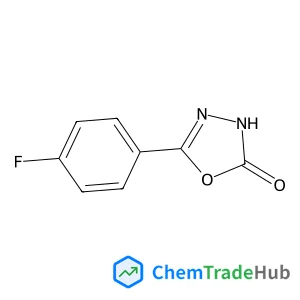

BIS(I-PROPYLCYCLOPENTADIENYL)TITANIUM DICHLORIDE
CAS Number:
12130-65-3
Molecular Formula:
C16H22Cl2Ti
Recommended Suppliers






Disclaimer
This page provides academic journal information for reference and research purposes only. We are not affiliated with any journal publishers and do not handle publication submissions. For publication-related inquiries, please contact the respective journal publishers directly.
If you notice any inaccuracies in the information displayed, please contact us at support@chemtradehub.com. We will promptly review and address your concerns.