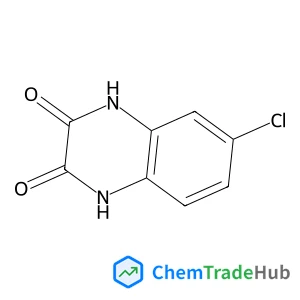
6-CHLORO-2,3-DIOXO-1,2,3,4-TETRAHYDROQUINOXALINE, 97
CAS Number:
169-14-2
Molecular Formula:
C8H5ClN2O2
M. Morga, Z. Adamczyk, D. Kosior
Even though silica nanoparticles and their monolayers find a broad field of applications, only a few studies providing a quantitative description of silica nanoparticle deposition at solid/liquid interfaces have been reported in the literature. Given the deficit of reliable experimental data, the goal of this work is to acquire thorough physicochemical characteristics of amorphous silica nanoparticle deposition. Silica nanoparticle monolayers of controlled coverage were formed on macroion (PAH)-modified mica. The size of the particles determined by dynamic light scattering (DLS), atomic force microscopy (AFM) and scanning electron microscopy (SEM) was equal to 28 nm. The electrophoretic mobility and the zeta potential of the particles were also determined as a function of ionic strength and pH. Using a well-defined suspension, systematic studies of particle deposition kinetics were carried out. The coverage of the self-assembled particle monolayers was determined by AFM and SEM imaging. Particle deposition was carried out under diffusion controlled transport conditions. For long deposition times, the saturation coverage was attained, systematically increasing with ionic strength up to 0.48 for I = 0.15 M NaCl. The deposition kinetic runs were adequately interpreted using the random sequential adsorption (RSA) model. This model was also used to determine the specific density of silica particles that confirmed their porous structure. In addition, the particle desorption kinetics was studied using AFM and SEM methods. It was confirmed that silica nanoparticle desorption was negligible within the time period of 60 hours. Our experimental data proved, therefore, that it is feasible to produce uniform and stable silica particle monolayers of desired coverage in the self-assembly processes, controlled by the bulk suspension concentration and the ionic strength. Such monolayers may find practical applications as substrates for selective protein and nanoparticle deposition, or various catalytic applications.
Ziqing Tang, Feng Chen, Qiang Chen, Lin Zhu, Xiaoqiang Yan, Hong Chen, Baiping Ren, Jia Yang, Gang Qin, Jie Zheng
DOI: 10.1039/C7PY01068K
Ryoto Tanaka, Kodai Watanabe, Takuya Yamamoto, Kenji Tajima, Takuya Isono, Toshifumi Satoh
DOI: 10.1039/C7PY00646B
Reem A. Alshumrani, Nikos Hadjichristidis
DOI: 10.1039/C7PY01079F
T. Hoeks, E. Kung, J. P. Lens, P. J. McCloskey, B. A. J. Noordover, J. P. A. Heuts
DOI: 10.1039/C6PY00925E
Silvia Montolio, Oleksandr Zagorodko, Raúl Porcar, M. Isabel Burguete, Santiago V. Luis, Heikki Tenhu
DOI: 10.1039/C7PY01067B
Marianne S. Rolph, Anaïs Pitto-Barry, Rachel K. O'Reilly
DOI: 10.1039/C7PY00219J
Mayra Rostagno, Steven Shen, Ion Ghiviriga, Stephen A. Miller
DOI: 10.1039/C7PY00205J
Luhai Wang, Chengjun Pan, Ansheng Liang, Xiaoyan Zhou, Wenqiao Zhou, Tao Wan, Lei Wang
DOI: 10.1039/C7PY01005B
So Young Lee, Sukjae Hong, Jong Hyun Jang, Dirk Henkensmeier, Sung Jong Yoo, Hyoung-Juhn Kim, Sung-Hyun Kim
DOI: 10.1039/C4PY01218F
Hao Ren, Dong Chen, Yan Shi, Haifeng Yu, Zhifeng Fu
DOI: 10.1039/C4PY01062K
4-Nitrophenyl phosphate disodium salt hexahydrate is primarily used as a substra...
2-(Trifluoromethyl)-1,3-oxazole-4-carboxylic Acid (CAS: 1060816-01-4) is widely ...
2-Fluoro-4-biphenylcarboxylic acid should be stored in a cool, dry place at room...
Prednisolone-21-Carboxylic Acid is primarily used in the pharmaceutical industry...
4-(Hydrazinomethyl)-1,2,3-benzenetriol (CAS: 3614-72-0) should be stored in a co...
4-Amino-1-methyl-1H-pyrazole-5-carboxylic acid hydrochloride (CAS: 92534-70-8) i...
Dehydropachymic acid (CAS: 77012-31-8) is regulated by various agencies. It fall...
The market and research trends for 6-[(2,2-Dimethylpropanoyl)amino]nicotinic aci...
1,10-Phenanthroline-2,9-dicarbaldehyde should be stored in a cool, dry place awa...
5-Carbamoyl-11-oxo-10,11-dihydro-5H-dibenzo[b,f]azepin-10-yl acetate can be synt...

Physical Chemistry Chemical Physics (PCCP) is an international journal co-owned by 19 physical chemistry and physics societies from around the world. This journal publishes original, cutting-edge research in physical chemistry, chemical physics and biophysical chemistry. To be suitable for publication in PCCP, articles must include significant innovation and/or insight into physical chemistry; this is the most important criterion that reviewers and Editors will judge against when evaluating submissions. The journal has a broad scope and welcomes contributions spanning experiment, theory, computation and data science. Topical coverage includes spectroscopy, dynamics, kinetics, statistical mechanics, thermodynamics, electrochemistry, catalysis, surface science, quantum mechanics, quantum computing and machine learning. Interdisciplinary research areas such as polymers and soft matter, materials, nanoscience, energy, surfaces/interfaces, and biophysical chemistry are welcomed if they demonstrate significant innovation and/or insight into physical chemistry. Joined experimental/theoretical studies are particularly appreciated when complementary and based on up-to-date approaches.