












The correspondence between the conformational and chromophoric properties of amorphous conjugated polymers in mesoscale condensed systems
Literature Information
Publication Date
2017-07-13
DOI
10.1039/C7CP03415F
Impact Factor
3.676
Authors
Chun I Wang, Chih H. Hsu, Chi C. Hua
View Original
Abstract
For π-conjugated polymers, the notion of spectroscopic units or “chromophores” provides illuminating insights into the experimentally observed absorption/emission spectra and the mechanisms of energy/charge transfer. To date, however, no statistical analysis has revealed a direct correspondence between chromophoric and conformational properties—with the latter being fundamental to polymer semiconductors. Herein, we propose a “persistence length” calculation to re-evaluate chain conformation over a full conjugation length. The mesoscale condensed systems of MEH-PPV and MEH-PPV/C60 hybrid (system size ∼10 × 10 × 10 nm3) are utilized as two prototypical model systems, along with a full range of segmental lengths (2–20-mer) and five lowest singlet excited states to hint at the generality of the features presented. We demonstrate, for the first time, that two properly re-defined conformational factors that characterize chain folding and planarity, respectively, capture excellently the population distribution of chromophores in both systems investigated. In contrast, the conventional strategy of utilizing two adjacent monomer units to characterize (local) chain conformation results in only an inconspicuous correlation between the two, as previously reported. It is further shown that chain folding—and not chain planarity—is more relevant in capturing the associated oscillator strength for the first excited state, where the transient dipole moments are known to align with the chain conformation, although the corresponding excitation energy and exciton size seem relatively unaffected. The observed effects of C60 on the MEH-PPV adsorption spectra also agree with recent experimental trends. Overall, the present findings are expected to aid future multiscale computer simulations and spectroscopy-data interpretations for polymer semiconductors and their hybrid systems.
Related Literature
Bringing light into the dark triplet space of molecular systems
Jing Ge, Zhigang Geng, Shenlong Jiang, Kaili Fan, Zhenkun Guo, Jiahua Hu, Zongwei Chen
2015-04-20
Paper
DOI: 10.1039/C5CP00323G
Graphene networks and their influence on free-volume properties of graphene–epoxidized natural rubber composites with a segregated structure: rheological and positron annihilation studies
Jieping Zhong, Shuangquan Liao, Wei Gong, Jianhe Liao, Lingxue Kong
2015-04-09
Paper
DOI: 10.1039/C5CP00465A
Photocarrier recombination dynamics in ternary chalcogenide CuInS2 quantum dots
Michio Ikezawa, Xiuying Wang, Pengtao Jing, Haibo Li, Yasuaki Masumoto
2015-02-17
Paper
DOI: 10.1039/C5CP00034C
Effect of cationic molecules on the oxygen reduction reaction on fuel cell grade Pt/C (20 wt%) catalyst in potassium hydroxide (aq, 1 mol dm−3)
Ai Lien Ong, Kenneth K. Inglis, Daniel K. Whelligan, Sam Murphy, John R. Varcoe
2015-03-31
Paper
DOI: 10.1039/C4CP04973J
Electrical and thermal transport properties of Pb1−xSnxSe solid solution thermoelectric materials
Chao-Feng Wu, Tian-Ran Wei, Jing-Feng Li
2015-04-20
Paper
DOI: 10.1039/C4CP06021K
(Hollow Au–Ag nanoparticles)–TiO2 composites for improved photocatalytic activity prepared from block copolymer-stabilized bimetallic nanoparticles
Na Li, Xiaoyu Zhang, Shulong Yuan, Xiaokai Zhang, Yuzhen Yuan, Xue Li
2015-04-01
Paper
DOI: 10.1039/C4CP06093H
Coherent resonance of quantum plasmons in the graphene–gold cluster hybrid system
Chikang Li
2015-04-15
Paper
DOI: 10.1039/C4CP05049E
Decomposition of nitroimidazole ions: experiment and theory
Johannes Postler, Athanasios Zavras, Paul Scheier, Stephan Denifl, Richard A. J. O'Hair
2015-04-16
Paper
DOI: 10.1039/C5CP01014D
Low temperature (550–700 K) oxidation pathways of cyclic ketones: dominance of HO2-elimination channels yielding conjugated cyclic coproducts
Adam M. Scheer, Oliver Welz, Subith S. Vasu, David L. Osborn, Craig A. Taatjes
2015-04-13
Paper
DOI: 10.1039/C4CP06097K
Volume shrinkage and rheological studies of epoxidised and unepoxidised poly(styrene-block-butadiene-block-styrene) triblock copolymer modified epoxy resin–diamino diphenyl methane nanostructured blend systems
Debora Puglia, Josè M. Kenny, Jyotishkumar Parameswaranpillai, Poornima Vijayan P, Jűrgen Pionteck
2015-03-31
Paper
DOI: 10.1039/C5CP00612K
You might also like
Compound Q&A
How should waste containing N-Methoxy-N-methyl-1,3-thiazole-5-carboxamide (CAS: 898825-89-3) be handled?
Waste containing N-Methoxy-N-methyl-1,3-thiazole-5-carboxamide (CAS: 898825-89-3...
898825-89-3N-Methoxy-N-methyl-1...
Compound Q&A
How should N-(4-Biphenylyl)dibenzo[b,d]furan-4-amine (CAS: 1318338-47-4) be stored?
N-(4-Biphenylyl)dibenzo[b,d]furan-4-amine should be stored in a tightly sealed c...
1318338-47-4N-(4-Biphenylyl)dibe...
Compound Q&A
What is the market or research trend for 3-Acetamido-5-amino-2,4,6-triiodobenzoic acid (CAS: 1713-07-1)?
The market for 3-Acetamido-5-amino-2,4,6-triiodobenzoic acid (CAS: 1713-07-1) is...
1713-07-13-Acetamido-5-amino-...
Compound Q&A
How should Benzyl 2-O-acetyl-3,4,6-tri-O-benzyl-beta-D-galactopyranoside (CAS: 61820-03-9) be stored?
Benzyl 2-O-acetyl-3,4,6-tri-O-benzyl-beta-D-galactopyranoside (CAS: 61820-03-9) ...
61820-03-9Benzyl 2-O-acetyl-3,...
Compound Q&A
What regulatory guidelines apply to 2-Ethylpiperazine dihydrochloride (CAS: 438050-52-3)?
2-Ethylpiperazine dihydrochloride (CAS: 438050-52-3) is regulated under the Glob...
438050-52-32-Ethylpiperazine di...
Compound Q&A
What regulatory guidelines apply to 1,1'-[1,3-Phenylenebis(methylene)]bis(3-methyl-1H-pyrrole-2,5-dione) (CAS: 119462-56-5)?
1,1'-[1,3-Phenylenebis(methylene)]bis(3-methyl-1H-pyrrole-2,5-dione) (CAS: 11946...
119462-56-51,1'-[1,3-Phenyleneb...
Compound Q&A
Are there alternatives to 5-Fluoro-2-(1-pyrrolidinyl)pyridine (CAS: 1287217-79-1) in synthesis?
Several alternatives can be used in the synthesis of 5-Fluoro-2-(1-pyrrolidinyl)...
1287217-79-15-Fluoro-2-(1-pyrrol...
Compound Q&A
What precautions should be taken when handling 1-((2R,3R,4R,5R)-5-((bis(4-methoxyphenyl)(phenyl)methoxy)methyl)-4-hydroxy-3-methoxytetrahydrofuran-2-yl)-5-methylpyrimidine-2,4(1H,3H)-dione (CAS: 153631-19-7)?
Proper personal protective equipment (PPE) must be worn when handling this compo...
153631-19-71-((2R,3R,4R,5R)-5-(...
Compound Q&A
What precautions should be taken when handling 6-Bromoimidazo[1,2-a]pyridin-8-amine (CAS: 676371-00-9)?
When handling 6-Bromoimidazo[1,2-a]pyridin-8-amine, it is important to wear appr...
676371-00-96-Bromoimidazo[1,2-a...
Compound Q&A
Are there alternatives to (2S,4R)-4-(4-Nitrobenzyl)pyrrolidine-2-carboxylic acid hydrochloride (CAS: 1049740-22-8) in synthesis?
Alternatives to (2S,4R)-4-(4-Nitrobenzyl)pyrrolidine-2-carboxylic acid hydrochlo...
1049740-22-8(2S,4R)-4-(4-Nitrobe...
Source Journal
Physical Chemistry Chemical Physics

CiteScore:
5.5
Self-citation Rate:
10.3%
Articles per Year:
3036
Physical Chemistry Chemical Physics (PCCP) is an international journal co-owned by 19 physical chemistry and physics societies from around the world. This journal publishes original, cutting-edge research in physical chemistry, chemical physics and biophysical chemistry. To be suitable for publication in PCCP, articles must include significant innovation and/or insight into physical chemistry; this is the most important criterion that reviewers and Editors will judge against when evaluating submissions. The journal has a broad scope and welcomes contributions spanning experiment, theory, computation and data science. Topical coverage includes spectroscopy, dynamics, kinetics, statistical mechanics, thermodynamics, electrochemistry, catalysis, surface science, quantum mechanics, quantum computing and machine learning. Interdisciplinary research areas such as polymers and soft matter, materials, nanoscience, energy, surfaces/interfaces, and biophysical chemistry are welcomed if they demonstrate significant innovation and/or insight into physical chemistry. Joined experimental/theoretical studies are particularly appreciated when complementary and based on up-to-date approaches.
Recommended Compounds

1-(3,4-Dichlorophenyl)-1H-pyrazole-3-carboxylic acid
CAS Number:
1152949-12-6
Molecular Formula:
C10H6Cl2N2O2

4-(Dimethylaminomethyl)phenylacetic acid hydrochloride
CAS Number:
99985-52-1
Molecular Formula:
C11H16ClNO2
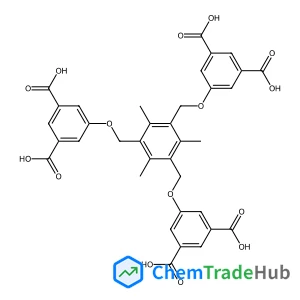
5,5',5''-(((2,4,6-Trimethylbenzene-1,3,5-triyl)tris(methylene))tris(oxy))triisophthalic acid
CAS Number:
1159974-70-5
Molecular Formula:
C36H30O15
Recommended Suppliers





Disclaimer
This page provides academic journal information for reference and research purposes only. We are not affiliated with any journal publishers and do not handle publication submissions. For publication-related inquiries, please contact the respective journal publishers directly.
If you notice any inaccuracies in the information displayed, please contact us at support@chemtradehub.com. We will promptly review and address your concerns.