












![2-Methylbenzo[h]quinoline structure](https://static.chemtradehub.com/structs/605/605-88-9-ac43.webp "2-Methylbenzo[h]quinoline structure")
Photocarrier recombination dynamics in ternary chalcogenide CuInS2 quantum dots
Literature Information
Publication Date
2015-02-17
DOI
10.1039/C5CP00034C
Impact Factor
3.676
Authors
Michio Ikezawa, Xiuying Wang, Pengtao Jing, Haibo Li, Yasuaki Masumoto
View Original
Abstract
Photocarrier recombination dynamics in ternary chalcogenide CuInS2 quantum dots (CIS QDs) was studied by means of femtosecond transient-absorption (TA) and nanosecond time-resolved photoluminescence (PL) spectroscopy. Under strong excitation, the TA dynamics in CIS QDs is well described by a simple rate equation including single-carrier trapping, free-to-bound recombination, and trap-assisted Auger recombination. Under weak excitation, on the other hand, the PL decays of the QDs are composed of a short-lived component caused by surface trapping and a long-lived one caused by free-to-bound recombination. It is found that the surface trapping accelerates markedly with decreasing QD size while the free-to-bound radiative recombination hardly depends on the QD size. Besides this, we observed both a decrease in the PL lifetimes and a dynamic spectral redshift, which are attributed to the surface trapping and the coexistent inhomogeneous broadening in CIS QDs. The spectral redshift becomes less pronounced in CIS/ZnS core/shell QDs because of the suppression of the fast nonradiative recombination caused by the passivation of the surface traps. These results give clear evidence that the free-to-bound model is appropriate for interpreting the optical properties of CIS QDs.
Related Literature
Zirconium mediated total synthesis of crinitol, 9-hydroxyfarnesoic acid, 9-hydroxyfarnesol, 9-hydroxysargaquinone and the selectively-protected aglycone of moritoside and euplexide A
Sally Dixon, George J. Gordon, Richard J. Whitby
2005-08-05
Communication
DOI: 10.1039/B508524A
Amphiphilic p-sulfonatocalix[4]arene-coated CdSe/ZnS quantum dots for the optical detection of the neurotransmitter acetylcholine
Takashi Jin, Fumihiko Fujii, Hiroshi Sakata, Mamoru Tamura, Masataka Kinjo
2005-07-11
Communication
DOI: 10.1039/B506608E
Surfactant-free hydrothermal synthesis of lithium aluminate microbricks and nanorods from aluminium oxide nanoparticles
Upendra. A. Joshi, Soo Hyun Chung, Jae Sung Lee
2005-08-04
Communication
DOI: 10.1039/B508168H
Chemistry of aluminium(i)
Herbert W. Roesky, S. Shravan Kumar
2005-07-13
Feature Article
DOI: 10.1039/B505307B
Mixed monolayer coverage on gold nanoparticles for interfacial stabilization of immiscible fluids
Elizabeth Glogowski, Jinbo He, Thomas P. Russell, Todd Emrick
2005-07-12
Communication
DOI: 10.1039/B503670D
Click-chemistry as an efficient synthetic tool for the preparation of novel conjugated polymers
Dirk Jan V. C. van Steenis, Olivier R. P. David, Gino P. F. van Strijdonck, Jan H. van Maarseveen, Joost N. H. Reek
2005-07-19
Communication
DOI: 10.1039/B507776A
A facile route to fabrication of inorganic–small organic molecule cable-like nanocomposite arrays
Weigang Ju, Mingming Gu, Xiangmin Meng, Wensheng Shi, Xiaohong Zhang, Shuittong Lee
2005-07-21
Communication
DOI: 10.1039/B506459G
First snapshot of a nonpolymeric hydrogelator interacting with its gelling solvents
D. Krishna Kumar, D. Amilan Jose, Amitava Das, Parthasarathi Dastidar
2005-07-13
Communication
DOI: 10.1039/B506941F
Ru(iv)-catalyzed isomerization of allylamines in water: A highly efficient procedure for the deprotection of N-allylic amines
Victorio Cadierno, Sergio E. García-Garrido, José Gimeno, Noel Nebra
2005-07-13
Communication
DOI: 10.1039/B506788J
You might also like
Compound Q&A
How should waste containing N-Methoxy-N-methyl-1,3-thiazole-5-carboxamide (CAS: 898825-89-3) be handled?
Waste containing N-Methoxy-N-methyl-1,3-thiazole-5-carboxamide (CAS: 898825-89-3...
898825-89-3N-Methoxy-N-methyl-1...
Compound Q&A
How should N-(4-Biphenylyl)dibenzo[b,d]furan-4-amine (CAS: 1318338-47-4) be stored?
N-(4-Biphenylyl)dibenzo[b,d]furan-4-amine should be stored in a tightly sealed c...
1318338-47-4N-(4-Biphenylyl)dibe...
Compound Q&A
What is the market or research trend for 3-Acetamido-5-amino-2,4,6-triiodobenzoic acid (CAS: 1713-07-1)?
The market for 3-Acetamido-5-amino-2,4,6-triiodobenzoic acid (CAS: 1713-07-1) is...
1713-07-13-Acetamido-5-amino-...
Compound Q&A
How should Benzyl 2-O-acetyl-3,4,6-tri-O-benzyl-beta-D-galactopyranoside (CAS: 61820-03-9) be stored?
Benzyl 2-O-acetyl-3,4,6-tri-O-benzyl-beta-D-galactopyranoside (CAS: 61820-03-9) ...
61820-03-9Benzyl 2-O-acetyl-3,...
Compound Q&A
What regulatory guidelines apply to 2-Ethylpiperazine dihydrochloride (CAS: 438050-52-3)?
2-Ethylpiperazine dihydrochloride (CAS: 438050-52-3) is regulated under the Glob...
438050-52-32-Ethylpiperazine di...
Compound Q&A
What regulatory guidelines apply to 1,1'-[1,3-Phenylenebis(methylene)]bis(3-methyl-1H-pyrrole-2,5-dione) (CAS: 119462-56-5)?
1,1'-[1,3-Phenylenebis(methylene)]bis(3-methyl-1H-pyrrole-2,5-dione) (CAS: 11946...
119462-56-51,1'-[1,3-Phenyleneb...
Compound Q&A
Are there alternatives to 5-Fluoro-2-(1-pyrrolidinyl)pyridine (CAS: 1287217-79-1) in synthesis?
Several alternatives can be used in the synthesis of 5-Fluoro-2-(1-pyrrolidinyl)...
1287217-79-15-Fluoro-2-(1-pyrrol...
Compound Q&A
What precautions should be taken when handling 1-((2R,3R,4R,5R)-5-((bis(4-methoxyphenyl)(phenyl)methoxy)methyl)-4-hydroxy-3-methoxytetrahydrofuran-2-yl)-5-methylpyrimidine-2,4(1H,3H)-dione (CAS: 153631-19-7)?
Proper personal protective equipment (PPE) must be worn when handling this compo...
153631-19-71-((2R,3R,4R,5R)-5-(...
Compound Q&A
What precautions should be taken when handling 6-Bromoimidazo[1,2-a]pyridin-8-amine (CAS: 676371-00-9)?
When handling 6-Bromoimidazo[1,2-a]pyridin-8-amine, it is important to wear appr...
676371-00-96-Bromoimidazo[1,2-a...
Compound Q&A
Are there alternatives to (2S,4R)-4-(4-Nitrobenzyl)pyrrolidine-2-carboxylic acid hydrochloride (CAS: 1049740-22-8) in synthesis?
Alternatives to (2S,4R)-4-(4-Nitrobenzyl)pyrrolidine-2-carboxylic acid hydrochlo...
1049740-22-8(2S,4R)-4-(4-Nitrobe...
Source Journal
Physical Chemistry Chemical Physics

CiteScore:
5.5
Self-citation Rate:
10.3%
Articles per Year:
3036
Physical Chemistry Chemical Physics (PCCP) is an international journal co-owned by 19 physical chemistry and physics societies from around the world. This journal publishes original, cutting-edge research in physical chemistry, chemical physics and biophysical chemistry. To be suitable for publication in PCCP, articles must include significant innovation and/or insight into physical chemistry; this is the most important criterion that reviewers and Editors will judge against when evaluating submissions. The journal has a broad scope and welcomes contributions spanning experiment, theory, computation and data science. Topical coverage includes spectroscopy, dynamics, kinetics, statistical mechanics, thermodynamics, electrochemistry, catalysis, surface science, quantum mechanics, quantum computing and machine learning. Interdisciplinary research areas such as polymers and soft matter, materials, nanoscience, energy, surfaces/interfaces, and biophysical chemistry are welcomed if they demonstrate significant innovation and/or insight into physical chemistry. Joined experimental/theoretical studies are particularly appreciated when complementary and based on up-to-date approaches.
Recommended Compounds
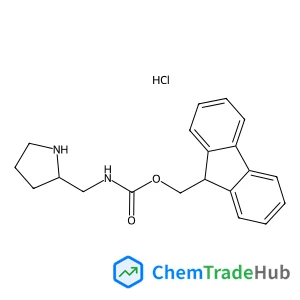
(S)-(9H-Fluoren-9-yl)methyl (pyrrolidin-2-ylmethyl)carbamate hydrochloride
CAS Number:
1217813-15-4
Molecular Formula:
C20H23ClN2O2
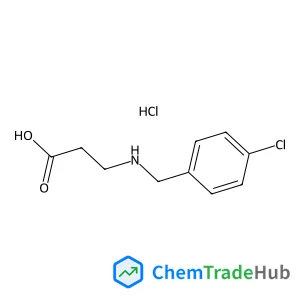
N-(4-Chlorobenzyl)-beta-alanine hydrochloride (1:1)
CAS Number:
1172479-10-5
Molecular Formula:
C10H13Cl2NO2

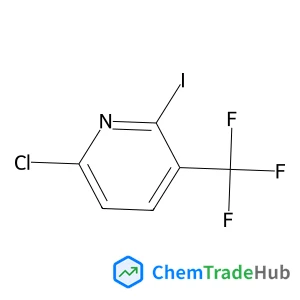
Recommended Suppliers






Disclaimer
This page provides academic journal information for reference and research purposes only. We are not affiliated with any journal publishers and do not handle publication submissions. For publication-related inquiries, please contact the respective journal publishers directly.
If you notice any inaccuracies in the information displayed, please contact us at support@chemtradehub.com. We will promptly review and address your concerns.