












Volume shrinkage and rheological studies of epoxidised and unepoxidised poly(styrene-block-butadiene-block-styrene) triblock copolymer modified epoxy resin–diamino diphenyl methane nanostructured blend systems
Literature Information
Publication Date
2015-03-31
DOI
10.1039/C5CP00612K
Impact Factor
3.676
Authors
Debora Puglia, Josè M. Kenny, Jyotishkumar Parameswaranpillai, Poornima Vijayan P, Jűrgen Pionteck
View Original
Abstract
Styrene-block-butadiene-block-styrene (SBS) copolymers epoxidised at different epoxidation degrees were used as modifiers for diglycidyl ether of the bisphenol A–diamino diphenyl methane (DGEBA–DDM) system. Epoxy systems containing modified epoxidised styrene-block-butadiene-block-styrene (eSBS) triblock copolymer with compositions ranging from 0 to 30 wt% were prepared and the curing reaction was monitored in situ using rheometry and pressure–volume–temperature (PVT) analysis. By controlling the mole percent of epoxidation, we could generate vesicles, worm-like micelles and core–shell nanodomains. At the highest mole percent of epoxidation, the fraction of the epoxy miscible component in the triblock copolymer (epoxidised polybutadiene (PB)) was maximum. This gave rise to core–shell nanodomains having a size of 10–15 nm, in which the incompatible polystyrene (PS) becomes the core, the unepoxidised PB becomes the shell and the epoxidised PB interpenetrates with the epoxy phase. On the other hand, the low level of epoxidation gave rise to bigger domains having a size of ∼1 μm and the intermediate epoxidation level resulted in a worm-like structure. This investigation specifically focused on the importance of cure rheology on nanostructure formation, using rheometry. The reaction induced phase separation of the PS phase in the epoxy matrix was carefully explored through rheological measurements. PVT measurements during curing were carried out to understand the volume shrinkage of the blend, confirming that shrinkage behaviour is related to the block copolymer phase separation process during curing. The volume shrinkage was found to be maximum in the case of blends with unmodified SBS, where a heterogeneous morphology was observed, while a decrease in the shrinkage was evidenced in the case of SBS epoxidation. It could be explained by two effects: (1) solubility of the epoxidised block copolymer in the DGEBA leads to the formation of nanoscopic domains upon reaction induced phase separation and (2) the plasticisation effect of the epoxidised block copolymer in the epoxy resin.
Related Literature
Shape-dependent magnetic properties of low-dimensional nanoscale Prussian blue (PB) analogue SmFe(CN)6·4H2O
Hao-Ling Sun, Hongtao Shi, Fei Zhao, Limin Qi, Song Gao
2005-07-28
Communication
DOI: 10.1039/B507240A
The elusive phosphorescence of pyrromethene–BF2 dyes revealed in new multicomponent species containing Ru(ii)–terpyridine subunits
Maurilio Galletta, Sebastiano Campagna, Manuel Quesada, Gilles Ulrich, Raymond Ziessel
2005-07-26
Communication
DOI: 10.1039/B507196H
2-Phenallyl as a versatile protecting group for the asymmetric one-pot three-component synthesis of propargylamines
Nina Gommermann, Paul Knochel
2005-07-26
Communication
DOI: 10.1039/B507810E
Networked calix[4]arenepolymers with unusual mechanical properties
Joseph N. Grima, Kenneth E. Evans
2005-07-14
Communication
DOI: 10.1039/B505839B
MCuB7O12·nH2O (M = Na, K ): A new copper borate with 14-ring channels
Tao Yang, Guobao Li, Liping You, Jing Ju, Fuhui Liao, Jianhua Lin
2005-07-26
Communication
DOI: 10.1039/B506901G
Microporous organic crystals: an unusual case for l-leucyl–l-serine
Carl Henrik Görbitz, Mette Nilsen, Kai Szeto, Linda Wibecke Tangen
2005-07-28
Communication
DOI: 10.1039/B504976H
Porous polystyrene microspheres having dimpled surface structures prepared within micellar assemblies of amphiphilic silica particles in water
Yoshiko K. Takahara, Koji Tachi, Takao Sakata, Toshiaki Hasegawa, Hirotaro Mori, Michio Matsumura, Bunsho Ohtani
2005-07-21
Communication
DOI: 10.1039/B507123B
Total synthesis of buergerinin F via effective construction of the asymmetric quaternary carbons using an enantioselective aldol reaction
Isamu Shiina, Yo-ichi Kawakita, Ryoutarou Ibuka, Kazutoshi Yokoyama, Yu-suke Yamai
2005-07-14
Communication
DOI: 10.1039/B507401K
Gold supported on a mesoporous CeO2matrix as an efficient catalyst in the selective aerobic oxidation of aldehydes in the liquid phase
Avelino Corma, Marcelo E. Domine
2005-07-19
Communication
DOI: 10.1039/B506685A
You might also like
Compound Q&A
How should waste containing N-Methoxy-N-methyl-1,3-thiazole-5-carboxamide (CAS: 898825-89-3) be handled?
Waste containing N-Methoxy-N-methyl-1,3-thiazole-5-carboxamide (CAS: 898825-89-3...
898825-89-3N-Methoxy-N-methyl-1...
Compound Q&A
How should N-(4-Biphenylyl)dibenzo[b,d]furan-4-amine (CAS: 1318338-47-4) be stored?
N-(4-Biphenylyl)dibenzo[b,d]furan-4-amine should be stored in a tightly sealed c...
1318338-47-4N-(4-Biphenylyl)dibe...
Compound Q&A
What is the market or research trend for 3-Acetamido-5-amino-2,4,6-triiodobenzoic acid (CAS: 1713-07-1)?
The market for 3-Acetamido-5-amino-2,4,6-triiodobenzoic acid (CAS: 1713-07-1) is...
1713-07-13-Acetamido-5-amino-...
Compound Q&A
How should Benzyl 2-O-acetyl-3,4,6-tri-O-benzyl-beta-D-galactopyranoside (CAS: 61820-03-9) be stored?
Benzyl 2-O-acetyl-3,4,6-tri-O-benzyl-beta-D-galactopyranoside (CAS: 61820-03-9) ...
61820-03-9Benzyl 2-O-acetyl-3,...
Compound Q&A
What regulatory guidelines apply to 2-Ethylpiperazine dihydrochloride (CAS: 438050-52-3)?
2-Ethylpiperazine dihydrochloride (CAS: 438050-52-3) is regulated under the Glob...
438050-52-32-Ethylpiperazine di...
Compound Q&A
What regulatory guidelines apply to 1,1'-[1,3-Phenylenebis(methylene)]bis(3-methyl-1H-pyrrole-2,5-dione) (CAS: 119462-56-5)?
1,1'-[1,3-Phenylenebis(methylene)]bis(3-methyl-1H-pyrrole-2,5-dione) (CAS: 11946...
119462-56-51,1'-[1,3-Phenyleneb...
Compound Q&A
Are there alternatives to 5-Fluoro-2-(1-pyrrolidinyl)pyridine (CAS: 1287217-79-1) in synthesis?
Several alternatives can be used in the synthesis of 5-Fluoro-2-(1-pyrrolidinyl)...
1287217-79-15-Fluoro-2-(1-pyrrol...
Compound Q&A
What precautions should be taken when handling 1-((2R,3R,4R,5R)-5-((bis(4-methoxyphenyl)(phenyl)methoxy)methyl)-4-hydroxy-3-methoxytetrahydrofuran-2-yl)-5-methylpyrimidine-2,4(1H,3H)-dione (CAS: 153631-19-7)?
Proper personal protective equipment (PPE) must be worn when handling this compo...
153631-19-71-((2R,3R,4R,5R)-5-(...
Compound Q&A
What precautions should be taken when handling 6-Bromoimidazo[1,2-a]pyridin-8-amine (CAS: 676371-00-9)?
When handling 6-Bromoimidazo[1,2-a]pyridin-8-amine, it is important to wear appr...
676371-00-96-Bromoimidazo[1,2-a...
Compound Q&A
Are there alternatives to (2S,4R)-4-(4-Nitrobenzyl)pyrrolidine-2-carboxylic acid hydrochloride (CAS: 1049740-22-8) in synthesis?
Alternatives to (2S,4R)-4-(4-Nitrobenzyl)pyrrolidine-2-carboxylic acid hydrochlo...
1049740-22-8(2S,4R)-4-(4-Nitrobe...
Source Journal
Physical Chemistry Chemical Physics

CiteScore:
5.5
Self-citation Rate:
10.3%
Articles per Year:
3036
Physical Chemistry Chemical Physics (PCCP) is an international journal co-owned by 19 physical chemistry and physics societies from around the world. This journal publishes original, cutting-edge research in physical chemistry, chemical physics and biophysical chemistry. To be suitable for publication in PCCP, articles must include significant innovation and/or insight into physical chemistry; this is the most important criterion that reviewers and Editors will judge against when evaluating submissions. The journal has a broad scope and welcomes contributions spanning experiment, theory, computation and data science. Topical coverage includes spectroscopy, dynamics, kinetics, statistical mechanics, thermodynamics, electrochemistry, catalysis, surface science, quantum mechanics, quantum computing and machine learning. Interdisciplinary research areas such as polymers and soft matter, materials, nanoscience, energy, surfaces/interfaces, and biophysical chemistry are welcomed if they demonstrate significant innovation and/or insight into physical chemistry. Joined experimental/theoretical studies are particularly appreciated when complementary and based on up-to-date approaches.
Recommended Compounds
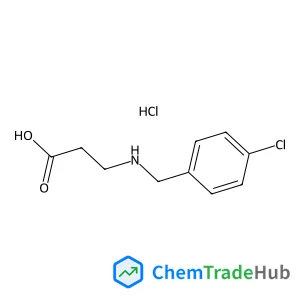
N-(4-Chlorobenzyl)-beta-alanine hydrochloride (1:1)
CAS Number:
1172479-10-5
Molecular Formula:
C10H13Cl2NO2
![4-Chloro-2-{[(2-chlorophenoxy)acetyl]amino}benzoic acid structure](https://static.chemtradehub.com/structs/351/351424-20-9-9467.webp "4-Chloro-2-{[(2-chlorophenoxy)acetyl]amino}benzoic acid structure")
4-Chloro-2-{[(2-chlorophenoxy)acetyl]amino}benzoic acid
CAS Number:
351424-20-9
Molecular Formula:
C15H11Cl2NO4

1-(3,4-Dichlorophenyl)-1H-pyrazole-3-carboxylic acid
CAS Number:
1152949-12-6
Molecular Formula:
C10H6Cl2N2O2
Recommended Suppliers






Disclaimer
This page provides academic journal information for reference and research purposes only. We are not affiliated with any journal publishers and do not handle publication submissions. For publication-related inquiries, please contact the respective journal publishers directly.
If you notice any inaccuracies in the information displayed, please contact us at support@chemtradehub.com. We will promptly review and address your concerns.