


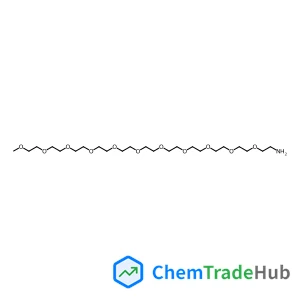
2,5,8,11,14,17,20,23,26,29,32-Undecaoxatetratriacontan-34-amine
CAS Number:
854601-60-8
Molecular Formula:
C23H49NO11
Li Chen, Hongmei Liu, Zhishan Mi, Changmin Shi, Lijie Qiao
We investigate the effect of Cr-doping on the properties of α-Fe2O3(001) thin films with Fe termination using the local density approximation plus a Hubbard U correction. We find that both the doping site and concentration of Cr atoms dramatically affect the electronic structure and work function (WF) of α-Fe2O3 films. The results demonstrate that it is most energetically favorable for Cr atoms to substitute the Fe atoms in the sub-surface of α-Fe2O3 thin films. The doping of Cr atoms in the sub-surface not only lowers the band gap of the film but also greatly enhances the work function by 0.9 eV with respect to the pure α-Fe2O3 film. The increase of WF correlates with the reduction of occupied O px/py states at the top valence band which leads to a decrease of the Fermi energy. As the Cr concentration changes from 4.2% to 16.7%, the WF firstly increases, and then drops. The WF reaches a maximum of 6.61 eV for the Cr concentration of 8.3%. These results suggest that doping Cr atoms in a α-Fe2O3(001) thin film can increase the corrosion potential and benefits the protection of steel from corrosion.

Current Opinion in Solid State & Materials Science

Saudi Pharmaceutical Journal

Russian Journal of Organic Chemistry

Russian Chemical Bulletin

Journal of Natural Medicines

Organic Process Research & Development

Russian Journal of General Chemistry

Russian Journal of Applied Chemistry

New Journal of Chemistry

Acta Materialia
Daniel Martín-Yerga, Alejandro Pérez-Junquera, David Hernández-Santos, Pablo Fanjul-Bolado
DOI: 10.1039/C7CP04568A
I. Yavuz
DOI: 10.1039/C7CP05297A
Xingce Fan, Zhengwei Luo, Xiangyu Hou, Xiaozhi Yang, Teng Qiu, Paul K. Chu
DOI: 10.1039/C7CP04196A
José I. Martínez, Fernando Flores, José Ortega, Sylvie Rangan, Charles M. Ruggieri, Robert A. Bartynski
DOI: 10.1039/C7CP03853D
M. Baglioni, C. Montis, F. Brandi, T. Guaragnone, I. Meazzini, P. Baglioni, D. Berti
DOI: 10.1039/C7CP02608K
Sajan Singh, Pratick Samanta, Rajiv Srivastava, Andriy Horechyy, Uta Reuter, Hsin-Lung Chen, Bhanu Nandan
DOI: 10.1039/C7CP04343K
Guofeng Yang, Rui Sun, Pengfei Yan, Yanan Lu, Junjun Xue, Guoqing Chen
DOI: 10.1039/C7CP05386J
3-Fluoro-2-methylbenzylamine is an organic compound with the CAS number 771573-3...
Tert-butyl 2-(oxetan-3-ylidene)acetate is considered safe for its intended uses ...
Proper personal protective equipment (PPE) such as gloves, goggles, and a lab co...
2-Ethyl-4-methyl-1,3-thiazole is commonly synthesized via the reaction of thiour...
This compound should be stored in a cool, dry place away from direct sunlight an...
L-Lysine Acetate Salt (CAS: 52315-92-1) is subject to various regulatory guideli...
6-Fluoro-3-hydroxy-2-pyrazinecarboxamide (CAS: 259793-96-9) is generally conside...
1,1'-Sulfonylbis(1H-imidazole) is a crystalline solid with a molecular weight of...
4-Methyl-7-nitro-1H-indole-3-carbonitrile (CAS: 289483-82-5) is primarily used i...
Waste containing 5-Bromo-3-indolyl-beta-galactoside (CAS: 97753-82-7) should be ...

Physical Chemistry Chemical Physics (PCCP) is an international journal co-owned by 19 physical chemistry and physics societies from around the world. This journal publishes original, cutting-edge research in physical chemistry, chemical physics and biophysical chemistry. To be suitable for publication in PCCP, articles must include significant innovation and/or insight into physical chemistry; this is the most important criterion that reviewers and Editors will judge against when evaluating submissions. The journal has a broad scope and welcomes contributions spanning experiment, theory, computation and data science. Topical coverage includes spectroscopy, dynamics, kinetics, statistical mechanics, thermodynamics, electrochemistry, catalysis, surface science, quantum mechanics, quantum computing and machine learning. Interdisciplinary research areas such as polymers and soft matter, materials, nanoscience, energy, surfaces/interfaces, and biophysical chemistry are welcomed if they demonstrate significant innovation and/or insight into physical chemistry. Joined experimental/theoretical studies are particularly appreciated when complementary and based on up-to-date approaches.
![(1R,3S,5R)-2-{[(2-Methyl-2-propanyl)oxy]carbonyl}-2-azabicyclo[3.1.0]hexane-3-carboxylic acid structure](https://static.chemtradehub.com/structs/197/197142-34-0-6a44.webp "(1R,3S,5R)-2-{[(2-Methyl-2-propanyl)oxy]carbonyl}-2-azabicyclo[3.1.0]hexane-3-carboxylic acid structure")
![1,1'-[(E)-1,2-Ethenediyl]bis(4-bromobenzene) structure](https://static.chemtradehub.com/structs/188/18869-30-2-c907.webp "1,1'-[(E)-1,2-Ethenediyl]bis(4-bromobenzene) structure")




