












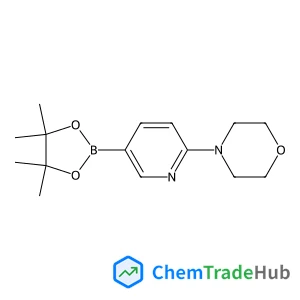
4-(5-(4,4,5,5-tetramethyl-1,3,2-dioxaborolan-2-yl)pyridin-2-yl)morpholine
CAS Number:
485799-04-0
Molecular Formula:
C15H23BN2O3
Xiaodong Wu, Yangyang Han, Xinxing Zhang, Canhui Lu
Conductive polymer composites (CPCs) have been intensively exploited as remarkable liquid sensing materials based on variations in their conductivity under liquid stimuli. However, most advances in liquid sensing CPCs are limited to bulk materials. Due to the slow permeation of liquids into the compact CPCs, sluggish responses are inevitable for most existing CPC-based liquid sensing materials. Here, we developed a new class of liquid sensing materials via a hierarchical structure design. Specifically, a thin CPC layer with a segregated conductive network was coated on porous polyurethane (PU) skeletons by layer-by-layer assembly, forming an elaborately designed hierarchical structure in the prepared CPC@PU composites. With this hierarchical structure, the CPC@PU composites exhibited ultrafast responses (0.05–0.15 s) to solvent stimuli, which are ∼3 orders of magnitude faster than the state-of-the-art composites. After liquid sensing, quick regeneration (within 10 s) could be achieved under hot-air. Accordingly, organic liquid and gas sensors and liquid-sensing electronic skins were fabricated. Furthermore, we prepared smart and fast leak-plugging materials using the CPC@PU composites based on the swelling-induced blocking of micropores in the materials. This structural strategy proposed here opens up exciting avenues towards manufacturing real-time liquid sensing and plugging materials, revealing potential applications in oilfield exploitation, solvent storage/transportation, environmental monitoring, etc.
Xintao Gu, Yin Wei
DOI: 10.1039/D1QO01373D
Dongfeng Yang, Chengyi Wang, Yu Wang, Guohua Liu, Tanyu Cheng, Rui Liu
DOI: 10.1039/D1QO01482J
Xinxin Han, Xin Liu, Yueyun Bao, Hunahuan Song, Yu-Rou Zhao, Xiaoying Wang, Junjie Zhang, Le Liu, Xin-Hua Duan, Jinbo Hu, Mingyou Hu
DOI: 10.1039/D1QO01654G
Hai Yu, Abhishek Santra, Yanhong Li, John B. McArthur, Tamashree Ghosh, Xiaoxiao Yang, Peng G. Wang, Xi Chen
DOI: 10.1039/C8OB01087K
Chang You, Tingting Yuan, Yanzhen Huang, Chao Pi, Yangjie Wu, Xiuling Cui
DOI: 10.1039/C8OB01108G
Kiran Bajaj, Devesh S. Agarwal, Rajeev Sakhuja, Girinath G. Pillai
DOI: 10.1039/C8OB00676H
Anton S. Makarov, Alexander A. Fadeev, Maxim G. Uchuskin
DOI: 10.1039/D1QO01281A
T. M. M. Maiden, N. Mbelesi, P. A. Procopiou, S. Swanson, J. P. A. Harrity
DOI: 10.1039/C8OB00935J
Alexander V. Aksenov, Dmitrii A. Aksenov, Nicolai A. Aksenov, Leonid G. Voskressensky
DOI: 10.1039/C8OB00588E
(1R,3S)-1,3-Cyclopentanediol finds applications in various industries. In the ph...
When handling N'-[4-(Dimethylamino)phenyl]-N,N-dimethyl-1,4-benzenediamine, it i...
There are several alternatives to 5-(2,4-Difluorophenyl)-2-methoxypyrimidine in ...
1-(3-Methoxyphenoxy)propan-2-ol (CAS: 382141-68-6) must comply with the Globally...
Tetrodotoxin Citrate is extremely dangerous and should be handled with extreme c...
2-Methyl-2-propanyl [(1R,3S)-3-hydroxycyclopentyl]carbamate (CAS: 225641-84-9) i...
Waste containing 4-(2-Hydroxyhexafluoroisopropyl)Benzoic Acid (CAS: 16261-80-6) ...
2-Methyl-2-proanyl {(2S)-1-[(benzyloxy)amino]-3-hydroxy-3-methyl-1-oxo-2-butanyl...
Benzeneethanamine, α-ethyl-, hydrochloride (1:1) is an organic compound with the...
In the synthesis of compounds similar to 3-{(E)-[4-(Dimethylamino)phenyl]diazeny...

Physical Chemistry Chemical Physics (PCCP) is an international journal co-owned by 19 physical chemistry and physics societies from around the world. This journal publishes original, cutting-edge research in physical chemistry, chemical physics and biophysical chemistry. To be suitable for publication in PCCP, articles must include significant innovation and/or insight into physical chemistry; this is the most important criterion that reviewers and Editors will judge against when evaluating submissions. The journal has a broad scope and welcomes contributions spanning experiment, theory, computation and data science. Topical coverage includes spectroscopy, dynamics, kinetics, statistical mechanics, thermodynamics, electrochemistry, catalysis, surface science, quantum mechanics, quantum computing and machine learning. Interdisciplinary research areas such as polymers and soft matter, materials, nanoscience, energy, surfaces/interfaces, and biophysical chemistry are welcomed if they demonstrate significant innovation and/or insight into physical chemistry. Joined experimental/theoretical studies are particularly appreciated when complementary and based on up-to-date approaches.
![N,N'-1,2-Ethanediylbis[2-(vinylsulfonyl)acetamide] structure](https://static.chemtradehub.com/structs/667/66710-66-5-b556.webp "N,N'-1,2-Ethanediylbis[2-(vinylsulfonyl)acetamide] structure")



