













A modeling study of methane hydrate decomposition in contact with the external surface of zeolites
Literature Information
Publication Date
2017-07-21
DOI
10.1039/C7CP01985H
Impact Factor
3.676
Authors
View Original
Abstract
The behavior of methane hydrate (MH) enclosed between the (010) surfaces of the silicalite-1 zeolite was studied by means of molecular dynamics simulations at temperatures of 150 and 250 K. Calculations reveal that the interaction with the hydrophilic surface OH groups destabilizes the clathrate structure of hydrate. While MH mostly conserves the structure in the simulation at the low temperature, thermal motion at the high temperature breaks the fragilized cages of H-bonded water molecules, thus leading to the release of methane. The dissociation proceeds in a layer-by-layer manner starting from the outer parts of the MH slab until complete hydrate decomposition. The released CH4 molecules are absorbed by the microporous solid, whereas water is retained at the surfaces of hydrophobic silicalite and forms a meniscus in the interlayer space. Methane uptake reaches 70% of the silicalite sorption capacity. The energy necessary for the endothermic MH dissociation is supplied by the exothermic methane absorption by the zeolite.
Related Literature
Non-viral siRNA delivery vectors: dendritic molecular transporter and molecular transporter nanovectors for target gene silencing‡
Sharon K. Hamilton, Artez L. Sims, Jenna Donavan, Eva Harth
2010-11-18
Paper
DOI: 10.1039/C0PY00342E
Self-healing and self-mendable polymers
Jay A. Syrett, C. Remzi Becer, David M. Haddleton
2010-05-13
Review Article
DOI: 10.1039/C0PY00104J
Connection of polymer chains using diepoxide in CO2/propylene oxide copolymerizations
Anish Cyriac, Sang Hwan Lee, Bun Yeoul Lee
2011-01-21
Paper
DOI: 10.1039/C0PY00365D
New thioxanthone and xanthone photoinitiators based on silyl radical chemistry
Jacques Lalevée, Nicolas Blanchard, Mohamad Ali Tehfe, Cédric Fries, Fabrice Morlet-Savary, Didier Gigmes, Jean Pierre Fouassier
2011-02-28
Paper
DOI: 10.1039/C0PY00392A
Optimised ‘click’ synthesis of glycopolymers with mono/di- and trisaccharides
Nicola Vinson, Yanzi Gou, C. Remzi Becer, David M. Haddleton, Matthew I. Gibson
2010-10-04
Paper
DOI: 10.1039/C0PY00260G
Synthesis of ellipsoidal hematite/polymer/titania hybrid materials and the corresponding hollow ellipsoidal particles
Longyu Li, Dianbin Qin, Xinlin Yang, Guangyu Liu
2009-12-16
Paper
DOI: 10.1039/B9PY00230H
Synthesis of P(EGDMA-co-MAA)/P(EGDMA-co-VPy)/titania/polymer tetra-layer microspheres
Longyu Li, Guangyu Liu, Dianbin Qin, Xinlin Yang
2010-02-18
Paper
DOI: 10.1039/B9PY00302A
Synthetic polymers for biopharmaceutical delivery
Johannes Pall Magnusson, Aram Omer Saeed, Francisco Fernández-Trillo, Cameron Alexander
2010-10-04
Review Article
DOI: 10.1039/C0PY00210K
Characterization of network structure in radiation-cured resins of polyfunctional acrylic ester and N-vinylpyrrolidone by MALDI-MS combined with supercritical methanolysis
Hideki Matsubara, Hiroyasu Kataoka, Hajime Ohtani
2010-05-19
Paper
DOI: 10.1039/C0PY00026D
Conjugated polyelectrolyte as signal amplifier for fluorogenic probe based enzyme activity study
Ruoyu Zhan, Angela Jun Hiong Tan, Bin Liu
2010-11-02
Paper
DOI: 10.1039/C0PY00265H
You might also like
Compound Q&A
Is 6-(3-Fluorophenyl)picolinic acid (CAS: 887982-40-3) safe?
6-(3-Fluorophenyl)picolinic acid is generally considered safe for laboratory use...
887982-40-36-(3-Fluorophenyl)pi...
Compound Q&A
What industries use (3R)-3-Pyrrolidinol (CAS: 2799-21-5)?
(3R)-3-Pyrrolidinol is used in the pharmaceutical industry as a precursor for dr...
2799-21-5(3R)-3-Pyrrolidinol
Compound Q&A
What precautions should be taken when handling (4R,5R)-4,5-Diethoxycarbonyl-2,2-dimethyldioxolane (CAS: 59779-75-8)?
When handling (4R,5R)-4,5-Diethoxycarbonyl-2,2-dimethyldioxolane (CAS: 59779-75-...
59779-75-8(4R,5R)-4,5-Diethoxy...
Compound Q&A
How is 1-(6-Chloroimidazo[1,2-b]pyridazin-3-yl)ethanone (CAS: 90734-71-7) typically synthesized?
1-(6-Chloroimidazo[1,2-b]pyridazin-3-yl)ethanone is often synthesized via a mult...
90734-71-71-(6-Chloroimidazo[1...
Compound Q&A
What is the market or research trend for N-Ethyl-3,4-dimethylbenzylamine (CAS: 39180-83-1)?
The market for N-Ethyl-3,4-dimethylbenzylamine (CAS: 39180-83-1) remains steady,...
39180-83-1N-Ethyl-3,4-dimethyl...
Compound Q&A
What is Tert-butyl 3-(pyrrolidin-1-yl)azetidine-1-carboxylate (CAS: 1019008-21-9)?
Tert-butyl 3-(pyrrolidin-1-yl)azetidine-1-carboxylate is a chemical compound wit...
1019008-21-9Tert-butyl 3-(pyrrol...
Compound Q&A
What regulatory guidelines apply to 1-Bromo-3-chloro-2,4-dimethoxybenzene (CAS: 1228956-93-1)?
1-Bromo-3-chloro-2,4-dimethoxybenzene (CAS: 1228956-93-1) falls under the classi...
1228956-93-11-Bromo-3-chloro-2,4...
Compound Q&A
Is 8-Bromo-2-methyl-3,4-dihydroisoquinolin-1(2H)-one (CAS: 1368622-07-4) safe?
The safety of 8-Bromo-2-methyl-3,4-dihydroisoquinolin-1(2H)-one (CAS: 1368622-07...
1368622-07-48-Bromo-2-methyl-3,4...
Compound Q&A
Is Benzyl [(3S)-2,6-dioxo-3-piperidinyl]carbamate (CAS: 22785-43-9) safe?
Benzyl [(3S)-2,6-dioxo-3-piperidinyl]carbamate is generally safe when handled wi...
22785-43-9Benzyl [(3S)-2,6-dio...
Compound Q&A
How should 1-{[4-(4,4,5,5-Tetramethyl-1,3,2-dioxaborolan-2-yl)phenyl]sulfonyl}pyrrolidine (CAS: 928657-21-0) be stored?
1-{[4-(4,4,5,5-Tetramethyl-1,3,2-dioxaborolan-2-yl)phenyl]sulfonyl}pyrrolidine s...
928657-21-01-{[4-(4,4,5,5-Tetra...
Source Journal
Physical Chemistry Chemical Physics

CiteScore:
5.5
Self-citation Rate:
10.3%
Articles per Year:
3036
Physical Chemistry Chemical Physics (PCCP) is an international journal co-owned by 19 physical chemistry and physics societies from around the world. This journal publishes original, cutting-edge research in physical chemistry, chemical physics and biophysical chemistry. To be suitable for publication in PCCP, articles must include significant innovation and/or insight into physical chemistry; this is the most important criterion that reviewers and Editors will judge against when evaluating submissions. The journal has a broad scope and welcomes contributions spanning experiment, theory, computation and data science. Topical coverage includes spectroscopy, dynamics, kinetics, statistical mechanics, thermodynamics, electrochemistry, catalysis, surface science, quantum mechanics, quantum computing and machine learning. Interdisciplinary research areas such as polymers and soft matter, materials, nanoscience, energy, surfaces/interfaces, and biophysical chemistry are welcomed if they demonstrate significant innovation and/or insight into physical chemistry. Joined experimental/theoretical studies are particularly appreciated when complementary and based on up-to-date approaches.
Recommended Compounds
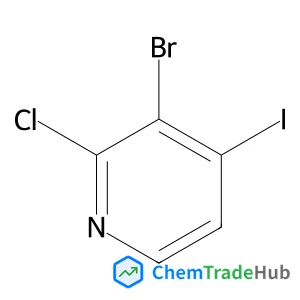
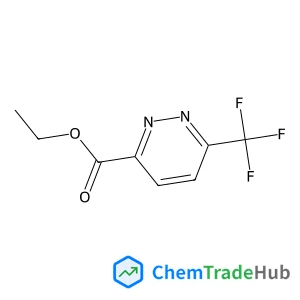
Ethyl 6-(trifluoromethyl)pyridazine-3-carboxylate
CAS Number:
1192155-06-8
Molecular Formula:
C8H7F3N2O2
![2-[({[(2-Methyl-2-propanyl)oxy]carbonyl}amino)methyl]isonicotinic acid structure](https://static.chemtradehub.com/structs/473/473924-63-9-973b.webp "2-[({[(2-Methyl-2-propanyl)oxy]carbonyl}amino)methyl]isonicotinic acid structure")
2-[({[(2-Methyl-2-propanyl)oxy]carbonyl}amino)methyl]isonicotinic acid
CAS Number:
473924-63-9
Molecular Formula:
C12H16N2O4
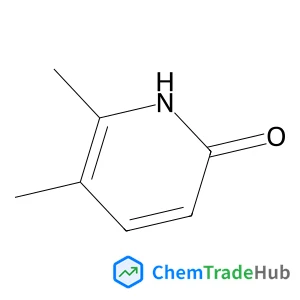
Recommended Suppliers






Disclaimer
This page provides academic journal information for reference and research purposes only. We are not affiliated with any journal publishers and do not handle publication submissions. For publication-related inquiries, please contact the respective journal publishers directly.
If you notice any inaccuracies in the information displayed, please contact us at support@chemtradehub.com. We will promptly review and address your concerns.