












Observation of perpendicular exchange bias in an Ir-doped Fe2O3/Co ultrathin film system
Literature Information
Publication Date
2017-02-24
DOI
10.1039/C7CP00445A
Impact Factor
3.676
Authors
S. Ye, S. P. Pati, Y. Shiokawa, M. Al-Mahdawi, T. Nozaki
View Original
Abstract
In this work, we investigated the temperature dependence of interface exchange coupling in an Ir-doped Fe2O3/Co system with variations in the Ir–Fe2O3 thickness. Low-temperature perpendicular exchange bias was observed in the samples with an Ir–Fe2O3 thickness of 5 nm or less, when it cooled from 360 K in an external magnetic field of 1 T perpendicular to the sample surface. For 5 nm-thick Ir–Fe2O3, a maximum exchange bias value of 1200 Oe was obtained at 200 K. This is the first report on perpendicular exchange bias of an Fe2O3 thin film coupled with a ferromagnet. Enhancements to the Morin temperature and the magnetic anisotropy of Fe2O3 caused by lattice strain, Ir doping, and the finite-size scaling effect, as well as the high quality (good crystal orientation, small roughness, etc.) of the Fe2O3 film fabricated by our process, are considered to be mostly responsible for the perpendicular exchange bias obtained.
Related Literature
Effects and distribution of Zr introduced in Ni-based cathode material for Li-ion batteries
2019-05-23
Paper
DOI: 10.1039/C9CP01850F
Using optical resonances to control heat generation and propagation in silicon nanostructures
2019-05-03
Paper
DOI: 10.1039/C8CP07573E
Tuning the magnetism of two-dimensional hematene by ferroelectric polarization
Guangbiao Zhang, Wei Sun, Jingyu Li, Yuanxu Wang
2019-05-22
Paper
DOI: 10.1039/C9CP01981B
Understanding the loss mechanisms in high-performance solution-processed small molecule bulk heterojunction solar cells doped with a PFN impurity
Ali Aghassi, Cormac D. Fay
2019-05-24
Paper
DOI: 10.1039/C9CP01732A
Tetrel bonding interaction: an analysis with the block-localized wavefunction (BLW) approach
Changwei Wang, Yama Aman, Xiaoxi Ji, Yirong Mo
2019-05-09
Paper
DOI: 10.1039/C9CP01710K
Electronic structure and high-temperature thermochemistry of BaZrO3−δ perovskite from first-principles calculations
Krishna K. Ghose, Alicia Bayon, Alister J. Page
2019-05-22
Paper
DOI: 10.1039/C9CP02505G
Explaining the optical spectrum of CrF2 and CuF2 model materials: role of the tetragonal to monoclinic instability
J. A. Aramburu, M. Moreno
2019-05-13
Paper
DOI: 10.1039/C9CP01822K
Hydrogenation-controlled mechanical properties in graphene helicoids: exceptional distribution-dependent behavior
Ali Sharifian, Hamid Hassanzadeh Afrouzi, Mostafa Baghani
2019-05-07
Paper
DOI: 10.1039/C9CP01361J
Block copolymers as bile salt sequestrants: intriguing structures formed in a mixture of an oppositely charged amphiphilic block copolymer and bile salt
Karin Schillén, Luciano Galantini, Guanqun Du, Alessandra Del Giudice, Viveka Alfredsson, Anna M. Carnerup, Nicolae V. Pavel, Giancarlo Masci, Bo Nyström
2019-05-20
Paper
DOI: 10.1039/C9CP01744E
New equations of state for the hard polyhedron fluids
Hua Jiang, A. Mulero
2019-05-23
Paper
DOI: 10.1039/C9CP02033K
You might also like
Compound Q&A
What are the main uses of 1H-Indazole-6-carbonitrile (CAS: 141290-59-7)?
1H-Indazole-6-carbonitrile finds applications in pharmaceuticals, where it serve...
141290-59-71H-Indazole-6-carbon...
Compound Q&A
How should waste containing Dioctyl (2E)-2-butenedioate (CAS: 2997-85-5) be handled?
Waste containing Dioctyl (2E)-2-butenedioate (CAS: 2997-85-5) should be collecte...
2997-85-5Dioctyl (2E)-2-buten...
Compound Q&A
What industries use Sodium [(1,2-benzoxazol-3-ylmethyl)sulfonyl]azanide (CAS: 68291-98-5)?
Sodium [(1,2-benzoxazol-3-ylmethyl)sulfonyl]azanide is primarily used in pharmac...
68291-98-5Sodium [(1,2-benzoxa...
Compound Q&A
Are there alternatives to Dimethyl 4-(4,4,5,5-tetramethyl-1,3,2-dioxaborolan-2-yl)-2,6-pyridinedicarboxylate (CAS: 741709-66-0) in synthesis?
Dimethyl 4-(4,4,5,5-tetramethyl-1,3,2-dioxaborolan-2-yl)-2,6-pyridinedicarboxyla...
741709-66-0Dimethyl 4-(4,4,5,5-...
Compound Q&A
How should waste containing 2-Fluoro-6-hydrazinopyridine (CAS: 80714-39-2) be handled?
Waste containing 2-Fluoro-6-hydrazinopyridine (CAS: 80714-39-2) should be manage...
80714-39-22-Fluoro-6-hydrazino...
Compound Q&A
What is 6-Formyl-2-pyridinecarboxylic acid (CAS: 499214-11-8)?
6-Formyl-2-pyridinecarboxylic acid is an organic compound with the molecular for...
499214-11-86-Formyl-2-pyridinec...
Compound Q&A
What is the market or research trend for 3-(3,4-dimethoxyphenyl)-2,5-dimethyl-N-(2-morpholin-4-ylethyl)pyrazolo[1,5-a]pyrimidin-7-amine (CAS: 900874-91-1)?
Research trends for this compound indicate a focus on its potential applications...
900874-91-13-(3,4-dimethoxyphen...
Compound Q&A
How is 9H-Tribenzo[b,d,f]azepine (CAS: 29875-73-8) typically synthesized?
9H-Tribenzo[b,d,f]azepine is typically synthesized via a multi-step process invo...
29875-73-89H-Tribenzo[b,d,f]az...
Compound Q&A
How is 1-Cyclopropyl-7-ethoxy-6-fluoro-8-methoxy-4-oxo-1,4-dihydro-3-quinolinecarboxylic acid (CAS: 1797982-51-4) typically synthesized?
1-Cyclopropyl-7-ethoxy-6-fluoro-8-methoxy-4-oxo-1,4-dihydro-3-quinolinecarboxyli...
1797982-51-41-Cyclopropyl-7-etho...
Compound Q&A
How should waste containing Methyl 3-oxo-1,2,3,4-tetrahydro-6-quinoxalinecarboxylate (CAS: 671820-52-3) be handled?
Waste containing Methyl 3-oxo-1,2,3,4-tetrahydro-6-quinoxalinecarboxylate (CAS: ...
671820-52-3Methyl 3-oxo-1,2,3,4...
Source Journal
Physical Chemistry Chemical Physics

CiteScore:
5.5
Self-citation Rate:
10.3%
Articles per Year:
3036
Physical Chemistry Chemical Physics (PCCP) is an international journal co-owned by 19 physical chemistry and physics societies from around the world. This journal publishes original, cutting-edge research in physical chemistry, chemical physics and biophysical chemistry. To be suitable for publication in PCCP, articles must include significant innovation and/or insight into physical chemistry; this is the most important criterion that reviewers and Editors will judge against when evaluating submissions. The journal has a broad scope and welcomes contributions spanning experiment, theory, computation and data science. Topical coverage includes spectroscopy, dynamics, kinetics, statistical mechanics, thermodynamics, electrochemistry, catalysis, surface science, quantum mechanics, quantum computing and machine learning. Interdisciplinary research areas such as polymers and soft matter, materials, nanoscience, energy, surfaces/interfaces, and biophysical chemistry are welcomed if they demonstrate significant innovation and/or insight into physical chemistry. Joined experimental/theoretical studies are particularly appreciated when complementary and based on up-to-date approaches.
Recommended Compounds
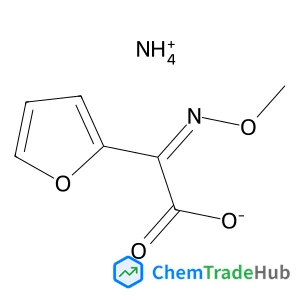
Ammonium (Z)-2-(furan-2-yl)-2-(methoxyimino)acetate
CAS Number:
97148-39-5
Molecular Formula:
C7H10N2O4


Recommended Suppliers






Disclaimer
This page provides academic journal information for reference and research purposes only. We are not affiliated with any journal publishers and do not handle publication submissions. For publication-related inquiries, please contact the respective journal publishers directly.
If you notice any inaccuracies in the information displayed, please contact us at support@chemtradehub.com. We will promptly review and address your concerns.