












Understanding the loss mechanisms in high-performance solution-processed small molecule bulk heterojunction solar cells doped with a PFN impurity
Literature Information
Publication Date
2019-05-24
DOI
10.1039/C9CP01732A
Impact Factor
3.676
Authors
Ali Aghassi, Cormac D. Fay
View Original
Abstract
Contamination of the active layer with an impurity could result in significant degradation in the performance of bulk heterojunction (BHJ) solar cells as a result of enhancing the loss of the charge carriers via a trap-assisted recombination. In this study, PFN as an impurity was intentionally introduced to a BHJ solar cell composed of a high-performance solution-processed small molecule (p-DTS(FBTTh2)2 as a donor and PC60BM as an acceptor. The power conversion efficiency (PCE) of PFN doped devices degrades owing to the reduction of short-circuit current (Jsc) and fill factor (FF). At a low concentration, PFN mostly reduces the generation of charge carriers, whereas doubling the PFN concentration conversely affects both generation and collection of charge carriers. Charge carrier dynamics of devices has also been probed using photovoltage decay, time-resolved charge extraction (TRCE) and photoinduced charge extraction by linearly increasing voltage (photo-CELIV) before and after incorporation of PFN. The results reveal that traps introduced by PFN reduce the decay of charge carriers via bimolecular recombination, leading to a higher charge carrier density and photovoltage at long times under an open-circuit potential (Voc). However, under short-circuit (Jsc) conditions, traps considerably impede the collection of charge carriers causing the appearance of an S-shaped current density–voltage curve.
Recommended Journals
Related Literature
Syntheses, characterization, multi-acid fluorescence sensing and electroluminescence properties of Cr(ii)-based metallopolymers
Anil Kumar, Shubham Bawa, Kapil Ganorkar, Sujit Kumar Ghosh, Anasuya Bandyopadhyay
2020-09-09
Paper
DOI: 10.1039/D0PY00953A
Thermo- and oxidation-sensitive poly(meth)acrylates based on alkyl sulfoxides: dual-responsive homopolymers from one functional group
Doğuş Işık, Elisa Quaas, Daniel Klinger
2020-11-17
Paper
DOI: 10.1039/D0PY01321H
Self-polymerization of Meldrum's acid-amine compounds: an effective route to polyamides
Chien-Ho Huang, Ying-Ling Liu
2020-11-23
Paper
DOI: 10.1039/D0PY01341B
Body temperature polymerization and in situ drug encapsulation in supercritical carbon dioxide
Zi-Kun Rao, Tian-Qiang Wang, Yang Li, Hong-Yu Zhu, Yu Liu, Jian-Yuan Hao
2020-10-07
Paper
DOI: 10.1039/D0PY01131B
A cardanol-based polybenzoxazine vitrimer: recycling, reshaping and reversible adhesion
Laura Puchot, Pierre Verge
2020-10-14
Paper
DOI: 10.1039/D0PY01239D
Solubility-governed architectural design of polyhydroxyurethane-graft-poly(ε-caprolactone) copolymers
Charalampos Pronoitis, Minna Hakkarainen, Karin Odelius
2020-11-09
Paper
DOI: 10.1039/D0PY01089H
Insight into the synthesis of N-methylated polypeptides
Christian Muhl, Lydia Zengerling, Jonathan Groß, Paul Eckhardt, Till Opatz, Pol Besenius
2020-10-06
Paper
DOI: 10.1039/D0PY01055C
Synthesis of CO2-responsive gradient copolymers by switchable RAFT polymerization and their controlled self-assembly
Xiaofeng Guo, Tianren Zhang, Yuetong Wu, Wencheng Shi, Bonnie Choi, Anchao Feng, San H. Thang
2020-10-02
Paper
DOI: 10.1039/D0PY01109F
You might also like
Compound Q&A
What are the main uses of 1H-Indazole-6-carbonitrile (CAS: 141290-59-7)?
1H-Indazole-6-carbonitrile finds applications in pharmaceuticals, where it serve...
141290-59-71H-Indazole-6-carbon...
Compound Q&A
How should waste containing Dioctyl (2E)-2-butenedioate (CAS: 2997-85-5) be handled?
Waste containing Dioctyl (2E)-2-butenedioate (CAS: 2997-85-5) should be collecte...
2997-85-5Dioctyl (2E)-2-buten...
Compound Q&A
What industries use Sodium [(1,2-benzoxazol-3-ylmethyl)sulfonyl]azanide (CAS: 68291-98-5)?
Sodium [(1,2-benzoxazol-3-ylmethyl)sulfonyl]azanide is primarily used in pharmac...
68291-98-5Sodium [(1,2-benzoxa...
Compound Q&A
Are there alternatives to Dimethyl 4-(4,4,5,5-tetramethyl-1,3,2-dioxaborolan-2-yl)-2,6-pyridinedicarboxylate (CAS: 741709-66-0) in synthesis?
Dimethyl 4-(4,4,5,5-tetramethyl-1,3,2-dioxaborolan-2-yl)-2,6-pyridinedicarboxyla...
741709-66-0Dimethyl 4-(4,4,5,5-...
Compound Q&A
How should waste containing 2-Fluoro-6-hydrazinopyridine (CAS: 80714-39-2) be handled?
Waste containing 2-Fluoro-6-hydrazinopyridine (CAS: 80714-39-2) should be manage...
80714-39-22-Fluoro-6-hydrazino...
Compound Q&A
What is 6-Formyl-2-pyridinecarboxylic acid (CAS: 499214-11-8)?
6-Formyl-2-pyridinecarboxylic acid is an organic compound with the molecular for...
499214-11-86-Formyl-2-pyridinec...
Compound Q&A
What is the market or research trend for 3-(3,4-dimethoxyphenyl)-2,5-dimethyl-N-(2-morpholin-4-ylethyl)pyrazolo[1,5-a]pyrimidin-7-amine (CAS: 900874-91-1)?
Research trends for this compound indicate a focus on its potential applications...
900874-91-13-(3,4-dimethoxyphen...
Compound Q&A
How is 9H-Tribenzo[b,d,f]azepine (CAS: 29875-73-8) typically synthesized?
9H-Tribenzo[b,d,f]azepine is typically synthesized via a multi-step process invo...
29875-73-89H-Tribenzo[b,d,f]az...
Compound Q&A
How is 1-Cyclopropyl-7-ethoxy-6-fluoro-8-methoxy-4-oxo-1,4-dihydro-3-quinolinecarboxylic acid (CAS: 1797982-51-4) typically synthesized?
1-Cyclopropyl-7-ethoxy-6-fluoro-8-methoxy-4-oxo-1,4-dihydro-3-quinolinecarboxyli...
1797982-51-41-Cyclopropyl-7-etho...
Compound Q&A
How should waste containing Methyl 3-oxo-1,2,3,4-tetrahydro-6-quinoxalinecarboxylate (CAS: 671820-52-3) be handled?
Waste containing Methyl 3-oxo-1,2,3,4-tetrahydro-6-quinoxalinecarboxylate (CAS: ...
671820-52-3Methyl 3-oxo-1,2,3,4...
Source Journal
Physical Chemistry Chemical Physics

CiteScore:
5.5
Self-citation Rate:
10.3%
Articles per Year:
3036
Physical Chemistry Chemical Physics (PCCP) is an international journal co-owned by 19 physical chemistry and physics societies from around the world. This journal publishes original, cutting-edge research in physical chemistry, chemical physics and biophysical chemistry. To be suitable for publication in PCCP, articles must include significant innovation and/or insight into physical chemistry; this is the most important criterion that reviewers and Editors will judge against when evaluating submissions. The journal has a broad scope and welcomes contributions spanning experiment, theory, computation and data science. Topical coverage includes spectroscopy, dynamics, kinetics, statistical mechanics, thermodynamics, electrochemistry, catalysis, surface science, quantum mechanics, quantum computing and machine learning. Interdisciplinary research areas such as polymers and soft matter, materials, nanoscience, energy, surfaces/interfaces, and biophysical chemistry are welcomed if they demonstrate significant innovation and/or insight into physical chemistry. Joined experimental/theoretical studies are particularly appreciated when complementary and based on up-to-date approaches.
Recommended Compounds

![Sodium (2Z)-7-{[(2R)-2-amino-2-carboxyethyl]sulfanyl}-2-({[(1S)-2,2-dimethylcyclopropyl]carbonyl}amino)-2-heptenoate structure](https://static.chemtradehub.com/structs/811/81129-83-1-441c.webp "Sodium (2Z)-7-{[(2R)-2-amino-2-carboxyethyl]sulfanyl}-2-({[(1S)-2,2-dimethylcyclopropyl]carbonyl}amino)-2-heptenoate structure")
Sodium (2Z)-7-{[(2R)-2-amino-2-carboxyethyl]sulfanyl}-2-({[(1S)-2,2-dimethylcyclopropyl]carbonyl}amino)-2-heptenoate
CAS Number:
81129-83-1
Molecular Formula:
C16H25N2NaO5S
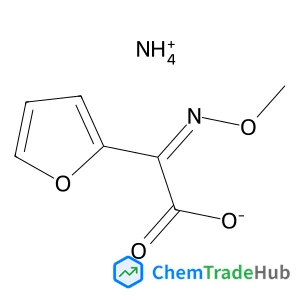
Ammonium (Z)-2-(furan-2-yl)-2-(methoxyimino)acetate
CAS Number:
97148-39-5
Molecular Formula:
C7H10N2O4
Recommended Suppliers






Disclaimer
This page provides academic journal information for reference and research purposes only. We are not affiliated with any journal publishers and do not handle publication submissions. For publication-related inquiries, please contact the respective journal publishers directly.
If you notice any inaccuracies in the information displayed, please contact us at support@chemtradehub.com. We will promptly review and address your concerns.