












Sensitive and simultaneous surface plasmon resonance detection of free and p53-bound MDM2 proteins from human sarcomas
Literature Information
Publication Date
2018-03-20
DOI
10.1039/C7AN01918A
Impact Factor
4.616
Authors
Ling Wu, Hailin Tang, Shengqiang Hu, Yonghong Xia, Zhixuan Lu, Yujuan Fan, Zixiao Wang, Xinyao Yi, Feimeng Zhou, Jianxiu Wang
View Original
Abstract
Murine double minute 2 (MDM2) is an oncoprotein mediating the degradation of the tumor suppressor p53 protein. The physiological levels of MDM2 protein are closely related to malignant transformation and tumor growth. In this work, the simultaneous and label-free determination of free and p53-bound MDM2 proteins from sarcoma tissue extracts was conducted using a dual-channel surface plasmon resonance (SPR) instrument. Free MDM2 protein was measured in one fluidic channel covered with the consensus double-stranded (ds)-DNA/p53 conjugate, while MDM2 bound to p53 was captured by the consensus ds-DNA immobilized onto the other channel. To achieve higher sensitivity and to confirm specificity, an MDM2-specific monoclonal antibody (2A10) was used to recognize both the free and p53-bound MDM2 proteins. The resultant method afforded a detection limit of 0.55 pM of MDM2. The amenability of the method to the analysis of free and p53-bound MDM2 proteins was demonstrated for normal and sarcoma tissue extracts from three patients. Our data reveal that both free and total MDM2 (free and bound forms combined) proteins from sarcoma tissue extracts are of much higher concentrations than those from normal tissue extracts and the p53-bound MDM2 protein only constitutes a small fraction of the total MDM2 concentration. In comparison with enzyme-linked immunosorbent assay (ELISA), the proposed method possesses higher sensitivity, is more cost-effective, and is capable of determining free and p53-bound MDM2 proteins in clinical samples.
Related Literature
Photophysical properties of N-methyl and N-acetyl substituted alloxazines: a theoretical investigation
Huimin Guo, Xiaolin Ma, Zhiwen Lei, Yang Qiu, Jianzhang Zhao, Bernhard Dick
2021-05-25
Paper
DOI: 10.1039/D1CP01201K
Molecular properties affecting the hydration of acid–base clusters
Deanna Myers, Sabrina Chee, James N. Smith
2021-05-25
Paper
DOI: 10.1039/D1CP01704G
Resistive switching on individual V2O5 nanoparticles encapsulated in fluorinated graphene films
Artem I. Ivanov, Victor Ya. Prinz, Irina V. Antonova, Anton K. Gutakovskii
2021-08-19
Paper
DOI: 10.1039/D1CP02930D
A theoretical study on the electronic, structural and optical properties of armchair, zigzag and chiral silicon–germanium nanotubes
Alejandro Herrera-Carbajal, Ventura Rodríguez-Lugo, Juan Hernández-Ávila, Ariadna Sánchez-Castillo
2021-05-09
Paper
DOI: 10.1039/D1CP00519G
Glass transition and dynamics of semiflexible polymer brushes
Jian-Hua Huang, Dan-Dan Sun, Rong-Xing Lu
2021-05-28
Paper
DOI: 10.1039/D1CP00089F
Thermo-osmotic pressure and resistance to mass transport in a vapor-gap membrane
Michael T. Rauter, Sondre K. Schnell, Bjørn Hafskjold, Signe Kjelstrup
2021-06-04
Paper
DOI: 10.1039/D0CP06556K
Review on physical impedance models in modern battery research
Rohit Ranganathan Gaddam, Leon Katzenmeier, Xaver Lamprecht, Aliaksandr S. Bandarenka
2021-05-04
Perspective
DOI: 10.1039/D1CP00673H
Bonding of C1 fragments on metal nanoclusters: a search for methane conversion catalysts with swarm intelligence
Mikiya Hori, Yuta Tsuji, Kazunari Yoshizawa
2021-06-01
Paper
DOI: 10.1039/D1CP00345C
Self-assembled, optically-active {naphthalene diimide}U{cucurbit[8]uril} ensembles in an aqueous environment
Heather F. Higginbotham, Subashani Maniam, Tina Hsia, Lyle Isaacs, Steven J. Langford, Toby D. M. Bell
2021-06-02
Communication
DOI: 10.1039/D1CP00659B
You might also like
Compound Q&A
What is the market or research trend for N-(4-Methoxybenzyl)-2-pyridinamine (CAS: 52818-63-0)?
N-(4-Methoxybenzyl)-2-pyridinamine (CAS: 52818-63-0) is increasingly being used ...
52818-63-0N-(4-Methoxybenzyl)-...
Compound Q&A
What precautions should be taken when handling Ethyl 4-(2-chlorophenyl)-1,3-thiazole-2-carboxylate (CAS: 1050507-06-6)?
When handling Ethyl 4-(2-chlorophenyl)-1,3-thiazole-2-carboxylate, appropriate p...
1050507-06-6Ethyl 4-(2-chlorophe...
Compound Q&A
What regulatory guidelines apply to diethyldiselane (CAS: 628-39-7)?
Diethyldiselane (CAS: 628-39-7) is classified under the Globally Harmonized Syst...
628-39-7Diethyldiselane
Compound Q&A
What is the market or research trend for oxocopper (CAS: 12053-18-8)?
The market for oxocopper (CAS: 12053-18-8) is primarily driven by its use in cat...
12053-18-8oxocopper; oxo-(oxoc...
Compound Q&A
What is the market or research trend for 5-{[(2-Methyl-2-propanyl)oxy]carbonyl}-5-azaspiro[2.4]heptane-7-carboxylic acid?
The market for 5-{[(2-Methyl-2-propanyl)oxy]carbonyl}-5-azaspiro[2.4]heptane-7-c...
1268519-54-55-{[(2-Methyl-2-prop...
Compound Q&A
What is 2-(1-Pyrrolidinyl)-4-pyridinamine (CAS: 35981-63-6)?
2-(1-Pyrrolidinyl)-4-pyridinamine is a chemical compound with the CAS number 359...
35981-63-62-(1-Pyrrolidinyl)-4...
Compound Q&A
What are the physical and chemical properties of 2-(3-Pyridinyl)-1-azabicyclo[2.2.2]octane (CAS: 91556-75-1)?
2-(3-Pyridinyl)-1-azabicyclo[2.2.2]octane (CAS: 91556-75-1) is a crystalline sol...
91556-75-12-(3-Pyridinyl)-1-az...
Compound Q&A
How is (S)-Alpha-allyl-proline hydrochloride (CAS: 129704-91-2) typically synthesized?
(S)-Alpha-allyl-proline hydrochloride is usually synthesized via a Wittig reacti...
129704-91-2(S)-Alpha-allyl-prol...
Compound Q&A
What is 3-Methyl-1,2-oxazole-5-carboxylic acid (CAS: 4857-42-5)?
3-Methyl-1,2-oxazole-5-carboxylic acid (CAS: 4857-42-5) is an organic compound w...
4857-42-53-Methyl-1,2-oxazole...
Compound Q&A
How is Lys-SMCC-DM1 (CAS: 1281816-04-3) typically synthesized?
Lys-SMCC-DM1 is synthesized via a multi-step process involving the coupling of S...
1281816-04-3Lys-SMCC-DM1
Source Journal
Analyst

CiteScore:
7.8
Self-citation Rate:
5.6%
Articles per Year:
653
Analyst publishes analytical and bioanalytical research that reports premier fundamental discoveries and inventions, and the applications of those discoveries, unconfined by traditional discipline barriers.
Recommended Compounds
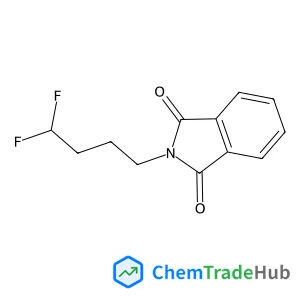
2-(4,4-Difluorobutyl)-1H-isoindole-1,3(2H)-dione
CAS Number:
1265341-14-7
Molecular Formula:
C12H11F2NO2

2-Methyl-2-propanyl 2-carbamimidoyl-1-piperidinecarboxylate
CAS Number:
1258640-98-0
Molecular Formula:
C11H21N3O2
Recommended Suppliers




Disclaimer
This page provides academic journal information for reference and research purposes only. We are not affiliated with any journal publishers and do not handle publication submissions. For publication-related inquiries, please contact the respective journal publishers directly.
If you notice any inaccuracies in the information displayed, please contact us at support@chemtradehub.com. We will promptly review and address your concerns.