












Regioselective Zn(OAc)2-catalyzed azide–alkyne cycloaddition in water: the green click-chemistry
Literature Information
Publication Date
2017-02-08
DOI
10.1039/C6QO00787B
Impact Factor
5.281
Authors
Maria A. Morozova, Mekhman S. Yusubov, Václav Eigner, Alexander A. Bondarev, Akio Saito, Marina E. Trusova, Pavel S. Postnikov
View Original
Abstract
A new method of azide–alkyne cycloaddition (AAC) in the presence of Zn(OAc)2 as an inexpensive and environmentally friendly catalyst in neat water has been developed. The proposed methodology has been applied for the synthesis of 1,4-disubstituted-1,2,3-triazoles from terminal alkynes and 1,4,5-trisubstituted-1,2,3-triazoles from internal alkynes. It has been found that Zn-catalyzed AAC is extremely sensitive to steric hindrance in acetylenes and a method of regioselective triazole ring formation has been proposed. Particularly important is the isolation and characterization of a relatively stable Zn-containing intermediate, which has been characterized by NMR and HRMS.
Related Literature
Synthesis of poly(glycolide) in supercritical carbon dioxide in the presence of a hydrocarbon stabiliser
Daniel Bratton, Malcolm Brown, Steven M. Howdle
2004-02-24
Communication
DOI: 10.1039/B313358C
Novel heteroditopic chelate for self-assembled gadolinium(iii) complex with high relaxivity
Robert Ruloff, Gerard van Koten, André E. Merbach
2004-02-26
Communication
DOI: 10.1039/B400169A
Elucidation of the mechanism of chiral selectivity in diastereomeric salt formation using organic solventnanofiltration
Nazlee F. Ghazali, Darrell A. Patterson, Andrew G. Livingston
2004-03-11
Communication
DOI: 10.1039/B400982G
Ti–Mo heterobimetallic thiacalix[4]arene complex containing an unusual α-agostic μ2-η5:η2-cyclopentadienyl ligand
Shin Takemoto, Shinpei Tanaka, Yasushi Mizobe, Masanobu Hidai
2004-02-26
Communication
DOI: 10.1039/B316972C
Highly enantioselective hydrogenation of enol ester phosphonates catalyzed by rhodium phosphine-phosphite complexes
Miguel Rubio, Andrés Suárez, Eleuterio Álvarez, Antonio Pizzano
2004-12-10
Communication
DOI: 10.1039/B414288H
The first organically templated open-framework metal selenate with a three-dimensional architecture
A. A. Ayi
2004-03-16
Communication
DOI: 10.1039/B400120F
An N-heterocyclic carbene as a bidentate hemilabile ligand: a synchrotron X-ray diffraction and density functional theory study
Vladimir K. Dioumaev, David J. Szalda, Jonathan Hanson, James A. Franz, R. Morris Bullock
2003-06-11
Communication
DOI: 10.1039/B303762B
Study of the Michael addition of β-cyclodextrin–thiol complexes to conjugated alkenes in water
N. Srilakshmi Krishnaveni, K. Surendra, K. Rama Rao
2004-12-14
Communication
DOI: 10.1039/B411736K
Indaphyrin, a meso-tetraphenylsecochlorin-derived chromophore incorporating o-phenyl-to-β-linkages
Jason R. McCarthy, Michael A. Hyland, Christian Brückner
2003-06-18
Communication
DOI: 10.1039/B304647H
Surface recognition of biomacromolecules using nanoparticle receptors
Ayush Verma, Vincent M. Rotello
2004-12-08
Feature Article
DOI: 10.1039/B410889B
You might also like
Compound Q&A
What precautions should be taken when handling 4-Methyl-6-(trifluoromethyl)quinoline (CAS: 40716-16-3)?
When handling 4-Methyl-6-(trifluoromethyl)quinoline (CAS: 40716-16-3), safety go...
40716-16-34-Methyl-6-(trifluor...
Compound Q&A
What is 4-(3,5-Difluorophenyl)aniline (CAS: 405058-00-6)?
4-(3,5-Difluorophenyl)aniline is an aromatic organic compound with the CAS numbe...
405058-00-64-(3,5-Difluoropheny...
Compound Q&A
How is 5-{[4-(Trifluoromethyl)phenyl]sulfanyl}-1,2,3-thiadiazole-4-carboxylic acid (CAS: 338982-07-3) typically synthesized?
5-{[4-(Trifluoromethyl)phenyl]sulfanyl}-1,2,3-thiadiazole-4-carboxylic acid can ...
338982-07-35-{[4-(Trifluorometh...
Compound Q&A
What is the market or research trend for 4-Benzylaniline hydrochloride (CAS: 6317-57-3)?
The market for 4-Benzylaniline hydrochloride (CAS: 6317-57-3) is steadily growin...
6317-57-34-Benzylaniline hydr...
Compound Q&A
Is [3-(Diethylsulfamoyl)phenyl]boronic acid (CAS: 871329-58-7) safe?
[3-(Diethylsulfamoyl)phenyl]boronic acid is generally considered safe when handl...
871329-58-7[3-(Diethylsulfamoyl...
Compound Q&A
What are the main uses of 3-Bromo-2,5-dimethoxyaniline (CAS: 115929-62-9)?
3-Bromo-2,5-dimethoxyaniline is mainly used in the pharmaceutical and chemical i...
115929-62-93-Bromo-2,5-dimethox...
Compound Q&A
What regulatory guidelines apply to N-Methyl-1-(5-methyl-1H-indol-3-yl)methanamine (CAS: 915922-67-7)?
N-Methyl-1-(5-methyl-1H-indol-3-yl)methanamine (CAS: 915922-67-7) is subject to ...
915922-67-7N-Methyl-1-(5-methyl...
Compound Q&A
What industries use Carbamic acid, N-[(5S)-5,6-diamino-6-oxohexyl]-, 1,1-dimethylethyl ester (CAS: 24828-96-4)?
This compound is primarily used in the pharmaceutical industry for the synthesis...
24828-96-4Carbamic acid, N-[(5...
Compound Q&A
How should 2-Methyl-2-propanyl [(1S,3R)-3-aminocyclohexyl]carbamate (CAS: 1298101-47-9) be stored?
2-Methyl-2-propanyl [(1S,3R)-3-aminocyclohexyl]carbamate (CAS: 1298101-47-9) sho...
1298101-47-92-Methyl-2-propanyl ...
Compound Q&A
What industries use Ethyl 2-bromo-4,4,4-trifluorobutanoate (CAS: 367-33-9)?
Ethyl 2-bromo-4,4,4-trifluorobutanoate (CAS: 367-33-9) is utilized in the pharma...
367-33-9Ethyl 2-bromo-4,4,4-...
Source Journal
Organic Chemistry Frontiers

CiteScore:
7.8
Self-citation Rate:
8.7%
Articles per Year:
724
Organic Chemistry Frontiers publishes high-quality research from across organic chemistry. Emphases are placed on studies that make significant contributions to the field of organic chemistry by reporting either new or significantly improved protocols or methodologies. Topics include, but are not limited to the following: Organic synthesis Development of synthetic methodologies Catalysis Natural products Functional organic materials Supramolecular and macromolecular chemistry Physical and computational organic chemistry
Recommended Compounds
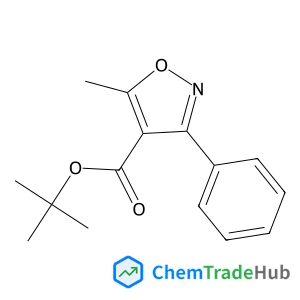
2-Methyl-2-propanyl 5-methyl-3-phenyl-1,2-oxazole-4-carboxylate
CAS Number:
211429-79-7
Molecular Formula:
C15H17NO3
Recommended Suppliers




Disclaimer
This page provides academic journal information for reference and research purposes only. We are not affiliated with any journal publishers and do not handle publication submissions. For publication-related inquiries, please contact the respective journal publishers directly.
If you notice any inaccuracies in the information displayed, please contact us at support@chemtradehub.com. We will promptly review and address your concerns.