












Polymerization of acetylene: polyynes, but not carbyne‡
Literature Information
Publication Date
2016-11-08
DOI
10.1039/C6QO00648E
Impact Factor
5.281
Authors
Dominik Prenzel, Rolf W. Kirschbaum, Wesley A. Chalifoux, Robert McDonald, Michael J. Ferguson, Thomas Drewello
View Original
Abstract
The formation of polyynes via polymerization of acetylene gas and endcapping with the tris(3,5-di-t-butylphenyl)methyl moiety (Tr*, supertrityl) has been explored. The polymerization process has been optimized based on the length of the polyyne endcapping groups. Separation-purification-identification has been achieved through reversed-phase (RP) high performance liquid chromatography (HPLC), utilizing UV-vis detection, which offers UV-vis spectra of the polyyne products. The chain length of individual polyynes can then be established through comparison to the spectra trends of known polyyne samples. LDI and MALDI mass spectrometry is used to examine the presence of Tr*[n] polyynes in the crude reaction mixture. The combined analyses show that polymerization reactions of acetylene using the supertrityl endgroup allow formation of polyynes, but much shorter than could be achieved by stepwise syntheses.
Recommended Journals
Related Literature
Solvent effects for vertical absorption and emission processes in solution using a self-consistent state specific method based on constrained equilibrium thermodynamics
Ting-Jun Bi, Long-Kun Xu, Fan Wang, Xiang-Yuan Li
2018-04-23
Paper
DOI: 10.1039/C8CP00930A
Excitation spectra of retinal by multiconfiguration pair-density functional theory
Sijia S. Dong, Laura Gagliardi, Donald G. Truhlar
2018-02-08
Paper
DOI: 10.1039/C7CP07275A
Tunable reactivity of supported single metal atoms by impurity engineering of the MgO(001) support
2018-01-31
Paper
DOI: 10.1039/C7CP08370J
Theoretical study on mesoscopic-size impurity effects in the charge separation process of organic photocells
Motomichi Tashiro, Takahito Nakajima
2018-05-21
Paper
DOI: 10.1039/C7CP08125A
Electronic structure calculations and nonadiabatic dynamics simulations of excited-state relaxation of Pigment Yellow 101
Meng Che, Yuan-Jun Gao, Yan Zhang, Shu-Hua Xia, Ganglong Cui
2018-02-05
Paper
DOI: 10.1039/C7CP07692D
Fermi resonance in solvated H3O+: a counter-intuitive trend confirmed via a joint experimental and theoretical investigation
Qian-Rui Huang, Tomoki Nishigori, Marusu Katada, Asuka Fujii, Jer-Lai Kuo
2018-04-30
Paper
DOI: 10.1039/C8CP02151A
Lithium doping on 2D squaraine-bridged covalent organic polymers for enhancing adsorption properties: a theoretical study
Ling Huang, Xianfeng Yi, Anmin Zheng
2018-01-31
Paper
DOI: 10.1039/C7CP07686J
An ab initio study of Cu-based delafossites as an alternative to nickel oxide in photocathodes: effects of Mg-doping and surface electronic features
Eduardo Schiavo, Vincenzo Barone, Orlando Crescenzi, Ana B. Muñoz-García, Michele Pavone
2018-04-18
Paper
DOI: 10.1039/C8CP00848E
Chemistry through cocrystals: pressure-induced polymerization of C2H2·C6H6 to an extended crystalline hydrocarbon
Matthew D. Ward, Haw-Tyng Huang, Li Zhu, Arani Biswas, Dmitry Popov, Timothy A. Strobel
2018-02-02
Paper
DOI: 10.1039/C7CP07852H
Spatiotemporal dynamics of minimal bromate oscillators in an open one-side-fed reactor
Krisztina Kurin-Csörgei, István Szalai
2018-04-30
Paper
DOI: 10.1039/C8CP01953C
You might also like
Compound Q&A
What precautions should be taken when handling 4-Methyl-6-(trifluoromethyl)quinoline (CAS: 40716-16-3)?
When handling 4-Methyl-6-(trifluoromethyl)quinoline (CAS: 40716-16-3), safety go...
40716-16-34-Methyl-6-(trifluor...
Compound Q&A
What is 4-(3,5-Difluorophenyl)aniline (CAS: 405058-00-6)?
4-(3,5-Difluorophenyl)aniline is an aromatic organic compound with the CAS numbe...
405058-00-64-(3,5-Difluoropheny...
Compound Q&A
How is 5-{[4-(Trifluoromethyl)phenyl]sulfanyl}-1,2,3-thiadiazole-4-carboxylic acid (CAS: 338982-07-3) typically synthesized?
5-{[4-(Trifluoromethyl)phenyl]sulfanyl}-1,2,3-thiadiazole-4-carboxylic acid can ...
338982-07-35-{[4-(Trifluorometh...
Compound Q&A
What is the market or research trend for 4-Benzylaniline hydrochloride (CAS: 6317-57-3)?
The market for 4-Benzylaniline hydrochloride (CAS: 6317-57-3) is steadily growin...
6317-57-34-Benzylaniline hydr...
Compound Q&A
Is [3-(Diethylsulfamoyl)phenyl]boronic acid (CAS: 871329-58-7) safe?
[3-(Diethylsulfamoyl)phenyl]boronic acid is generally considered safe when handl...
871329-58-7[3-(Diethylsulfamoyl...
Compound Q&A
What are the main uses of 3-Bromo-2,5-dimethoxyaniline (CAS: 115929-62-9)?
3-Bromo-2,5-dimethoxyaniline is mainly used in the pharmaceutical and chemical i...
115929-62-93-Bromo-2,5-dimethox...
Compound Q&A
What regulatory guidelines apply to N-Methyl-1-(5-methyl-1H-indol-3-yl)methanamine (CAS: 915922-67-7)?
N-Methyl-1-(5-methyl-1H-indol-3-yl)methanamine (CAS: 915922-67-7) is subject to ...
915922-67-7N-Methyl-1-(5-methyl...
Compound Q&A
What industries use Carbamic acid, N-[(5S)-5,6-diamino-6-oxohexyl]-, 1,1-dimethylethyl ester (CAS: 24828-96-4)?
This compound is primarily used in the pharmaceutical industry for the synthesis...
24828-96-4Carbamic acid, N-[(5...
Compound Q&A
How should 2-Methyl-2-propanyl [(1S,3R)-3-aminocyclohexyl]carbamate (CAS: 1298101-47-9) be stored?
2-Methyl-2-propanyl [(1S,3R)-3-aminocyclohexyl]carbamate (CAS: 1298101-47-9) sho...
1298101-47-92-Methyl-2-propanyl ...
Compound Q&A
What industries use Ethyl 2-bromo-4,4,4-trifluorobutanoate (CAS: 367-33-9)?
Ethyl 2-bromo-4,4,4-trifluorobutanoate (CAS: 367-33-9) is utilized in the pharma...
367-33-9Ethyl 2-bromo-4,4,4-...
Source Journal
Organic Chemistry Frontiers

CiteScore:
7.8
Self-citation Rate:
8.7%
Articles per Year:
724
Organic Chemistry Frontiers publishes high-quality research from across organic chemistry. Emphases are placed on studies that make significant contributions to the field of organic chemistry by reporting either new or significantly improved protocols or methodologies. Topics include, but are not limited to the following: Organic synthesis Development of synthetic methodologies Catalysis Natural products Functional organic materials Supramolecular and macromolecular chemistry Physical and computational organic chemistry
Recommended Compounds
![N-{3-[Benzyl(methyl)amino]propyl}-9-chloro-5,6,7,8-tetrahydro-2-acridinecarboxamide structure](https://static.chemtradehub.com/structs/142/1426944-49-1-1e4c.webp "N-{3-[Benzyl(methyl)amino]propyl}-9-chloro-5,6,7,8-tetrahydro-2-acridinecarboxamide structure")
N-{3-[Benzyl(methyl)amino]propyl}-9-chloro-5,6,7,8-tetrahydro-2-acridinecarboxamide
CAS Number:
1426944-49-1
Molecular Formula:
C25H28ClN3O
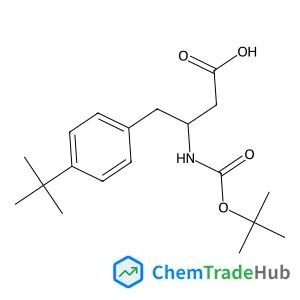
(S)-3-((tert-Butoxycarbonyl)amino)-4-(4-(tert-butyl)phenyl)butanoic acid
CAS Number:
403661-85-8
Molecular Formula:
C19H29NO4
Recommended Suppliers






Disclaimer
This page provides academic journal information for reference and research purposes only. We are not affiliated with any journal publishers and do not handle publication submissions. For publication-related inquiries, please contact the respective journal publishers directly.
If you notice any inaccuracies in the information displayed, please contact us at support@chemtradehub.com. We will promptly review and address your concerns.