












Tunable reactivity of supported single metal atoms by impurity engineering of the MgO(001) support
Literature Information
Publication Date
2018-01-31
DOI
10.1039/C7CP08370J
Impact Factor
3.676
Authors
View Original
Abstract
Development of novel materials may often require a rational use of high price components, like noble metals, in combination with the possibility to tune their properties in a desirable way. Here we present a theoretical DFT study of Au and Pd single atoms supported by doped MgO(001). By introducing B, C and N impurities into the MgO(001) surface, the interaction between the surface and the supported metal adatoms can be adjusted. Impurity atoms act as strong binding sites for Au and Pd adatoms and can help to produce highly dispersed metal particles. The reactivity of metal atoms supported by doped MgO(001), as probed by CO, is altered compared to their counterparts on pristine MgO(001). We find that Pd atoms on doped MgO(001) are less reactive than on perfect MgO(001). In contrast, Au adatoms bind CO much more strongly when placed on doped MgO(001). In the case of Au on N-doped MgO(001) we find that charge redistribution between the metal atom and impurity takes place even when not in direct contact, which enhances the interaction of Au with CO. The presented results suggest possible ways for optimizing the reactivity of oxide supported metal catalysts through impurity engineering.
Related Literature
Robust, flexible, freestanding and high surface area activated carbon and multi-walled carbon nanotubes composite material with outstanding electrode properties for aqueous-based supercapacitors
Bruno Freitas, Willian G. Nunes, Davi Marcelo Soares, Fernando C. Rufino, Cássio Murilo Moreira, Leonardo Morais Da Silva, Hudson Zanin
2021-03-30
Paper
DOI: 10.1039/D0MA00783H
Novel resin-based vacuum distillation-crystallisation method for recovery of succinic acid crystals from fermentation broths
Chenyu Du, Alexandra Cristina Blaga, Maria Camarut, Colin Webb, Christian V. Stevens, Wim Soetaert
2010-02-20
Paper
DOI: 10.1039/B913021G
Antimicrobial and surface activity of 1-alkyl-3-methylimidazolium derivatives
Justyna Łuczak, Christian Jungnickel, Izabela Łącka, Stefan Stolte, Jan Hupka
2010-03-22
Paper
DOI: 10.1039/B921805J
Clay based materials for storage and therapeutic release of nitric oxide
Ana C. Fernandes, Moisés L. Pinto, Fernando Antunes, João Pires
2013-05-07
Paper
DOI: 10.1039/C3TB20535E
Nanomaterials: stimulants for biofuels and renewables, yield and energy optimization
Yogendra Kumar, Prerna Yogeshwar, Sushant Bajpai, Pooja Jaiswal, Shalu Yadav, Diksha Praveen Pathak, Muskan Sonker, Saurabh Kr Tiwary
2021-07-15
Review Article
DOI: 10.1039/D1MA00538C
“Comment on analysis of Fe isotopes in sulfides and iron meteorites by laser ablation high-mass resolution multi-collector ICP mass spectrometry”—a reply
Paul Sylvester
2005-12-22
Comment
DOI: 10.1039/B512647A
Synthesis of transition metal isocyanide compounds from carbonyl complexes via reaction with Li[Me3SiNR]‡
Wesley Sattler, Gerard Parkin
2009-11-12
Communication
DOI: 10.1039/B917156H
Silver quasi-nanoparticles: bridging the gap between molecule-like clusters and plasmonic nanoparticles
Fatima Douma, Louwanda Lakiss, Oleg I. Lebedev, Julien Cardin, Krassimir L. Kostov, Jaafar El Fallah, Valentin Valtchev, Mohamad El-Roz
2021-06-30
Paper
DOI: 10.1039/D1MA00382H
Conductive NiMn-based bimetallic metal–organic gel nanosheets for supercapacitors
Qiankun Zhong, Wensheng Liu, Yong Yang, Wenkang Pan, Mingzai Wu, Fangcai Zheng, Xiao Lian, Helin Niu
2021-05-17
Paper
DOI: 10.1039/D1MA00390A
Earth-abundant non-toxic perovskite nanocrystals for solution processed solar cells
2021-06-01
Review Article
DOI: 10.1039/D1MA00245G
You might also like
Compound Q&A
What precautions should be taken when handling 4-Methyl-6-(trifluoromethyl)quinoline (CAS: 40716-16-3)?
When handling 4-Methyl-6-(trifluoromethyl)quinoline (CAS: 40716-16-3), safety go...
40716-16-34-Methyl-6-(trifluor...
Compound Q&A
What is 4-(3,5-Difluorophenyl)aniline (CAS: 405058-00-6)?
4-(3,5-Difluorophenyl)aniline is an aromatic organic compound with the CAS numbe...
405058-00-64-(3,5-Difluoropheny...
Compound Q&A
How is 5-{[4-(Trifluoromethyl)phenyl]sulfanyl}-1,2,3-thiadiazole-4-carboxylic acid (CAS: 338982-07-3) typically synthesized?
5-{[4-(Trifluoromethyl)phenyl]sulfanyl}-1,2,3-thiadiazole-4-carboxylic acid can ...
338982-07-35-{[4-(Trifluorometh...
Compound Q&A
What is the market or research trend for 4-Benzylaniline hydrochloride (CAS: 6317-57-3)?
The market for 4-Benzylaniline hydrochloride (CAS: 6317-57-3) is steadily growin...
6317-57-34-Benzylaniline hydr...
Compound Q&A
Is [3-(Diethylsulfamoyl)phenyl]boronic acid (CAS: 871329-58-7) safe?
[3-(Diethylsulfamoyl)phenyl]boronic acid is generally considered safe when handl...
871329-58-7[3-(Diethylsulfamoyl...
Compound Q&A
What are the main uses of 3-Bromo-2,5-dimethoxyaniline (CAS: 115929-62-9)?
3-Bromo-2,5-dimethoxyaniline is mainly used in the pharmaceutical and chemical i...
115929-62-93-Bromo-2,5-dimethox...
Compound Q&A
What regulatory guidelines apply to N-Methyl-1-(5-methyl-1H-indol-3-yl)methanamine (CAS: 915922-67-7)?
N-Methyl-1-(5-methyl-1H-indol-3-yl)methanamine (CAS: 915922-67-7) is subject to ...
915922-67-7N-Methyl-1-(5-methyl...
Compound Q&A
What industries use Carbamic acid, N-[(5S)-5,6-diamino-6-oxohexyl]-, 1,1-dimethylethyl ester (CAS: 24828-96-4)?
This compound is primarily used in the pharmaceutical industry for the synthesis...
24828-96-4Carbamic acid, N-[(5...
Compound Q&A
How should 2-Methyl-2-propanyl [(1S,3R)-3-aminocyclohexyl]carbamate (CAS: 1298101-47-9) be stored?
2-Methyl-2-propanyl [(1S,3R)-3-aminocyclohexyl]carbamate (CAS: 1298101-47-9) sho...
1298101-47-92-Methyl-2-propanyl ...
Compound Q&A
What industries use Ethyl 2-bromo-4,4,4-trifluorobutanoate (CAS: 367-33-9)?
Ethyl 2-bromo-4,4,4-trifluorobutanoate (CAS: 367-33-9) is utilized in the pharma...
367-33-9Ethyl 2-bromo-4,4,4-...
Source Journal
Physical Chemistry Chemical Physics

CiteScore:
5.5
Self-citation Rate:
10.3%
Articles per Year:
3036
Physical Chemistry Chemical Physics (PCCP) is an international journal co-owned by 19 physical chemistry and physics societies from around the world. This journal publishes original, cutting-edge research in physical chemistry, chemical physics and biophysical chemistry. To be suitable for publication in PCCP, articles must include significant innovation and/or insight into physical chemistry; this is the most important criterion that reviewers and Editors will judge against when evaluating submissions. The journal has a broad scope and welcomes contributions spanning experiment, theory, computation and data science. Topical coverage includes spectroscopy, dynamics, kinetics, statistical mechanics, thermodynamics, electrochemistry, catalysis, surface science, quantum mechanics, quantum computing and machine learning. Interdisciplinary research areas such as polymers and soft matter, materials, nanoscience, energy, surfaces/interfaces, and biophysical chemistry are welcomed if they demonstrate significant innovation and/or insight into physical chemistry. Joined experimental/theoretical studies are particularly appreciated when complementary and based on up-to-date approaches.
Recommended Compounds
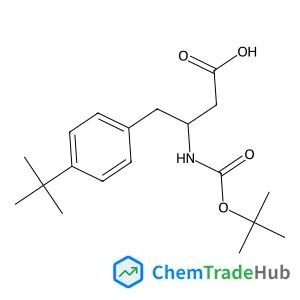
(S)-3-((tert-Butoxycarbonyl)amino)-4-(4-(tert-butyl)phenyl)butanoic acid
CAS Number:
403661-85-8
Molecular Formula:
C19H29NO4

Recommended Suppliers






Disclaimer
This page provides academic journal information for reference and research purposes only. We are not affiliated with any journal publishers and do not handle publication submissions. For publication-related inquiries, please contact the respective journal publishers directly.
If you notice any inaccuracies in the information displayed, please contact us at support@chemtradehub.com. We will promptly review and address your concerns.