












Dihydroxyanthraquinone derivatives: natural dyes as blue-light-sensitive versatile photoinitiators of photopolymerization
Literature Information
Publication Date
2016-10-17
DOI
10.1039/C6PY01550F
Impact Factor
5.582
Authors
Jing Zhang, Jacques Lalevée, Jiacheng Zhao, Bernadette Graff, Martina H. Stenzel, Pu Xiao
View Original
Abstract
Four dihydroxyanthraquinone derivatives [i.e. 1,2-dihydroxyanthraquinone (12-DHAQ), 1,4-dihydroxyanthraquinone (14-DHAQ), 1,5-dihydroxyanthraquinone (15-DHAQ), and 1,8-dihydroxyanthraquinone (18-DHAQ)], when combined with various additives (e.g. iodonium salt, tertiary amine, N-vinylcarbazole, phenacyl bromide, and 4-cyanopentanoic acid dithiobenzoate), are investigated as photoinitiating systems for free radical photopolymerization [e.g. cross-linked free radical photopolymerization of multifunctional monomers or reversible addition–fragmentation chain transfer (RAFT) photopolymerization of monofunctional monomers] and cationic photopolymerization. 14-DHAQ, 15-DHAQ and 18-DHAQ exhibit good solubility in solvent (acetonitrile) and monomers (methacrylate and epoxide) and demonstrate absorption maxima in the blue light wavelength range, which makes them potential candidates to work under the irradiation of a household blue LED bulb. Among all the investigated dihydroxyanthraquinone derivative-based photoinitiating systems, 18-DHAQ based systems exhibit the highest photoinitiating ability for both free radical and cationic photopolymerization while 12-DHAQ based systems are inefficient. It illustrates that the positions of hydroxyl substituents in the anthraquinone molecule play a significant role in the photoinitiating ability of dihydroxyanthraquinone derivatives. The photochemical mechanisms are investigated by fluorescence, laser flash photolysis, steady state photolysis, and electron spin resonance spin trapping techniques, and the results are in agreement with the relevant photopolymerization efficiency.
Related Literature
Methylthio BODIPY as a standard triplet photosensitizer for singlet oxygen production: a photophysical study
Ruth Prieto-Montero, Rebeca Sola-Llano, Raul Montero, Asier Longarte, Teresa Arbeloa, Iñigo López-Arbeloa, Virginia Martínez-Martínez, Sylvie Lacombe
2019-07-31
Paper
DOI: 10.1039/C9CP03454D
Effects of temperature and grain size on deformation of polycrystalline copper–graphene nanolayered composites
Yunlong Ma, Sen Zhang, Yunfei Xu, Xiaoyi Liu
2020-02-10
Paper
DOI: 10.1039/C9CP06830A
Potential molecular semiconductor devices: cyclo-Cn (n = 10 and 14) with higher stabilities and aromaticities than acknowledged cyclo-C18
Mengyang Li, Zhibin Gao, Yanbo Han, Yaoxiao Zhao, Kun Yuan, Shigeru Nagase, Masahiro Ehara, Xiang Zhao
2020-02-07
Paper
DOI: 10.1039/D0CP00167H
Double aromaticity of the B40 fullerene: induced magnetic field analysis of π and σ delocalization in the boron cavernous structure
Nickolas D. Charistos, Alvaro Muñoz-Castro
2019-08-23
Paper
DOI: 10.1039/C9CP04223G
Atmospheric oxidation mechanism and kinetics of 2-bromo-4,6-dinitroaniline by OH radicals – a theoretical study
M. Gnanaprakasam, G. Saranya, S. Bandaru, N. J. English, K. Senthilkumar
2019-09-06
Paper
DOI: 10.1039/C9CP04271G
Morphologies of a polyelectrolyte brush grafted onto a cubic colloid in the presence of trivalent ions
Hong-Ge Tan, Gang Xia, Li-Xiang Liu, Bing Miao
2019-08-22
Paper
DOI: 10.1039/C9CP03819A
Rechargeable Mg–M (M = Li, Na and K) dual-metal–ion batteries based on a Berlin green cathode and a metallic Mg anode
Yujie Zhang, Jingwei Shen, Xue Li, Zhongxue Chen, Shun-an Cao, Ting Li, Fei Xu
2019-08-23
Paper
DOI: 10.1039/C9CP03836A
closo-Carboranes as dual CH⋯π and BH⋯π donors: theoretical study and biological significance
Antonio Frontera, Antonio Bauzá
2019-08-21
Paper
DOI: 10.1039/C9CP03858B
Transition metal embedded C3N monolayers as promising catalysts for the hydrogen evolution reaction
Dongwei Ma, Jing Zhang, Zhansheng Lu, Yuanxu Wang
2019-08-28
Paper
DOI: 10.1039/C9CP04267A
An Au22(L8)6 nanocluster with in situ uncoordinated Au as a highly active catalyst for O2 activation and CO oxidation
Fuhua Li, Qing Tang
2019-08-23
Paper
DOI: 10.1039/C9CP03469B
You might also like
Compound Q&A
What precautions should be taken when handling 2-Methyl-2-propanyl 5-amino-2-thiophenecarboxylate (CAS: 1498311-57-1)?
When handling 2-Methyl-2-propanyl 5-amino-2-thiophenecarboxylate (CAS: 1498311-5...
1498311-57-12-Methyl-2-propanyl ...
Compound Q&A
What are the physical and chemical properties of 5-Bromo-1,2-dichloro-3-fluorobenzene (CAS: 1000572-93-9)?
5-Bromo-1,2-dichloro-3-fluorobenzene (CAS: 1000572-93-9) is a crystalline solid ...
1000572-93-95-Bromo-1,2-dichloro...
Compound Q&A
How should (2R)-2-Amino-2-(4-bromophenyl)ethanol (CAS: 354153-64-3) be stored?
(2R)-2-Amino-2-(4-bromophenyl)ethanol (CAS: 354153-64-3) should be stored in a c...
354153-64-3(2R)-2-Amino-2-(4-br...
Compound Q&A
What regulatory guidelines apply to Methyl 4-(aminomethyl)tetrahydro-2H-pyran-4-carboxylate hydrochloride (CAS: 362707-24-2)?
Methyl 4-(aminomethyl)tetrahydro-2H-pyran-4-carboxylate hydrochloride (CAS: 3627...
362707-24-2Methyl 4-(aminomethy...
Compound Q&A
What are the main uses of 1,4-dimethyl-1H-pyrazole-5-sulfonyl chloride (CAS: 1174834-52-6)?
1,4-Dimethyl-1H-pyrazole-5-sulfonyl chloride is primarily used as an intermediat...
1174834-52-61,4-dimethyl-1H-pyra...
Compound Q&A
Is Dinaphtho[1,2-b:2',1'-d]furan (CAS: 239-69-0) safe?
Dinaphtho[1,2-b:2',1'-d]furan is generally safe when handled with appropriate pe...
239-69-0Dinaphtho[1,2-b:2',1...
Compound Q&A
What is the market or research trend for 7-Methyl-7,9-dihydro-1H-purine-2,6,8(3H)-trione (CAS: 612-37-3)?
The market for 7-Methyl-7,9-dihydro-1H-purine-2,6,8(3H)-trione (CAS: 612-37-3) i...
612-37-37-Methyl-7,9-dihydro...
Compound Q&A
What are the physical and chemical properties of 2-(4-Chlorophenyl)malonaldehyde (CAS: 205676-17-1)?
2-(4-Chlorophenyl)malonaldehyde (CAS: 205676-17-1) is a colorless or light yello...
205676-17-12-(4-Chlorophenyl)ma...
Compound Q&A
How is 2-Methylchrysene (CAS: 3351-32-4) typically synthesized?
2-Methylchrysene (CAS: 3351-32-4) is typically synthesized via the reaction of c...
3351-32-42-Methylchrysene
Compound Q&A
Is N-(6-aminopyrimidin-4-yl)acetamide (CAS: 89533-23-3) safe?
N-(6-aminopyrimidin-4-yl)acetamide (CAS: 89533-23-3) is generally considered saf...
89533-23-3N-(6-aminopyrimidin-...
Source Journal
Polymer Chemistry

CiteScore:
8.6
Self-citation Rate:
7.3%
Articles per Year:
457
Polymer Chemistry welcomes submissions in all areas of polymer science that have a strong focus on macromolecular chemistry. Manuscripts may cover a broad range of fields, yet no direct application focus is required.
Recommended Compounds
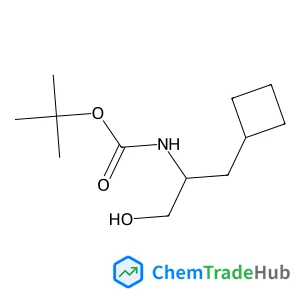
2-Methyl-2-propanyl (1-cyclobutyl-3-hydroxy-2-propanyl)carbamate
CAS Number:
816429-99-9
Molecular Formula:
C12H23NO3
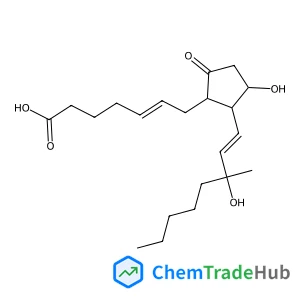
(5Z,11alpha,13E,15R)-11,15-Dihydroxy-15-methyl-9-oxoprosta-5,13-dien-1-oic acid
CAS Number:
55028-70-1
Molecular Formula:
C21H34O5

Recommended Suppliers


Disclaimer
This page provides academic journal information for reference and research purposes only. We are not affiliated with any journal publishers and do not handle publication submissions. For publication-related inquiries, please contact the respective journal publishers directly.
If you notice any inaccuracies in the information displayed, please contact us at support@chemtradehub.com. We will promptly review and address your concerns.