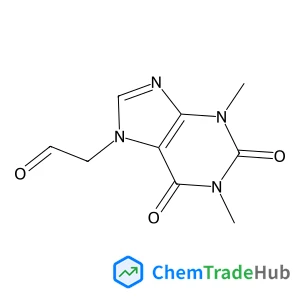
(1,3-Dimethyl-2,6-dioxo-1,2,3,6-tetrahydro-7H-purin-7-yl)acetaldehyde
CAS Number:
5614-53-9
Molecular Formula:
C9H10N4O3
Dongwei Ma, Jing Zhang, Zhansheng Lu, Yuanxu Wang
Transition metal (TM) doped or TM, N co-doped carbon materials have attracted increasing attention as efficient catalysts for the hydrogen evolution reaction (HER), to replace Pt or reduce the usage of Pt. By using first-principles calculations, the TM-embedded C3N monolayer (TM@C3N) has been theoretically investigated for HER, for which eighteen TMs are selected from the 3d, 4d, and 5d rows. The M-CC catalysts, with the TM atom embedded into the C–C double atomic vacancy, are the most stable among the various TM@C3N materials. All the M-CC catalysts show metallic conductivity and high thermal stability. The hydrogen binding free energy for the M-CC catalysts can be optimized to be close to 0 eV by choosing a suitable TM, and the kinetic barrier under the Tafel mechanism for further gaseous hydrogen evolution can be reduced to as low as 0.58 eV. These results suggest that the HER catalytic activities of the M-CC catalysts are likely comparable or even higher than those of the well-explored MoS2 nanostructures or Pt catalysts. Moreover, the HER activities of the M-CC catalysts can be illustrated by the electronic state distribution near the Fermi level of the catalytically active sites. This study provides a new possibility for cost-efficient HER catalysts of high activity and for the application of C3N nanostructures.
Lingling Gong, Mehran Abbaszadeh Amirdehi, Amine Miled
DOI: 10.1039/D0SE01406K
Linlin Qiu, Jiacheng Zou, Wei-Hsiang Chen, Lika Dong, Deqiang Mei, Jieqiong Wang, Pei-Cheng Jiang
DOI: 10.1039/D0SE01498B
Santosh K. Singh, Kotaro Takeyasu, Bappi Paul, Sachin K. Sharma, Junji Nakamura
DOI: 10.1039/D0SE01285H
Isabelle Heath-Apostolopoulos, Diego Vargas-Ortiz, Liam Wilbraham, Kim E. Jelfs, Martijn A. Zwijnenburg
DOI: 10.1039/D1SE90005F
André Hofer, Sebastian Bochmann
DOI: 10.1039/D0SE01577F
Hao Lu, Bangkai Gu, Song Fang
DOI: 10.1039/D0SE01558J
Fengyun Su, Yanli Chen, Ruiping Wang, Sheng Zhang, Kecheng Liu, Yezhen Zhang, Wei Zhao, Chenghua Ding, Haiquan Xie
DOI: 10.1039/D0SE01561J
Tao Zhang, Xinyang Li, Bo Wu, Yue Li
DOI: 10.1039/D0SE01837F
Saqib Sohail Toor, Kamaldeep Sharma, Asbjørn Haaning Nielsen, Thomas Helmer Pedersen, Lasse Aistrup Rosendahl
DOI: 10.1039/D0SE01634A
When handling 2-Methyl-2-propanyl 5-amino-2-thiophenecarboxylate (CAS: 1498311-5...
5-Bromo-1,2-dichloro-3-fluorobenzene (CAS: 1000572-93-9) is a crystalline solid ...
(2R)-2-Amino-2-(4-bromophenyl)ethanol (CAS: 354153-64-3) should be stored in a c...
Methyl 4-(aminomethyl)tetrahydro-2H-pyran-4-carboxylate hydrochloride (CAS: 3627...
1,4-Dimethyl-1H-pyrazole-5-sulfonyl chloride is primarily used as an intermediat...
Dinaphtho[1,2-b:2',1'-d]furan is generally safe when handled with appropriate pe...
The market for 7-Methyl-7,9-dihydro-1H-purine-2,6,8(3H)-trione (CAS: 612-37-3) i...
2-(4-Chlorophenyl)malonaldehyde (CAS: 205676-17-1) is a colorless or light yello...
2-Methylchrysene (CAS: 3351-32-4) is typically synthesized via the reaction of c...
N-(6-aminopyrimidin-4-yl)acetamide (CAS: 89533-23-3) is generally considered saf...

Physical Chemistry Chemical Physics (PCCP) is an international journal co-owned by 19 physical chemistry and physics societies from around the world. This journal publishes original, cutting-edge research in physical chemistry, chemical physics and biophysical chemistry. To be suitable for publication in PCCP, articles must include significant innovation and/or insight into physical chemistry; this is the most important criterion that reviewers and Editors will judge against when evaluating submissions. The journal has a broad scope and welcomes contributions spanning experiment, theory, computation and data science. Topical coverage includes spectroscopy, dynamics, kinetics, statistical mechanics, thermodynamics, electrochemistry, catalysis, surface science, quantum mechanics, quantum computing and machine learning. Interdisciplinary research areas such as polymers and soft matter, materials, nanoscience, energy, surfaces/interfaces, and biophysical chemistry are welcomed if they demonstrate significant innovation and/or insight into physical chemistry. Joined experimental/theoretical studies are particularly appreciated when complementary and based on up-to-date approaches.
![2,5-Dichloro-1H-pyrrolo[3,2-b]pyridine structure](https://static.chemtradehub.com/structs/100/1000342-87-9-f632.webp "2,5-Dichloro-1H-pyrrolo[3,2-b]pyridine structure")