












Multiple types of hydroxyl-rich cationic derivatives of PGMA for broad-spectrum antibacterial and antifouling coatings
Literature Information
Publication Date
2016-08-29
DOI
10.1039/C6PY01242F
Impact Factor
5.582
Authors
Li-Hai Fan, Meng Wang
View Original
Abstract
The development of new antibacterial materials is a constant demand in the manufacturing of personal hygiene products and medical implements. The inhibition of bacterial adhesion onto surfaces is very challenging, and adhesion may cause secondary infection. In this study, we synthesize multiple types of hydroxyl-rich cationic derivatives via a ring-opening reaction of a star-like poly(glycidyl methacrylate) (s-PGMA) for broad-spectrum antibacterial and antifouling coatings. The derivatives containing tertiary amine groups are subsequently quaternized to produce poly(quaternary ammonium). The quaternary and silver-loaded derivatives exhibit potent and broad-spectrum antibacterial activities towards both Gram-negative and Gram-positive bacteria. Particularly, some of the silver-loaded derivatives show a 64-fold improvement in antibacterial activity toward P. aeruginosa compared to their non-silver counterparts, due to the synergistic actions of quaternary ammonium components and silver ions. Moreover, the antibacterial derivatives can be readily coated on substrates such as glass slides via an adhesive layer of polydopamine. The resultant antibacterial coatings with rich hydroxyl groups also endow antifouling capability against killed bacteria, while the release and diffusion of silver ions from the silver-loaded polymer coatings enable the long-range antibacterial abilities. This study offers a new approach for synthesizing effective antibacterial and antifouling coatings that possess promising applications on biomedical devices.
Recommended Journals
Related Literature
Spectral properties of a novel antimony(iii)-phthalocyanine complex that behaves like J-aggregates in non-aqueous media
Hiroaki Isago
2003-06-20
Communication
DOI: 10.1039/B304089E
A novel peptide synthesis using fluorous chemistry
Mamoru Mizuno, Kohtaro Goto, Tsuyoshi Miura, Daisuke Hosaka, Toshiyuki Inazu
2003-03-18
Communication
DOI: 10.1039/B300682D
Influence of the solvent on the crystal structure of PCBM and the efficiency of MDMO-PPV:PCBM ‘plastic’ solar cells
Minze T. Rispens, Auke Meetsma, Roman Rittberger, Christoph J. Brabec, N. Serdar Sariciftci, Jan C. Hummelen
2003-07-22
Communication
DOI: 10.1039/B305988J
Synthesis and biological evaluation of cytostatin analogues
2003-06-20
Communication
DOI: 10.1039/B305308N
Ag8Cl2[Se2P(OEt)2]6: A rare example containing a combination of discrete clusters and chains
C. W. Liu, Chiu-Mine Hung, Hsien-Chung Haia, Ben-Jie Liaw, Lin-Shu Liou, Yi-Fang Tsai, Ju-Chun Wang
2003-03-18
Communication
DOI: 10.1039/B300887H
Enantio-differentiating catalytic oxidation by a biomimetic trinuclear copper complex containing l-histidine residues
Laura Santagostini, Michele Gullotti, Roberto Pagliarin, Enrico Monzani, Luigi Casella
2003-07-28
Communication
DOI: 10.1039/B307349A
Transformation of a 4-membered ring zinc phosphate SBU to a sodalite-related 3-dimensional structure through a linear chain structure
D. Udayakumar
2003-07-24
Communication
DOI: 10.1039/B305679C
Observation of high enantioselectivity for the gas phase hydrogenation of methyl pyruvate using supported Pt catalysts pre-modified with cinchonidine
Nicholas Dummer, David J. Willock, Stuart H. Taylor, Richard P. K. Wells, Peter B. Wells, Graham J. Hutchings
2003-06-27
Communication
DOI: 10.1039/B304976K
The first structurally characterised perchlorato-cobalt(iii) complexes, involving the C-bonded macrobicyclic ligand 1,4,8,11-tetraazabicyclo[9.5.2]octadecane
Xiangting Zhou, Anthony I. Day, Anthony C. Willis, W. Gregory Jackson
2003-08-20
Communication
DOI: 10.1039/B305182J
A sonochemical approach to hierarchical porous titania spheres with enhanced photocatalytic activity
Lizhi Zhang, Jimmy C. Yu
2003-07-11
Communication
DOI: 10.1039/B306013F
You might also like
Compound Q&A
What precautions should be taken when handling 2-Methyl-2-propanyl 5-amino-2-thiophenecarboxylate (CAS: 1498311-57-1)?
When handling 2-Methyl-2-propanyl 5-amino-2-thiophenecarboxylate (CAS: 1498311-5...
1498311-57-12-Methyl-2-propanyl ...
Compound Q&A
What are the physical and chemical properties of 5-Bromo-1,2-dichloro-3-fluorobenzene (CAS: 1000572-93-9)?
5-Bromo-1,2-dichloro-3-fluorobenzene (CAS: 1000572-93-9) is a crystalline solid ...
1000572-93-95-Bromo-1,2-dichloro...
Compound Q&A
How should (2R)-2-Amino-2-(4-bromophenyl)ethanol (CAS: 354153-64-3) be stored?
(2R)-2-Amino-2-(4-bromophenyl)ethanol (CAS: 354153-64-3) should be stored in a c...
354153-64-3(2R)-2-Amino-2-(4-br...
Compound Q&A
What regulatory guidelines apply to Methyl 4-(aminomethyl)tetrahydro-2H-pyran-4-carboxylate hydrochloride (CAS: 362707-24-2)?
Methyl 4-(aminomethyl)tetrahydro-2H-pyran-4-carboxylate hydrochloride (CAS: 3627...
362707-24-2Methyl 4-(aminomethy...
Compound Q&A
What are the main uses of 1,4-dimethyl-1H-pyrazole-5-sulfonyl chloride (CAS: 1174834-52-6)?
1,4-Dimethyl-1H-pyrazole-5-sulfonyl chloride is primarily used as an intermediat...
1174834-52-61,4-dimethyl-1H-pyra...
Compound Q&A
Is Dinaphtho[1,2-b:2',1'-d]furan (CAS: 239-69-0) safe?
Dinaphtho[1,2-b:2',1'-d]furan is generally safe when handled with appropriate pe...
239-69-0Dinaphtho[1,2-b:2',1...
Compound Q&A
What is the market or research trend for 7-Methyl-7,9-dihydro-1H-purine-2,6,8(3H)-trione (CAS: 612-37-3)?
The market for 7-Methyl-7,9-dihydro-1H-purine-2,6,8(3H)-trione (CAS: 612-37-3) i...
612-37-37-Methyl-7,9-dihydro...
Compound Q&A
What are the physical and chemical properties of 2-(4-Chlorophenyl)malonaldehyde (CAS: 205676-17-1)?
2-(4-Chlorophenyl)malonaldehyde (CAS: 205676-17-1) is a colorless or light yello...
205676-17-12-(4-Chlorophenyl)ma...
Compound Q&A
How is 2-Methylchrysene (CAS: 3351-32-4) typically synthesized?
2-Methylchrysene (CAS: 3351-32-4) is typically synthesized via the reaction of c...
3351-32-42-Methylchrysene
Compound Q&A
Is N-(6-aminopyrimidin-4-yl)acetamide (CAS: 89533-23-3) safe?
N-(6-aminopyrimidin-4-yl)acetamide (CAS: 89533-23-3) is generally considered saf...
89533-23-3N-(6-aminopyrimidin-...
Source Journal
Polymer Chemistry

CiteScore:
8.6
Self-citation Rate:
7.3%
Articles per Year:
457
Polymer Chemistry welcomes submissions in all areas of polymer science that have a strong focus on macromolecular chemistry. Manuscripts may cover a broad range of fields, yet no direct application focus is required.
Recommended Compounds
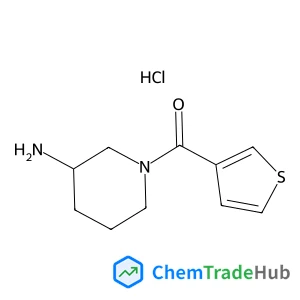
(3-Amino-piperidin-1-yl)-thiophen-3-yl-methanone hydrochloride
CAS Number:
1185316-70-4
Molecular Formula:
C10H15ClN2OS
![2-[2-(2-Methoxyethoxy)ethoxy]-2-methylpropane structure](https://static.chemtradehub.com/structs/527/52788-79-1-71c1.webp "2-[2-(2-Methoxyethoxy)ethoxy]-2-methylpropane structure")
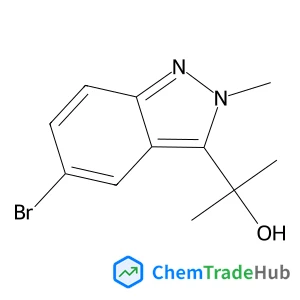
2-(5-Bromo-2-methyl-2H-indazol-3-yl)-2-propanol
CAS Number:
1823787-20-7
Molecular Formula:
C11H13BrN2O
Recommended Suppliers








Disclaimer
This page provides academic journal information for reference and research purposes only. We are not affiliated with any journal publishers and do not handle publication submissions. For publication-related inquiries, please contact the respective journal publishers directly.
If you notice any inaccuracies in the information displayed, please contact us at support@chemtradehub.com. We will promptly review and address your concerns.