












An ENDOR and DFT analysis of hindered methyl group rotations in frozen solutions of bis(acetylacetonato)-copper(ii)
Literature Information
Publication Date
2013-08-05
DOI
10.1039/C3CP52464G
Impact Factor
3.676
Authors
Katherine M. Sharples, Emma Carter, Colan E. Hughes, Kenneth D. M. Harris, James A. Platts, Damien M. Murphy
View Original
Abstract
ENDOR spectroscopy and DFT calculations have been used to thoroughly investigate the ligand hyperfine couplings for the bis(acetylacetonato)–copper(II) complex [Cu(acac)2] in frozen solution. Solutions of [Cu(acac)2] were prepared under anhydrous conditions, and EPR revealed that the g and CuA values were affected by traces of water present in the solvent. The ligand HAi hyperfine couplings were subsequently investigated by CW and pulsed ENDOR spectroscopy. Anisotropic hyperfine couplings to the methine protons (HAi = 1.35, −1.62, −2.12 MHz; aiso = −0.80 MHz) and smaller couplings to the fully averaged methyl group protons (HAi = −0.65, 1.658, −0.9 MHz; aiso = 0.036 MHz) were identified by simulation of the angular selective ENDOR spectra and confirmed by DFT. Since the barrier to methyl group rotation was estimated to be ca. 5 kJ mol−1 by DFT, rapid rotation of these –CH3 groups, even at 10 K, leads to an averaged value of HAi. However, variable temperature X-band Mims ENDOR revealed an additional set of hyperfine couplings which showed a pronounced temperature dependency. Using CW Q-band ENDOR, these additional couplings were characterised by the hyperfine parameters HAi = 3.45, 2.9, 2.62 MHz, aiso = 2.99 MHz and assigned to a hindered methyl group rotation. This hindered rotation of a sub-set of methyl groups occurs in 120° jumps, such that a large Adip and aiso component is always observed. Whilst the majority of the methyl groups undergo free rotation, a sub-set of methyl groups experience hindered rotation in frozen solution, through proton tunnelling. This hindered rotation appears to be caused by weak outer-sphere solvent interactions with the complex.
Recommended Journals
Related Literature
A new ‘turn-on’ and reversible fluorescent sensor for Al3+ detection and live cell imaging
JianHua Wang, LiHen Feng, JianBin Chao, Yu Wang, ShaoMin Shuang
2019-10-03
Paper
DOI: 10.1039/C9AY01438A
Fluorescence observation supporting capillary chromatography based on tube radial distribution of carrier solvents under laminar flow conditions
Naoya Jinno, Mari Murakami, Kiyoshi Mizohata, Masahiko Hashimoto, Kazuhiko Tsukagoshi
2010-12-02
Paper
DOI: 10.1039/C0AN00820F
Study of porphyrin-modified liquid exfoliated graphene field-effect transistors for evaluating DNA methylation degree
Zhongrong Wang, Shihui Hu, Fang Li, Qingjie Fan, Yunfang Jia
2019-07-01
Paper
DOI: 10.1039/C9AN00993K
A practical method for rapid screening and quantitative analysis of 130 pesticide residues in herbal medicines based on the Kovats retention index principle: an exemplary study using Panacis quinquefolii radix
Xichuan Wei, Haizhu Zhang, Ming Niu, Dingkun Zhang
2019-08-02
Paper
DOI: 10.1039/C9AY01310E
Liquid chromatography-tandem mass spectrometry for monitoring vitamin D hydroxymetabolites in human aqueous humor
Neus Fabregat-Cabello, Pierre Darimont, Loreen Huyghebaert, Pascal Reynier, Caroline Le Goff, Étienne Cavalier
2019-09-24
Paper
DOI: 10.1039/C9AY01896D
An enhanced capillary electrophoresis method for characterizing natural organic matter
Barbara A. Cottrell, Wei Ran Cheng, Buuan Lam, William J. Cooper, Andre J. Simpson
2012-12-18
Paper
DOI: 10.1039/C2AN36144B
Study of oxygen effects on electrochemiluminescence using dye-doped oxygen-resisting nanobeads
Lan Luan, Zhi-jie Lin, Xi-wei Liu, Xu-dong Wang
2012-03-12
Paper
DOI: 10.1039/C2AN00026A
You might also like
Compound Q&A
Are there alternatives to 1-(4-Chlorophenyl)-N-hydroxymethanimine (CAS: 3848-36-0) in synthesis?
When considering alternatives to 1-(4-Chlorophenyl)-N-hydroxymethanimine (CAS: 3...
3848-36-01-(4-Chlorophenyl)-N...
Compound Q&A
How should (1R,9S,10S,12S,14E,16S,19R,20R,21S,22R)-3,9,21-Trihydroxy-5,10,12,14,16,20,22-heptamethyl-23,24-dioxatetracyclo[17.3.1.1~6,9~.0~2,7~]tetracosa-2,5,7,14-tetraen-4-one (CAS: 183202-73-5) be stored?
This compound should be stored in a cool, dry place away from direct sunlight. I...
183202-73-5(1R,9S,10S,12S,14E,1...
Compound Q&A
How is 3-(4-Bromophenyl)-5-(2-fluorophenyl)-1,2,4-oxadiazole (CAS: 419553-16-5) typically synthesized?
3-(4-Bromophenyl)-5-(2-fluorophenyl)-1,2,4-oxadiazole is synthesized through a m...
419553-16-53-(4-Bromophenyl)-5-...
Compound Q&A
How is 5-Chloro-2-(4-chlorophenyl)-4-methyl-6-[3-(1-piperidinyl)propoxy]pyrimidine (CAS: 1639220-19-1) typically synthesized?
5-Chloro-2-(4-chlorophenyl)-4-methyl-6-[3-(1-piperidinyl)propoxy]pyrimidine (CAS...
1639220-19-15-Chloro-2-(4-chloro...
Compound Q&A
What industries use 2-Chloro-4-(difluoromethoxy)pyridine (CAS: 1206978-15-5)?
2-Chloro-4-(difluoromethoxy)pyridine is used in the pharmaceutical industry for ...
1206978-15-52-Chloro-4-(difluoro...
Compound Q&A
What regulatory guidelines apply to 3-Chloro-6-methylpyridazine (CAS: 1121-79-5)?
3-Chloro-6-methylpyridazine (CAS: 1121-79-5) is classified under the Globally Ha...
1121-79-53-Chloro-6-methylpyr...
Compound Q&A
Are there alternatives to Methyl 4,5-dimethyl-2-nitrobenzoate in synthesis?
Several alternatives can be used in the synthesis of Methyl 4,5-dimethyl-2-nitro...
90922-74-0Methyl 4,5-dimethyl-...
Compound Q&A
Are there alternatives to (2E,2'E)-3,3'-(1,4-Phenylene)bisacrylaldehyde in synthesis?
Alternatives to (2E,2'E)-3,3'-(1,4-Phenylene)bisacrylaldehyde include other acry...
63405-68-5(2E,2'E)-3,3'-(1,4-P...
Compound Q&A
What is 3-Amino-5-chloropyridin-2-ol hydrochloride (CAS: 1261906-29-9)?
3-Amino-5-chloropyridin-2-ol hydrochloride is an organic compound with the CAS n...
1261906-29-93-Amino-5-chloropyri...
Compound Q&A
What precautions should be taken when handling 6,7-Difluoro-2,3-dihydro-4H-chromen-4-one (CAS: 1092349-93-3)?
When handling 6,7-Difluoro-2,3-dihydro-4H-chromen-4-one, it is essential to wear...
1092349-93-36,7-Difluoro-2,3-dih...
Source Journal
Physical Chemistry Chemical Physics

CiteScore:
5.5
Self-citation Rate:
10.3%
Articles per Year:
3036
Physical Chemistry Chemical Physics (PCCP) is an international journal co-owned by 19 physical chemistry and physics societies from around the world. This journal publishes original, cutting-edge research in physical chemistry, chemical physics and biophysical chemistry. To be suitable for publication in PCCP, articles must include significant innovation and/or insight into physical chemistry; this is the most important criterion that reviewers and Editors will judge against when evaluating submissions. The journal has a broad scope and welcomes contributions spanning experiment, theory, computation and data science. Topical coverage includes spectroscopy, dynamics, kinetics, statistical mechanics, thermodynamics, electrochemistry, catalysis, surface science, quantum mechanics, quantum computing and machine learning. Interdisciplinary research areas such as polymers and soft matter, materials, nanoscience, energy, surfaces/interfaces, and biophysical chemistry are welcomed if they demonstrate significant innovation and/or insight into physical chemistry. Joined experimental/theoretical studies are particularly appreciated when complementary and based on up-to-date approaches.
Recommended Compounds
![6-Bromo-2,3-dihydro-1H-pyrido[2,3-b][1,4]oxazine structure](https://static.chemtradehub.com/structs/120/1203499-17-5-b4d1.webp "6-Bromo-2,3-dihydro-1H-pyrido[2,3-b][1,4]oxazine structure")
6-Bromo-2,3-dihydro-1H-pyrido[2,3-b][1,4]oxazine
CAS Number:
1203499-17-5
Molecular Formula:
C7H7BrN2O
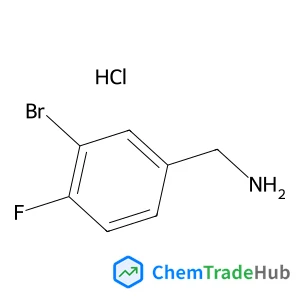
1-(3-Bromo-4-fluorophenyl)methanamine hydrochloride (1:1)
CAS Number:
202865-68-7
Molecular Formula:
C7H8BrClFN
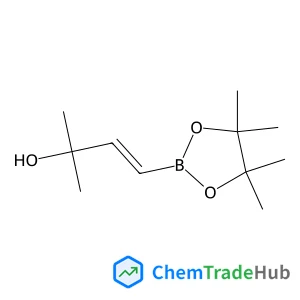
(E)-2-methyl-4-(4,4,5,5-tetramethyl-1,3,2-dioxaborolan-2-yl)but-3-en-2-ol
CAS Number:
581802-26-8
Molecular Formula:
C11H21BO3
Recommended Suppliers






Disclaimer
This page provides academic journal information for reference and research purposes only. We are not affiliated with any journal publishers and do not handle publication submissions. For publication-related inquiries, please contact the respective journal publishers directly.
If you notice any inaccuracies in the information displayed, please contact us at support@chemtradehub.com. We will promptly review and address your concerns.