













Copolymerization of propylene with Si-containing α,ω-diolefins: how steric hindrance of diolefins affects long chain branch formation
Literature Information
Publication Date
2016-03-24
DOI
10.1039/C6PY00333H
Impact Factor
5.582
Authors
Bin Wang, Yi-Ming Zhang, Zhe Ma, Li Pan, Shi-Jun Yu
View Original
Abstract
Using the pyridylamido-hafnium/[Ph3C][B(C6F5)4]/AliBu3 catalytic system, a series of long chain branched isotactic polypropylenes (LCBPPs) were in situ synthesized by copolymerization of propylene with Si-containing monomers 4,4-dimethyl-4-sila-1,6-heptadiene (DMS), 4-methyl-4-phenyl-4-sila-1,6-heptadiene (MPS), 4,4-diphenyl-4-sila-1,6-heptadiene (DPS), or 4-methyl-4-vinyl-4-sila-1,6-heptadiene (MVS). The effects of the substituent groups on their copolymerization behavior and topological structure were further investigated. The substituent groups decreased the cyclization tendency of the diallylsilane, which increased the probability of insertion of the pendant vinyl groups into another polymer chain. Thus, LCBPPs could be easily prepared under mild conditions by exquisitely controlling the comonomer structure and polymerization conditions such as the initial concentration of the comonomer, the dosage of the chain transfer agent (CTA) and the reaction time. The presence of LCB structure was confirmed by characterization using SEC equipped with triple detectors, small-amplitude dynamic rheological measurements and uniaxial extension. The introduction of LCBs endowed PP with improved rheological behavior and melt strength, which made the resultant LCBPPs possess potential applications in thermal processes such as blow molding and foaming.
Recommended Journals
Related Literature
Dibenzofuran-4,6-bis(oxazoline) (DBFOX). A novel trans-chelating bis(oxazoline) ligand for asymmetric reactions
Kennosuke Itoh, Mukund P. Sibi
2018-06-18
Review Article
DOI: 10.1039/C8OB01010B
Synthesis and biological evaluation of cyclic derivatives of combretastatin A-4 containing group 14 elements
Víctor Blasco, Juan Murga, Eva Falomir, Miguel Carda, Santiago Royo, Ana C. Cuñat, Juan F. Sanz-Cervera, J. Alberto Marco
2018-07-30
Paper
DOI: 10.1039/C8OB01148F
Theoretical insight into the origins of chemo- and diastereo-selectivity in the palladium-catalysed (3 + 2) cyclisation of 5-alkenyl thiazolones
Ting Qi, Shuai Fu, Xiang Zhang, Ting-Hao Liu, Qing-Zhu Li, Chuan Gou, Jun-Long Li
2021-09-04
Research Article
DOI: 10.1039/D1QO01071A
Multigram synthesis of an orthogonally-protected pentasaccharide for use as a glycan precursor in a Shigella flexneri 3a conjugate vaccine: application to a ready-for-conjugation decasaccharide
Johan Cornil, Zhaoyu Hu, Marion Bouchet, Laurence A. Mulard
2021-07-21
Research Article
DOI: 10.1039/D1QO00761K
Chemoenzymatic macrocycle synthesis using resorcylic acid lactone thioesterase domains
Graham W. Heberlig, Jesse T. C. Brown, Ryan D. Simard, Monica Wirz, Wei Zhang, Meng Wang, Leah I. Susser, Mark E. Horsman, Christopher N. Boddy
2018-07-20
Paper
DOI: 10.1039/C8OB01512K
The discovery of a freezing-induced peptide ligation during the total chemical synthesis of human interferon-ε
Yin-He Yang, Bin Di, Da-Song Yang
2018-06-25
Communication
DOI: 10.1039/C8OB01365A
Base controlled diverse reactivity of allyl cyanide for synthesis of multi-substituted benzenes
Pratik Yadav, Ranjay Shaw, Amr Elagamy, Abhinav Kumar, Ramendra Pratap
2018-07-10
Paper
DOI: 10.1039/C8OB01270A
Synthesis of the C19–C30 bis-THF fragment of iriomoteolide-13a via stepwise SN2 cyclization and intramolecular syn-oxypalladation
Hui Zhao, Haichen Ma, Tsz Chun Yip, Wei-Min Dai
2021-10-05
Research Article
DOI: 10.1039/D1QO01049B
Synthesis of 2-substituted 3-chlorobenzofurans via TMSCl-mediated nucleophilic annulation of isatin-derived propargylic alcohols
Zhou Sun, Kuirong Xiang, Hua Tao, Liqun Guo, Ying Li
2018-08-08
Paper
DOI: 10.1039/C8OB01731J
Modular synthesis of (E)-cinnamaldehydes directly from allylarenes via a metal-free DDQ-mediated oxidative process
Ting-Ting Xu, Tao-Shan Jiang, Xiao-Lan Han, Yuan-Hong Xu, Jin-Ping Qiao
2018-07-09
Paper
DOI: 10.1039/C8OB01469H
You might also like
Compound Q&A
What are the main uses of 4-Nitrophenyl phosphate disodium salt hexahydrate (CAS: 333338-18-4)?
4-Nitrophenyl phosphate disodium salt hexahydrate is primarily used as a substra...
333338-18-44-Nitrophenyl phosph...
Compound Q&A
What are the main uses of 2-(Trifluoromethyl)-1,3-oxazole-4-carboxylic Acid (CAS: 1060816-01-4)?
2-(Trifluoromethyl)-1,3-oxazole-4-carboxylic Acid (CAS: 1060816-01-4) is widely ...
1060816-01-42-(Trifluoromethyl)-...
Compound Q&A
How should 2-Fluoro-4-biphenylcarboxylic acid (CAS: 137045-30-8) be stored?
2-Fluoro-4-biphenylcarboxylic acid should be stored in a cool, dry place at room...
137045-30-82-Fluoro-4-biphenylc...
Compound Q&A
What industries use Prednisolone-21-Carboxylic Acid (CAS: 61549-70-0)?
Prednisolone-21-Carboxylic Acid is primarily used in the pharmaceutical industry...
61549-70-0Prednisolone-21-Carb...
Compound Q&A
How should 4-(Hydrazinomethyl)-1,2,3-benzenetriol (CAS: 3614-72-0) be stored?
4-(Hydrazinomethyl)-1,2,3-benzenetriol (CAS: 3614-72-0) should be stored in a co...
3614-72-04-(Hydrazinomethyl)-...
Compound Q&A
What industries use 4-Amino-1-methyl-1H-pyrazole-5-carboxylic acid hydrochloride (CAS: 92534-70-8)?
4-Amino-1-methyl-1H-pyrazole-5-carboxylic acid hydrochloride (CAS: 92534-70-8) i...
92534-70-84-Amino-1-methyl-1H-...
Compound Q&A
What regulatory guidelines apply to dehydropachymic acid (CAS: 77012-31-8)?
Dehydropachymic acid (CAS: 77012-31-8) is regulated by various agencies. It fall...
77012-31-8Dehydropachymic acid
Compound Q&A
What is the market or research trend for 6-[(2,2-Dimethylpropanoyl)amino]nicotinic acid (CAS: 898561-66-5)?
The market and research trends for 6-[(2,2-Dimethylpropanoyl)amino]nicotinic aci...
898561-66-56-[(2,2-Dimethylprop...
Compound Q&A
How should 1,10-Phenanthroline-2,9-dicarbaldehyde (CAS: 57709-62-3) be stored?
1,10-Phenanthroline-2,9-dicarbaldehyde should be stored in a cool, dry place awa...
57709-62-31,10-Phenanthroline-...
Compound Q&A
How is 5-Carbamoyl-11-oxo-10,11-dihydro-5H-dibenzo[b,f]azepin-10-yl acetate (CAS: 113952-21-9) typically synthesized?
5-Carbamoyl-11-oxo-10,11-dihydro-5H-dibenzo[b,f]azepin-10-yl acetate can be synt...
113952-21-95-Carbamoyl-11-oxo-1...
Source Journal
Polymer Chemistry

CiteScore:
8.6
Self-citation Rate:
7.3%
Articles per Year:
457
Polymer Chemistry welcomes submissions in all areas of polymer science that have a strong focus on macromolecular chemistry. Manuscripts may cover a broad range of fields, yet no direct application focus is required.
Recommended Compounds
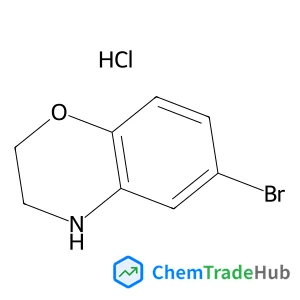
6-Bromo-3,4-dihydro-2H-1,4-benzoxazine hydrochloride (1:1)
CAS Number:
1260803-10-8
Molecular Formula:
C8H9BrClNO

![N-[2-(4-Hydroxyphenoxy)-4-nitrophenyl]methanesulfonamide structure](https://static.chemtradehub.com/structs/109/109032-22-6-7c88.webp "N-[2-(4-Hydroxyphenoxy)-4-nitrophenyl]methanesulfonamide structure")
N-[2-(4-Hydroxyphenoxy)-4-nitrophenyl]methanesulfonamide
CAS Number:
109032-22-6
Molecular Formula:
C13H12N2O6S
Recommended Suppliers



Disclaimer
This page provides academic journal information for reference and research purposes only. We are not affiliated with any journal publishers and do not handle publication submissions. For publication-related inquiries, please contact the respective journal publishers directly.
If you notice any inaccuracies in the information displayed, please contact us at support@chemtradehub.com. We will promptly review and address your concerns.