


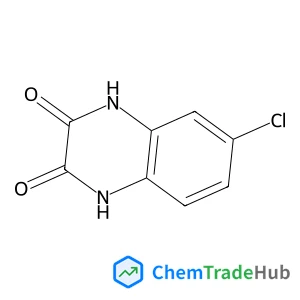
6-CHLORO-2,3-DIOXO-1,2,3,4-TETRAHYDROQUINOXALINE, 97
CAS Number:
169-14-2
Molecular Formula:
C8H5ClN2O2
Hao Hu, Xiu-Ju Hou, Xiao-Chen Wang, Jing-Jun Nie
Non-spherical nanoparticles have been proven to be promising materials for drug delivery systems. Spindly cellulose nanocrystals (CNCs) are one kind of natural organic nanoparticles with good biocompatibility and unique physico-chemical properties. In this work, gold (Au) nanoparticle-conjugated heterogeneous polymer brush-coated CNCs were prepared via different controllable polymerization techniques for effective biomedical applications. One bi-functional CNC-based initiator was first prepared to initiate both atom transfer radical polymerization (ATRP) and reversible addition–fragmentation chain transfer (RAFT) polymerization. Poly(poly(ethylene glycol)ethyl ether methacrylate) (PPEGEEMA) and poly(2-(dimethylamino)ethyl methacrylate) (PDMAEMA) brushes were individually grafted from CNCs. The cationic PDMAEMA chains complex genes effectively, while the uncharged PPEGEEMA brushes spread outwards and reduce the cytotoxicity significantly. In order to impart computed tomography (CT) imaging function to CNCs, Au nanoparticles as CT contrast agents were in situ formed on the CNC-based carriers by using the amine groups of PDMAEMA chains as reducing and protective agents. The in vitro CT imaging, gene condensation ability, cytotoxicity, gene transfection, and cellular uptake of CNC-based vectors were investigated in detail. Such effective CNC-based gene vectors with gold nanoparticle-conjugated heterogeneous polymer brushes would provide a promising multifunctional therapy system.

Chemistry of Natural Compounds

Canadian Metallurgical Quarterly

Ferroelectrics

Corrosion Science

Journal of the Chinese Chemical Society

Chemistry of Heterocyclic Compounds

Chemical & Pharmaceutical Bulletin

Journal of the American Chemical Society

Accounts of Chemical Research

Bulletin of the Chemical Society of Japan
Abdul Rahman, Qiaoxia Zhou, Xufeng Lin
DOI: 10.1039/C8OB01169A
Ting Qi, Shuai Fu, Xiang Zhang, Ting-Hao Liu, Qing-Zhu Li, Chuan Gou, Jun-Long Li
DOI: 10.1039/D1QO01071A
Bo Ren, Lu Gan, Li Zhang, Ningning Yan, Hai Dong
DOI: 10.1039/C8OB01464G
L. J. Bromhead, A. R. Norman, K. C. Snowden, B. J. Janssen, C. S. P. McErlean
DOI: 10.1039/C8OB01287C
Lingfeng Chen, Dong Zou, Patrick J. Walsh, Guang Liang
DOI: 10.1039/D1QO00992C
Yuan-Ye Jiang, Tian-Tian Liu, Xue Sun, Zhong-Yan Xu, Xia Fan, Ling Zhu, Siwei Bi
DOI: 10.1039/C8OB01338A
Yaxiong Wei, Min Zheng, Qiaohui Zhou, Xiaoguo Zhou, Shilin Liu
DOI: 10.1039/C8OB01410H
Yin-He Yang, Bin Di, Da-Song Yang
DOI: 10.1039/C8OB01365A
Chen Zhang
DOI: 10.1039/C8OB01397G
Soumendranath Mukhopadhyay, Subhas Chandra Pan
DOI: 10.1039/C8OB01399C
4-Nitrophenyl phosphate disodium salt hexahydrate is primarily used as a substra...
2-(Trifluoromethyl)-1,3-oxazole-4-carboxylic Acid (CAS: 1060816-01-4) is widely ...
2-Fluoro-4-biphenylcarboxylic acid should be stored in a cool, dry place at room...
Prednisolone-21-Carboxylic Acid is primarily used in the pharmaceutical industry...
4-(Hydrazinomethyl)-1,2,3-benzenetriol (CAS: 3614-72-0) should be stored in a co...
4-Amino-1-methyl-1H-pyrazole-5-carboxylic acid hydrochloride (CAS: 92534-70-8) i...
Dehydropachymic acid (CAS: 77012-31-8) is regulated by various agencies. It fall...
The market and research trends for 6-[(2,2-Dimethylpropanoyl)amino]nicotinic aci...
1,10-Phenanthroline-2,9-dicarbaldehyde should be stored in a cool, dry place awa...
5-Carbamoyl-11-oxo-10,11-dihydro-5H-dibenzo[b,f]azepin-10-yl acetate can be synt...

Polymer Chemistry welcomes submissions in all areas of polymer science that have a strong focus on macromolecular chemistry. Manuscripts may cover a broad range of fields, yet no direct application focus is required.

![S-[2,3-Bis(palmitoyloxy)propyl]-N-[(9H-fluoren-9-ylmethoxy)(hydroxy)methylene]cysteine structure](https://static.chemtradehub.com/structs/210/210532-98-2-f6a7.webp "S-[2,3-Bis(palmitoyloxy)propyl]-N-[(9H-fluoren-9-ylmethoxy)(hydroxy)methylene]cysteine structure")




