


Antimicrobial silica particles synthesized via ring-opening grafting of cationic amphiphilic cyclic carbonates: effects of hydrophobicity and structure
Literature Information
Publication Date
2016-02-29
DOI
10.1039/C6PY00194G
Impact Factor
5.582
Authors
Qingxing Xu, Chuan Yang, James L. Hedrick, Yi Yan Yang
View Original
Abstract
In this study, cationic amphiphilic cyclic carbonates with varying hydrophobicity and structure were synthesized and grafted onto amine-containing silica surface via a ring-opening nucleophilic addition reaction to impart antimicrobial properties. The presence of the coated layer on silica surface was verified by X-ray photoelectron spectroscopy (XPS) and thermogravimetric analysis (TGA). The effects of the alkyl chain length and the cationic group structure of the surface-grafted carbonate on the antimicrobial efficacy against Gram-positive S. aureus, and Gram-negative E. coli and P. aeruginosa were examined to understand the structure–activity relationship of the surface-coated silica particles. Results indicated that an optimal chain length of the hydrophobic alkyl tail, and the position of the cationic center and benzyl group were crucial in imparting high antimicrobial efficacy especially against difficult-to-kill P. aeruginosa. These quaternary ammonium-functionalized silica particles have various potential antimicrobial applications.
Recommended Journals

Chemistry of Natural Compounds

Australian Journal of Chemistry

Journal of the Chinese Chemical Society

Journal of the American Chemical Society

Bulletin of the Chemical Society of Japan

Advances in Colloid and Interface Science

Chemical Reviews

Ferroelectrics

Cement and Concrete Research

Chemistry of Heterocyclic Compounds
Related Literature
Brønsted acid-catalyzed dynamic kinetic resolution of in situ formed acyclic N,O-hemiaminals: cascade synthesis of chiral cyclic N,O-aminals
Xue-Jiao Lv, Yong-Chao Ming, Hui-Chun Wu
2021-09-16
Research Article
DOI: 10.1039/D1QO01135A
Synthesis of near-infrared absorbing and fluorescent bis(pyrrol-2-yl)squaraines and their halochromic properties
Yasuhiro Kubota, Masato Nakazawa, Junheon Lee, Ryoma Naoi, Motoki Tachikawa, Toshiyasu Inuzuka, Kazumasa Funabiki, Masaki Matsui, Taekyeong Kim
2021-09-10
Research Article
DOI: 10.1039/D1QO01169C
Nα-Amino acid containing privileged structures: design, synthesis and use in solid-phase peptide synthesis
Eva Schütznerová, Adam Přibylka
2018-07-12
Paper
DOI: 10.1039/C8OB01485J
Molecularly imprinted artificial esterases with highly specific active sites and precisely installed catalytic groups
Lan Hu, Yan Zhao
2018-07-24
Communication
DOI: 10.1039/C8OB01584H
Synthesis and evaluation of analogues of the glycinocin family of calcium-dependent antibiotics
Leo Corcilius, Dennis Y. Liu, Jessica L. Ochoa, Richard J. Payne
2018-07-06
Paper
DOI: 10.1039/C8OB01268G
Synthesis of chiral piperazin-2-ones through palladium-catalyzed asymmetric hydrogenation of pyrazin-2-ols
Guang-Shou Feng, Zi-Biao Zhao, Lei Shi
2021-09-14
Research Article
DOI: 10.1039/D1QO01144H
Ni-Catalyzed direct iminoalkynylation of unactivated olefins with terminal alkynes: facile access to alkyne-labelled pyrrolines
Xingjie Zhang, Di Qi, Chenchen Jiao, Zhiguo Zhang, Xiaopan Liu, Guisheng Zhang
2021-09-24
Research Article
DOI: 10.1039/D1QO01217G
Theoretical insight into the origins of chemo- and diastereo-selectivity in the palladium-catalysed (3 + 2) cyclisation of 5-alkenyl thiazolones
Ting Qi, Shuai Fu, Xiang Zhang, Ting-Hao Liu, Qing-Zhu Li, Chuan Gou, Jun-Long Li
2021-09-04
Research Article
DOI: 10.1039/D1QO01071A
Synthesis of N-acylbenzimidazoles through [4 + 1] annulation of N-arylpivalimidamides with dioxazolones
Xia Song, Xinyuan Cai, Xinying Zhang, Xuesen Fan
2021-09-14
Research Article
DOI: 10.1039/D1QO01137E
You might also like
Compound Q&A
What are the main uses of 4-Nitrophenyl phosphate disodium salt hexahydrate (CAS: 333338-18-4)?
4-Nitrophenyl phosphate disodium salt hexahydrate is primarily used as a substra...
333338-18-44-Nitrophenyl phosph...
Compound Q&A
What are the main uses of 2-(Trifluoromethyl)-1,3-oxazole-4-carboxylic Acid (CAS: 1060816-01-4)?
2-(Trifluoromethyl)-1,3-oxazole-4-carboxylic Acid (CAS: 1060816-01-4) is widely ...
1060816-01-42-(Trifluoromethyl)-...
Compound Q&A
How should 2-Fluoro-4-biphenylcarboxylic acid (CAS: 137045-30-8) be stored?
2-Fluoro-4-biphenylcarboxylic acid should be stored in a cool, dry place at room...
137045-30-82-Fluoro-4-biphenylc...
Compound Q&A
What industries use Prednisolone-21-Carboxylic Acid (CAS: 61549-70-0)?
Prednisolone-21-Carboxylic Acid is primarily used in the pharmaceutical industry...
61549-70-0Prednisolone-21-Carb...
Compound Q&A
How should 4-(Hydrazinomethyl)-1,2,3-benzenetriol (CAS: 3614-72-0) be stored?
4-(Hydrazinomethyl)-1,2,3-benzenetriol (CAS: 3614-72-0) should be stored in a co...
3614-72-04-(Hydrazinomethyl)-...
Compound Q&A
What industries use 4-Amino-1-methyl-1H-pyrazole-5-carboxylic acid hydrochloride (CAS: 92534-70-8)?
4-Amino-1-methyl-1H-pyrazole-5-carboxylic acid hydrochloride (CAS: 92534-70-8) i...
92534-70-84-Amino-1-methyl-1H-...
Compound Q&A
What regulatory guidelines apply to dehydropachymic acid (CAS: 77012-31-8)?
Dehydropachymic acid (CAS: 77012-31-8) is regulated by various agencies. It fall...
77012-31-8Dehydropachymic acid
Compound Q&A
What is the market or research trend for 6-[(2,2-Dimethylpropanoyl)amino]nicotinic acid (CAS: 898561-66-5)?
The market and research trends for 6-[(2,2-Dimethylpropanoyl)amino]nicotinic aci...
898561-66-56-[(2,2-Dimethylprop...
Compound Q&A
How should 1,10-Phenanthroline-2,9-dicarbaldehyde (CAS: 57709-62-3) be stored?
1,10-Phenanthroline-2,9-dicarbaldehyde should be stored in a cool, dry place awa...
57709-62-31,10-Phenanthroline-...
Compound Q&A
How is 5-Carbamoyl-11-oxo-10,11-dihydro-5H-dibenzo[b,f]azepin-10-yl acetate (CAS: 113952-21-9) typically synthesized?
5-Carbamoyl-11-oxo-10,11-dihydro-5H-dibenzo[b,f]azepin-10-yl acetate can be synt...
113952-21-95-Carbamoyl-11-oxo-1...
Source Journal
Polymer Chemistry

CiteScore:
8.6
Self-citation Rate:
7.3%
Articles per Year:
457
Polymer Chemistry welcomes submissions in all areas of polymer science that have a strong focus on macromolecular chemistry. Manuscripts may cover a broad range of fields, yet no direct application focus is required.
Recommended Compounds
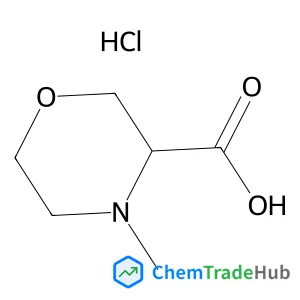
4-Methyl-3-morpholinecarboxylic acid hydrochloride (1:1)
CAS Number:
1240518-90-4
Molecular Formula:
C6H12ClNO3

Recommended Suppliers




Disclaimer
This page provides academic journal information for reference and research purposes only. We are not affiliated with any journal publishers and do not handle publication submissions. For publication-related inquiries, please contact the respective journal publishers directly.
If you notice any inaccuracies in the information displayed, please contact us at support@chemtradehub.com. We will promptly review and address your concerns.