












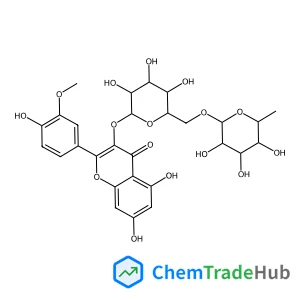
Front cover
Literature Information
Publication Date
DOI
10.1039/C6CP90195F
Impact Factor
3.676
Authors
View Original
Abstract
A graphical abstract is available for this content
Related Literature
Relaxation dynamics of deeply supercooled confined water in l,l-diphenylalanine micro/nanotubes
P. M. G. L. Ferreira, M. S. Ishikawa, S. Kogikoski, Jr., W. A. Alves, H. Martinho
2015-06-01
Paper
DOI: 10.1039/C5CP01055A
CO2 adsorption–desorption performance of mesoporous zirconium hydroxide with robust water durability
Y. Kamimura, A. Endo
2015-12-16
Paper
DOI: 10.1039/C5CP05211D
Multipole-preserving quadratures for the discretization of functions in real-space electronic structure calculations
2015-09-03
Paper
DOI: 10.1039/C5CP01236H
Ultrafast excited state hydrogen atom transfer in salicylideneaniline driven by changes in aromaticity
Luis Gutiérrez-Arzaluz, Fernando Cortés-Guzmán, Tomás Rocha-Rinza, Jorge Peón
2015-08-06
Communication
DOI: 10.1039/C5CP03699B
Theoretical analysis of NMR shieldings in XSe and XTe (X = Si, Ge, Sn and Pb): the spin-rotation constant saga
2015-12-21
Paper
DOI: 10.1039/C5CP07025B
Measurement and prediction of quantum coherence effects in biological processes
Aurélien de la Lande, Vicent Moliner, Dennis Salahub
2015-09-17
Editorial
DOI: 10.1039/C5CP90134K
Deviation of polarity from linearity in liquid mixtures containing an ionic liquid
Vijay Beniwal, Shashi K. Shukla, Anil Kumar
2015-11-04
Communication
DOI: 10.1039/C5CP05921F
Nuclear quantum tunnelling in enzymatic reactions – an enzymologist's perspective
Linus O. Johannissen, Sam Hay, Nigel S. Scrutton
2015-03-27
Perspective
DOI: 10.1039/C5CP00614G
Strain tuning of the charge density wave in monolayer and bilayer 1T-TaS2
Li-Yong Gan, Li-Hong Zhang, Qingyun Zhang, Chun-Sheng Guo, Udo Schwingenschlögl
2015-12-07
Paper
DOI: 10.1039/C5CP05695K
Thiolated Au18 cluster: preferred Ag sites for doping, structures, and optical and chiroptical properties
Bertha Molina, Alfredo Tlahuice-Flores
2015-12-03
Communication
DOI: 10.1039/C5CP05171A
You might also like
Compound Q&A
How should waste containing (6-Bromo-2-naphthyl)oxy](dimethyl)(2-methyl-2-propanyl)silane be handled?
Waste containing (6-Bromo-2-naphthyl)oxy](dimethyl)(2-methyl-2-propanyl)silane (...
100751-65-3[(6-Bromo-2-naphthyl...
Compound Q&A
How is 7-Fluoro-4-isoquinolinecarboxylic acid (CAS: 1841081-40-0) typically synthesized?
7-Fluoro-4-isoquinolinecarboxylic acid can be synthesized via a multi-step proce...
1841081-40-07-Fluoro-4-isoquinol...
Compound Q&A
What are the physical and chemical properties of 2,3,5,6-Tetrabromothieno[3,2-b]thiophene (CAS: 124638-53-5)?
2,3,5,6-Tetrabromothieno[3,2-b]thiophene is a crystalline compound with a high m...
124638-53-52,3,5,6-Tetrabromoth...
Compound Q&A
Is 1-[4-(Benzylamino)-7,8-dihydro-5H-pyrano[4,3-d]pyrimidin-2-yl]-2-methyl-1H-indole-4-carboxamide (CAS: 1542705-92-9) safe?
1-[4-(Benzylamino)-7,8-dihydro-5H-pyrano[4,3-d]pyrimidin-2-yl]-2-methyl-1H-indol...
1542705-92-91-[4-(Benzylamino)-7...
Compound Q&A
What is the market or research trend for imidazo[5,1-d]-1,2,3,5-tetrazine-8-carboxylic acid, 3,4-dihydro-3-methyl-4-oxo- (CAS: 113942-30-6)?
The market for imidazo[5,1-d]-1,2,3,5-tetrazine-8-carboxylic acid, 3,4-dihydro-3...
113942-30-6Imidazo[5,1-d]-1,2,3...
Compound Q&A
What is 3-(Triisopropylsilyl)propiolaldehyde (CAS: 163271-80-5)?
3-(Triisopropylsilyl)propiolaldehyde is a synthetic organic compound with the CA...
163271-80-53-(Triisopropylsilyl...
Compound Q&A
What regulatory guidelines apply to 6-Nitro-2H-1,4-benzoxazin-3(4H)-one (CAS: 81721-87-1)?
6-Nitro-2H-1,4-benzoxazin-3(4H)-one (CAS: 81721-87-1) is subject to various regu...
81721-87-16-Nitro-2H-1,4-benzo...
Compound Q&A
How should waste containing (3-Fluorophenyl)(4-{[(2-methyl-2-propanyl)oxy]carbonyl}-1-piperazinyl)acetic acid (CAS: 885272-91-3) be handled?
Waste containing (3-Fluorophenyl)(4-{[(2-methyl-2-propanyl)oxy]carbonyl}-1-piper...
885272-91-3(3-Fluorophenyl)(4-{...
Compound Q&A
What are the physical and chemical properties of N,N'-4,4'-Biphenyldiyldiisonicotinamide (CAS: 55119-40-9)?
N,N'-4,4'-Biphenyldiyldiisonicotinamide is a white crystalline solid with a mole...
55119-40-9N,N'-4,4'-Biphenyldi...
Compound Q&A
What industries use 6-Bromo-8-fluoro-2-quinazolinol (CAS: 1036756-15-6)?
6-Bromo-8-fluoro-2-quinazolinol is primarily used in the pharmaceutical industry...
1036756-15-66-Bromo-8-fluoro-2-q...
Source Journal
Physical Chemistry Chemical Physics

CiteScore:
5.5
Self-citation Rate:
10.3%
Articles per Year:
3036
Physical Chemistry Chemical Physics (PCCP) is an international journal co-owned by 19 physical chemistry and physics societies from around the world. This journal publishes original, cutting-edge research in physical chemistry, chemical physics and biophysical chemistry. To be suitable for publication in PCCP, articles must include significant innovation and/or insight into physical chemistry; this is the most important criterion that reviewers and Editors will judge against when evaluating submissions. The journal has a broad scope and welcomes contributions spanning experiment, theory, computation and data science. Topical coverage includes spectroscopy, dynamics, kinetics, statistical mechanics, thermodynamics, electrochemistry, catalysis, surface science, quantum mechanics, quantum computing and machine learning. Interdisciplinary research areas such as polymers and soft matter, materials, nanoscience, energy, surfaces/interfaces, and biophysical chemistry are welcomed if they demonstrate significant innovation and/or insight into physical chemistry. Joined experimental/theoretical studies are particularly appreciated when complementary and based on up-to-date approaches.
Recommended Compounds
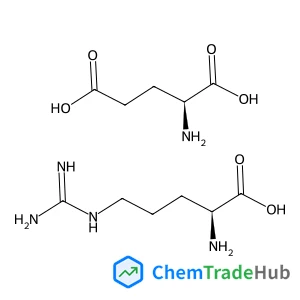

EthylenediaminetetraaceticacidcalciumDisodiumsalthydrate
CAS Number:
23411-34-9
Molecular Formula:
C10H16CaN2Na2O10
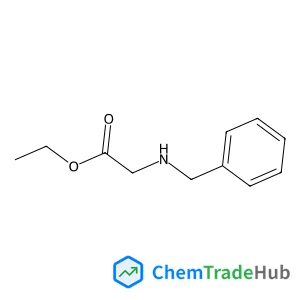
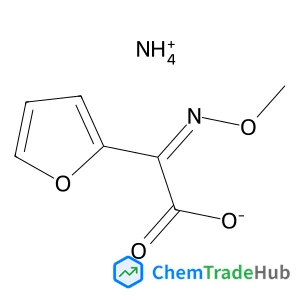
Ammonium (Z)-2-(furan-2-yl)-2-(methoxyimino)acetate
CAS Number:
97148-39-5
Molecular Formula:
C7H10N2O4
Recommended Suppliers





Disclaimer
This page provides academic journal information for reference and research purposes only. We are not affiliated with any journal publishers and do not handle publication submissions. For publication-related inquiries, please contact the respective journal publishers directly.
If you notice any inaccuracies in the information displayed, please contact us at support@chemtradehub.com. We will promptly review and address your concerns.