













Ligand size dependence of U–N and U–O bond character in a series of uranyl hexaphyrin complexes: quantum chemical simulation and density based analysis
Literature Information
Publication Date
2017-02-22
DOI
10.1039/C6CP08783C
Impact Factor
3.676
Authors
Poppy Di Pietro, Andrew Kerridge
View Original
Abstract
A series of uranyl complexes with hexaphyrin ligands are investigated at the density functional level of theory and analysed using a variety of density-based techniques. A relationship is identified between the size of the ligand and the stability of the complex, controlled by the presence of meso-carbon centres in the porphyrin ring. The complex with the smallest ligand, cyclo[6]pyrrole, is found to have enhanced covalent character in equatorial U–N bonds as defined by the quantum theory of atoms in molecules (QTAIM), as well as enhanced stability, compared to the larger complexes. QTAIM data are supported by electron density difference distributions, integrated electronic properties and analysis of the reduced density gradient (RDG), which all show unambiguous evidence of electron sharing in all U–N bonds. In all complexes, a weakening of the covalent axial U–Oyl interaction in comparison to free uranyl is found, with evidence for a separation of electronic charge resulting in a more ionic interaction. A relationship between covalent character in the U–N bonds and the magnitude of uranyl charge redistribution is identified, where the greater the covalent character of the U–N interaction, the more ionic the U–Oyl interaction appears. The complex with the largest ligand, hexaphyrin(1.1.1.1.1.1), is found to have additional interactions with the uranyl oxygen centres, perturbing the U–Oyl interaction.
Related Literature
Vertical vs. adiabatic ionization energies in solution and gas-phase: probing ionization-induced reorganization in conformationally-mobile bichromophoric actuators using photoelectron spectroscopy, electrochemistry and theory
Maxim V. Ivanov, Denan Wang, Depeng Zhang, Rajendra Rathore, Scott A. Reid
2018-09-24
Paper
DOI: 10.1039/C8CP02936A
A detailed insight into the catalytic reduction of NO operated by Cr–Cu nanostructures embedded in a CeO2 surface
Mauro Boero, Kazuki Tamai
2018-08-08
Paper
DOI: 10.1039/C8CP04314K
Properties of perhalogenated {closo-B10} and {closo-B11} multiply charged anions and a critical comparison with {closo-B12} in the gas and the condensed phase
Jonas Warneke, Szymon Z. Konieczka, Gao-Lei Hou, Edoardo Aprà, Christoph Kerpen, Fabian Keppner, Thomas C. Schäfer, Michael Deckert, Zheng Yang, Eric J. Bylaska, Grant E. Johnson, Julia Laskin, Xue-Bin Wang, Maik Finze
2018-11-07
Paper
DOI: 10.1039/C8CP05313H
Electron localization in niobium doped CaMnO3 due to the energy difference of electronic states of Mn and Nb
Yi Li, Jian Liu, Ji-Chao Li, Yu-Fei Chen, Xin-Miao Zhang, Xue-Jin Wang, Fu-Ning Wang, Wen-Bin Su, Lan-Ling Zhao, Chun-Lei Wang
2018-07-23
Paper
DOI: 10.1039/C8CP02783H
Electronic and magnetic properties of CoPc and FePc molecules on graphene: the substrate, defect, and hydrogen adsorption effects
Xiaoguang Li, Jinlong Yang
2019-02-12
Paper
DOI: 10.1039/C8CP07091A
Structural and bonding properties of Cu3O3− and Cu3O4− clusters: anion photoelectron spectroscopy and density functional calculations
Xi-Ling Xu, Bin Yang, Zhi-You Wei, Guo-Jin Cao, Hong-Guang Xu
2018-07-23
Paper
DOI: 10.1039/C8CP03302A
Dissociative electron attachment induced ring opening in five-membered heterocyclic compounds
Ian Carmichael
2018-06-19
Paper
DOI: 10.1039/C8CP02718H
The energy level of the Fe2+/3+-transition in BaTiO3 and SrTiO3 single crystals
Issei Suzuki, Leonard Gura, Andreas Klein
2019-02-26
Paper
DOI: 10.1039/C8CP07872F
Tuning the magnetic properties of beryllium chains
Noelia Faginas-Lago, Thierry Leininger, Stefano Evangelisti
2019-02-27
Paper
DOI: 10.1039/C8CP07159D
Effect of an external electric field on capillary filling of water in hydrophilic silica nanochannels
Andres Rojano Crisson, Enrique Wagemann, Harvey A. Zambrano
2018-06-22
Paper
DOI: 10.1039/C8CP03186J
You might also like
Compound Q&A
Is 6-(3-Fluorophenyl)picolinic acid (CAS: 887982-40-3) safe?
6-(3-Fluorophenyl)picolinic acid is generally considered safe for laboratory use...
887982-40-36-(3-Fluorophenyl)pi...
Compound Q&A
What industries use (3R)-3-Pyrrolidinol (CAS: 2799-21-5)?
(3R)-3-Pyrrolidinol is used in the pharmaceutical industry as a precursor for dr...
2799-21-5(3R)-3-Pyrrolidinol
Compound Q&A
What precautions should be taken when handling (4R,5R)-4,5-Diethoxycarbonyl-2,2-dimethyldioxolane (CAS: 59779-75-8)?
When handling (4R,5R)-4,5-Diethoxycarbonyl-2,2-dimethyldioxolane (CAS: 59779-75-...
59779-75-8(4R,5R)-4,5-Diethoxy...
Compound Q&A
How is 1-(6-Chloroimidazo[1,2-b]pyridazin-3-yl)ethanone (CAS: 90734-71-7) typically synthesized?
1-(6-Chloroimidazo[1,2-b]pyridazin-3-yl)ethanone is often synthesized via a mult...
90734-71-71-(6-Chloroimidazo[1...
Compound Q&A
What is the market or research trend for N-Ethyl-3,4-dimethylbenzylamine (CAS: 39180-83-1)?
The market for N-Ethyl-3,4-dimethylbenzylamine (CAS: 39180-83-1) remains steady,...
39180-83-1N-Ethyl-3,4-dimethyl...
Compound Q&A
What is Tert-butyl 3-(pyrrolidin-1-yl)azetidine-1-carboxylate (CAS: 1019008-21-9)?
Tert-butyl 3-(pyrrolidin-1-yl)azetidine-1-carboxylate is a chemical compound wit...
1019008-21-9Tert-butyl 3-(pyrrol...
Compound Q&A
What regulatory guidelines apply to 1-Bromo-3-chloro-2,4-dimethoxybenzene (CAS: 1228956-93-1)?
1-Bromo-3-chloro-2,4-dimethoxybenzene (CAS: 1228956-93-1) falls under the classi...
1228956-93-11-Bromo-3-chloro-2,4...
Compound Q&A
Is 8-Bromo-2-methyl-3,4-dihydroisoquinolin-1(2H)-one (CAS: 1368622-07-4) safe?
The safety of 8-Bromo-2-methyl-3,4-dihydroisoquinolin-1(2H)-one (CAS: 1368622-07...
1368622-07-48-Bromo-2-methyl-3,4...
Compound Q&A
Is Benzyl [(3S)-2,6-dioxo-3-piperidinyl]carbamate (CAS: 22785-43-9) safe?
Benzyl [(3S)-2,6-dioxo-3-piperidinyl]carbamate is generally safe when handled wi...
22785-43-9Benzyl [(3S)-2,6-dio...
Compound Q&A
How should 1-{[4-(4,4,5,5-Tetramethyl-1,3,2-dioxaborolan-2-yl)phenyl]sulfonyl}pyrrolidine (CAS: 928657-21-0) be stored?
1-{[4-(4,4,5,5-Tetramethyl-1,3,2-dioxaborolan-2-yl)phenyl]sulfonyl}pyrrolidine s...
928657-21-01-{[4-(4,4,5,5-Tetra...
Source Journal
Physical Chemistry Chemical Physics

CiteScore:
5.5
Self-citation Rate:
10.3%
Articles per Year:
3036
Physical Chemistry Chemical Physics (PCCP) is an international journal co-owned by 19 physical chemistry and physics societies from around the world. This journal publishes original, cutting-edge research in physical chemistry, chemical physics and biophysical chemistry. To be suitable for publication in PCCP, articles must include significant innovation and/or insight into physical chemistry; this is the most important criterion that reviewers and Editors will judge against when evaluating submissions. The journal has a broad scope and welcomes contributions spanning experiment, theory, computation and data science. Topical coverage includes spectroscopy, dynamics, kinetics, statistical mechanics, thermodynamics, electrochemistry, catalysis, surface science, quantum mechanics, quantum computing and machine learning. Interdisciplinary research areas such as polymers and soft matter, materials, nanoscience, energy, surfaces/interfaces, and biophysical chemistry are welcomed if they demonstrate significant innovation and/or insight into physical chemistry. Joined experimental/theoretical studies are particularly appreciated when complementary and based on up-to-date approaches.
Recommended Compounds
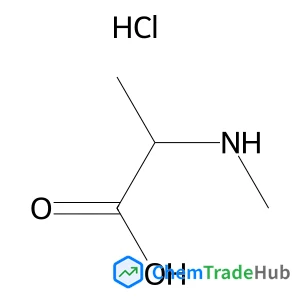
(R)-2-(Methylamino)propanoic acid hydrochloride
CAS Number:
1155878-14-0
Molecular Formula:
C4H10ClNO2
![Benzyl spiro[indole-3,4'-piperidine]-1(2H)-carboxylate hydrochloride (1:1) structure](https://static.chemtradehub.com/structs/159/159635-46-8-8de0.webp "Benzyl spiro[indole-3,4'-piperidine]-1(2H)-carboxylate hydrochloride (1:1) structure")
Benzyl spiro[indole-3,4'-piperidine]-1(2H)-carboxylate hydrochloride (1:1)
CAS Number:
159635-46-8
Molecular Formula:
C20H23ClN2O2
Recommended Suppliers






Disclaimer
This page provides academic journal information for reference and research purposes only. We are not affiliated with any journal publishers and do not handle publication submissions. For publication-related inquiries, please contact the respective journal publishers directly.
If you notice any inaccuracies in the information displayed, please contact us at support@chemtradehub.com. We will promptly review and address your concerns.