












Temperature dependence of ion diffusion coefficients in NaCl electrolyte confined within graphene nanochannels
Literature Information
Publication Date
2017-02-20
DOI
10.1039/C6CP08752C
Impact Factor
3.676
Authors
Jing Kong, Zheng Bo, Huachao Yang, Jinyuan Yang, Xiaorui Shuai, Jianhua Yan, Kefa Cen
View Original
Abstract
The behavior of ion diffusion in nano-confined spaces and its temperature dependence provide important fundamental information about electric double-layer capacitors (EDLCs) employing nano-sized active materials. In this work, the ion diffusion coefficients of NaCl electrolyte confined within neutral and charged graphene nanochannels at different temperatures are investigated using molecular dynamics simulations. The results show that ions confined in neutral nanochannels diffuse faster (along the graphene surfaces) than those in bulk solution, which could be attributed to the relatively smaller concentration in confined spaces and the solvophobic nature of graphene surfaces. In charged nanochannels where the electrostatic interactions between counter-ions and charged channel surfaces govern the motion of ions, the diffusion coefficients are found to be lower than those in the neutral counterparts. The increase of temperature will lead to enhanced vibrant thermal motion of ions. Due to the significant role of ion–surface interactions, ion diffusion coefficients in nano-confined spaces are more stable, that is, insensitive to the temperature variation, than those in bulk solution. The electrical conductivity is further estimated using the Nernst–Einstein equation. The findings of the current work could provide basic data and information for research studies on the thermal effects of graphene-based EDLCs.
Related Literature
Self-healing and self-mendable polymers
Jay A. Syrett, C. Remzi Becer, David M. Haddleton
2010-05-13
Review Article
DOI: 10.1039/C0PY00104J
Use of spin traps to measure the addition and fragmentation rate coefficients of small molecule RAFT-adduct radicals
Elena Chernikova, Vladimir Golubev, Anatoly Filippov, Ching Yeh Lin, Michelle L. Coote
2010-09-06
Communication
DOI: 10.1039/C0PY00245C
Functional polymers for optoelectronic applications by RAFT polymerization
Graeme Moad, Ming Chen, Matthias Häussler, Almar Postma, Ezio Rizzardo, San H. Thang
2010-09-23
Review Article
DOI: 10.1039/C0PY00179A
Synthesis of nanogels/microgels by conventional and controlled radical crosslinking copolymerization
Nicolas Sanson, Jutta Rieger
2010-04-26
Review Article
DOI: 10.1039/C0PY00010H
Single step reductive polymerization of functional 3,4-propylenedioxythiophenes via direct C–H arylation catalyzed by palladium acetate
Anshu Kumar, Anil Kumar
2009-12-21
Communication
DOI: 10.1039/B9PY00265K
The role of responsive branched copolymer composition in controlling pH-triggered aggregation of “engineered” emulsion droplets: towards selective droplet assembly‡
Robert T. Woodward, Jonathan V. M. Weaver
2010-10-20
Paper
DOI: 10.1039/C0PY00277A
Characterization of network structure in radiation-cured resins of polyfunctional acrylic ester and N-vinylpyrrolidone by MALDI-MS combined with supercritical methanolysis
Hideki Matsubara, Hiroyasu Kataoka, Hajime Ohtani
2010-05-19
Paper
DOI: 10.1039/C0PY00026D
Hydrophilization of poly(ether ether ketone) films by surface-initiated atom transfer radical polymerization
Charlotte Juel Fristrup, Katja Jankova, Søren Hvilsted
2010-09-13
Paper
DOI: 10.1039/C0PY00142B
PMMA based soluble polymeric temperature sensors based on UCST transition and solvatochromic dyes
2010-06-12
Communication
DOI: 10.1039/C0PY00162G
You might also like
Compound Q&A
Is 6-(3-Fluorophenyl)picolinic acid (CAS: 887982-40-3) safe?
6-(3-Fluorophenyl)picolinic acid is generally considered safe for laboratory use...
887982-40-36-(3-Fluorophenyl)pi...
Compound Q&A
What industries use (3R)-3-Pyrrolidinol (CAS: 2799-21-5)?
(3R)-3-Pyrrolidinol is used in the pharmaceutical industry as a precursor for dr...
2799-21-5(3R)-3-Pyrrolidinol
Compound Q&A
What precautions should be taken when handling (4R,5R)-4,5-Diethoxycarbonyl-2,2-dimethyldioxolane (CAS: 59779-75-8)?
When handling (4R,5R)-4,5-Diethoxycarbonyl-2,2-dimethyldioxolane (CAS: 59779-75-...
59779-75-8(4R,5R)-4,5-Diethoxy...
Compound Q&A
How is 1-(6-Chloroimidazo[1,2-b]pyridazin-3-yl)ethanone (CAS: 90734-71-7) typically synthesized?
1-(6-Chloroimidazo[1,2-b]pyridazin-3-yl)ethanone is often synthesized via a mult...
90734-71-71-(6-Chloroimidazo[1...
Compound Q&A
What is the market or research trend for N-Ethyl-3,4-dimethylbenzylamine (CAS: 39180-83-1)?
The market for N-Ethyl-3,4-dimethylbenzylamine (CAS: 39180-83-1) remains steady,...
39180-83-1N-Ethyl-3,4-dimethyl...
Compound Q&A
What is Tert-butyl 3-(pyrrolidin-1-yl)azetidine-1-carboxylate (CAS: 1019008-21-9)?
Tert-butyl 3-(pyrrolidin-1-yl)azetidine-1-carboxylate is a chemical compound wit...
1019008-21-9Tert-butyl 3-(pyrrol...
Compound Q&A
What regulatory guidelines apply to 1-Bromo-3-chloro-2,4-dimethoxybenzene (CAS: 1228956-93-1)?
1-Bromo-3-chloro-2,4-dimethoxybenzene (CAS: 1228956-93-1) falls under the classi...
1228956-93-11-Bromo-3-chloro-2,4...
Compound Q&A
Is 8-Bromo-2-methyl-3,4-dihydroisoquinolin-1(2H)-one (CAS: 1368622-07-4) safe?
The safety of 8-Bromo-2-methyl-3,4-dihydroisoquinolin-1(2H)-one (CAS: 1368622-07...
1368622-07-48-Bromo-2-methyl-3,4...
Compound Q&A
Is Benzyl [(3S)-2,6-dioxo-3-piperidinyl]carbamate (CAS: 22785-43-9) safe?
Benzyl [(3S)-2,6-dioxo-3-piperidinyl]carbamate is generally safe when handled wi...
22785-43-9Benzyl [(3S)-2,6-dio...
Compound Q&A
How should 1-{[4-(4,4,5,5-Tetramethyl-1,3,2-dioxaborolan-2-yl)phenyl]sulfonyl}pyrrolidine (CAS: 928657-21-0) be stored?
1-{[4-(4,4,5,5-Tetramethyl-1,3,2-dioxaborolan-2-yl)phenyl]sulfonyl}pyrrolidine s...
928657-21-01-{[4-(4,4,5,5-Tetra...
Source Journal
Physical Chemistry Chemical Physics

CiteScore:
5.5
Self-citation Rate:
10.3%
Articles per Year:
3036
Physical Chemistry Chemical Physics (PCCP) is an international journal co-owned by 19 physical chemistry and physics societies from around the world. This journal publishes original, cutting-edge research in physical chemistry, chemical physics and biophysical chemistry. To be suitable for publication in PCCP, articles must include significant innovation and/or insight into physical chemistry; this is the most important criterion that reviewers and Editors will judge against when evaluating submissions. The journal has a broad scope and welcomes contributions spanning experiment, theory, computation and data science. Topical coverage includes spectroscopy, dynamics, kinetics, statistical mechanics, thermodynamics, electrochemistry, catalysis, surface science, quantum mechanics, quantum computing and machine learning. Interdisciplinary research areas such as polymers and soft matter, materials, nanoscience, energy, surfaces/interfaces, and biophysical chemistry are welcomed if they demonstrate significant innovation and/or insight into physical chemistry. Joined experimental/theoretical studies are particularly appreciated when complementary and based on up-to-date approaches.
Recommended Compounds
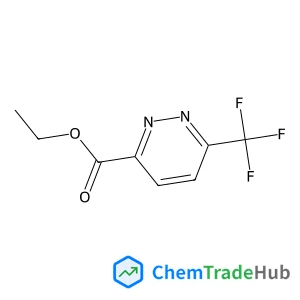
Ethyl 6-(trifluoromethyl)pyridazine-3-carboxylate
CAS Number:
1192155-06-8
Molecular Formula:
C8H7F3N2O2
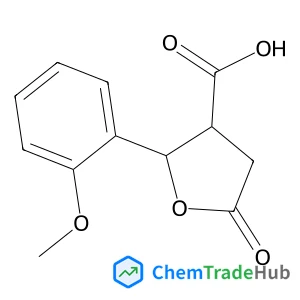
trans-2-(2-Methoxyphenyl)-5-oxotetrahydrofuran-3-carboxylic acid
CAS Number:
99226-02-5
Molecular Formula:
C12H12O5
Recommended Suppliers





Disclaimer
This page provides academic journal information for reference and research purposes only. We are not affiliated with any journal publishers and do not handle publication submissions. For publication-related inquiries, please contact the respective journal publishers directly.
If you notice any inaccuracies in the information displayed, please contact us at support@chemtradehub.com. We will promptly review and address your concerns.