












Nonadiabatic photodynamics and UV absorption spectrum of all-trans-octatetraene
Literature Information
Publication Date
2017-01-06
DOI
10.1039/C6CP07640H
Impact Factor
3.676
Authors
Igor Lyskov, Horst Köppel, Christel M. Marian
View Original
Abstract
The short-time molecular quantum dynamics of all-trans-octatetraene after electronic excitation to the first bright valence state is theoretically investigated. A semiempirical approach of a multireference configuration interaction based on density functional theory, the so called hybrid DFT/MRCI, in both its original and redesigned formulations, is used for treating the electronic part of the problem. The nuclear kinetic part is defined with the help of symmetry-adapted internal coordinates also suitable for a large amplitude displacement. By incorporating ten in-plane and two out-of-plane nuclear degrees of freedom in the underlying Hamiltonian, the results of the time evolution of the excited wave packet are discussed. We show that the population transfer between the two coupled low-lying states in all-trans-octatetraene occurs in a 100–200 fs time regime. The calculated UV absorption spectra describe the main vibronic features correctly except for the band associated with the single-bond stretching motion which lacks intensity. The possible products of the photoisomerization in terms of symmetry-adapted coordinates are also discussed.
Recommended Journals
Related Literature
Spectro-microscopic photoemission evidence of charge uncompensated areas in Pb(Zr,Ti)O3(001) layers
Dana Georgeta Popescu, Marius Adrian Huşanu, Lucian Trupinǎ, Luminiţa Hrib, Lucian Pintilie, Alexei Barinov, Silvano Lizzit, Paolo Lacovig, Cristian Mihail Teodorescu
2014-11-05
Paper
DOI: 10.1039/C4CP04546G
Solvent-mediated molar conductivity of protic ionic liquids
Sachin Thawarkar, Nageshwar D. Khupse, Anil Kumar
2014-11-05
Paper
DOI: 10.1039/C4CP04591B
Human serum albumin binding to silica nanoparticles – effect of protein fatty acid ligand
Joo Chuan Ang, Mark J. Henderson, Richard A. Campbell, Jhih-Min Lin, Peter N. Yaron, Andrew Nelson, Thomas Faunce, John W. White
2014-02-19
Paper
DOI: 10.1039/C4CP00293H
Electronic structure of positive and negative polarons in functionalized dithienylthiazolo[5,4-d]thiazoles: a combined EPR and DFT study
Yun Ling, Sarah Van Mierloo, Alexander Schnegg, Matthias Fehr, Peter Adriaensens, Laurence Lutsen, Dirk Vanderzande, Wouter Maes, Etienne Goovaerts, Sabine Van Doorslaer
2014-01-23
Paper
DOI: 10.1039/C3CP54635G
Interaction of gold nanoparticles mediated by captopril and S-nitrosocaptopril: the effect of manganese ions in mild acid medium
Emilia Iglesias, Rafael Prado-Gotor
2014-11-07
Paper
DOI: 10.1039/C4CP03969F
More stable and more efficient alternatives of Z-907: carbazole-based amphiphilic Ru(ii) sensitizers for dye-sensitized solar cells
Hammad Cheema, Ashraful Islam, Robert Younts, Bhoj Gautam, Idriss Bedja, Ravindra Kumar Gupta, Liyuan Han, Kenan Gundogdu, Ahmed El-Shafei
2014-10-31
Paper
DOI: 10.1039/C4CP04120H
Di- and tri-oxalkyl derivatives of a boron dipyrromethene (BODIPY) rotor dye in lipid bilayers
Marie Olšinová, Piotr Jurkiewicz, Michal Pozník, Radek Šachl, Tereza Prausová, Martin Hof, Václav Kozmík, Filip Teplý, Jiří Svoboda, Marek Cebecauer
2014-04-10
Paper
DOI: 10.1039/C4CP00888J
Stress in titania nanoparticles: an atomistic study
Robert Darkins, Maria L. Sushko, Jun Liu, Dorothy M. Duffy
2014-04-03
Paper
DOI: 10.1039/C3CP54357A
The influence of the electrolyte on chemical and morphological modifications of an iron sulfide thin film negative electrode
Feng Liao, Jolanta Światowska, Vincent Maurice, Antoine Seyeux, Lorena H. Klein, Sandrine Zanna, Philippe Marcus
2014-11-10
Paper
DOI: 10.1039/C4CP04041D
Beyond the molecular orbital conception of electronically excited states through the quantum theory of atoms in molecules
David Ferro-Costas, Ángel Martín Pendás, Leticia González, Ricardo A. Mosquera
2014-03-17
Paper
DOI: 10.1039/C4CP00431K
You might also like
Compound Q&A
How should waste containing N-Methoxy-N-methyl-1,3-thiazole-5-carboxamide (CAS: 898825-89-3) be handled?
Waste containing N-Methoxy-N-methyl-1,3-thiazole-5-carboxamide (CAS: 898825-89-3...
898825-89-3N-Methoxy-N-methyl-1...
Compound Q&A
How should N-(4-Biphenylyl)dibenzo[b,d]furan-4-amine (CAS: 1318338-47-4) be stored?
N-(4-Biphenylyl)dibenzo[b,d]furan-4-amine should be stored in a tightly sealed c...
1318338-47-4N-(4-Biphenylyl)dibe...
Compound Q&A
What is the market or research trend for 3-Acetamido-5-amino-2,4,6-triiodobenzoic acid (CAS: 1713-07-1)?
The market for 3-Acetamido-5-amino-2,4,6-triiodobenzoic acid (CAS: 1713-07-1) is...
1713-07-13-Acetamido-5-amino-...
Compound Q&A
How should Benzyl 2-O-acetyl-3,4,6-tri-O-benzyl-beta-D-galactopyranoside (CAS: 61820-03-9) be stored?
Benzyl 2-O-acetyl-3,4,6-tri-O-benzyl-beta-D-galactopyranoside (CAS: 61820-03-9) ...
61820-03-9Benzyl 2-O-acetyl-3,...
Compound Q&A
What regulatory guidelines apply to 2-Ethylpiperazine dihydrochloride (CAS: 438050-52-3)?
2-Ethylpiperazine dihydrochloride (CAS: 438050-52-3) is regulated under the Glob...
438050-52-32-Ethylpiperazine di...
Compound Q&A
What regulatory guidelines apply to 1,1'-[1,3-Phenylenebis(methylene)]bis(3-methyl-1H-pyrrole-2,5-dione) (CAS: 119462-56-5)?
1,1'-[1,3-Phenylenebis(methylene)]bis(3-methyl-1H-pyrrole-2,5-dione) (CAS: 11946...
119462-56-51,1'-[1,3-Phenyleneb...
Compound Q&A
Are there alternatives to 5-Fluoro-2-(1-pyrrolidinyl)pyridine (CAS: 1287217-79-1) in synthesis?
Several alternatives can be used in the synthesis of 5-Fluoro-2-(1-pyrrolidinyl)...
1287217-79-15-Fluoro-2-(1-pyrrol...
Compound Q&A
What precautions should be taken when handling 1-((2R,3R,4R,5R)-5-((bis(4-methoxyphenyl)(phenyl)methoxy)methyl)-4-hydroxy-3-methoxytetrahydrofuran-2-yl)-5-methylpyrimidine-2,4(1H,3H)-dione (CAS: 153631-19-7)?
Proper personal protective equipment (PPE) must be worn when handling this compo...
153631-19-71-((2R,3R,4R,5R)-5-(...
Compound Q&A
What precautions should be taken when handling 6-Bromoimidazo[1,2-a]pyridin-8-amine (CAS: 676371-00-9)?
When handling 6-Bromoimidazo[1,2-a]pyridin-8-amine, it is important to wear appr...
676371-00-96-Bromoimidazo[1,2-a...
Compound Q&A
Are there alternatives to (2S,4R)-4-(4-Nitrobenzyl)pyrrolidine-2-carboxylic acid hydrochloride (CAS: 1049740-22-8) in synthesis?
Alternatives to (2S,4R)-4-(4-Nitrobenzyl)pyrrolidine-2-carboxylic acid hydrochlo...
1049740-22-8(2S,4R)-4-(4-Nitrobe...
Source Journal
Physical Chemistry Chemical Physics

CiteScore:
5.5
Self-citation Rate:
10.3%
Articles per Year:
3036
Physical Chemistry Chemical Physics (PCCP) is an international journal co-owned by 19 physical chemistry and physics societies from around the world. This journal publishes original, cutting-edge research in physical chemistry, chemical physics and biophysical chemistry. To be suitable for publication in PCCP, articles must include significant innovation and/or insight into physical chemistry; this is the most important criterion that reviewers and Editors will judge against when evaluating submissions. The journal has a broad scope and welcomes contributions spanning experiment, theory, computation and data science. Topical coverage includes spectroscopy, dynamics, kinetics, statistical mechanics, thermodynamics, electrochemistry, catalysis, surface science, quantum mechanics, quantum computing and machine learning. Interdisciplinary research areas such as polymers and soft matter, materials, nanoscience, energy, surfaces/interfaces, and biophysical chemistry are welcomed if they demonstrate significant innovation and/or insight into physical chemistry. Joined experimental/theoretical studies are particularly appreciated when complementary and based on up-to-date approaches.
Recommended Compounds
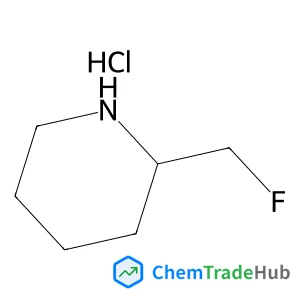
(2S)-2-(Fluoromethyl)piperidine hydrochloride (1:1)
CAS Number:
886216-73-5
Molecular Formula:
C6H13ClFN
Recommended Suppliers




Disclaimer
This page provides academic journal information for reference and research purposes only. We are not affiliated with any journal publishers and do not handle publication submissions. For publication-related inquiries, please contact the respective journal publishers directly.
If you notice any inaccuracies in the information displayed, please contact us at support@chemtradehub.com. We will promptly review and address your concerns.