












Conformational structures of jet-cooled acetaminophen–water clusters: a gas phase spectroscopic and computational study
Literature Information
Publication Date
2017-01-12
DOI
10.1039/C6CP06863D
Impact Factor
3.676
Authors
Ahreum Min, Ahreum Ahn, Cheol Joo Moon, Ji Hoon Lee, Yeon Guk Seong, Seong Keun Kim, Myong Yong Choi
View Original
Abstract
Jet-cooled acetaminophen (AAP)–water clusters, AAP–(H2O)1, were investigated by mass-selected resonant two-photon ionization (R2PI), ultraviolet–ultraviolet hole-burning (UV–UV HB), infrared-dip (IR-dip), and infrared–ultraviolet hole-burning (IR–UV HB) spectroscopy. Each syn- and anti-AAP rotamer has three distinctive binding sites (–OH, >CO, and >NH) for a water molecule, thus 6 different AAP–(H2O)1 conformers are expected to exist in the molecular beam. The origin bands of the AAP(OH)–(H2O)1 and AAP(CO)–(H2O)1 conformers (including their syn- and anti-conformers) in the R2PI spectrum are shifted to red and blue compared to those of the AAP monomer, respectively. These frequency shifts upon complexation between a water molecule and a specific binding site of AAP are also predicted by theoretical calculations. The spectral assignments of the origin bands in the R2PI spectra and the IR vibrational bands in the IR-dip spectra of the four lowest-energy conformers of AAP–(H2O)1, [syn- and anti-AAP(OH)–(H2O)1 and syn- and anti-AAP(CO)–(H2O)1], are aided by ab initio and time-dependent density functional theory (TDDFT) calculations. Further investigation of the IR-dip spectra has revealed a hydrogen-bonded NH stretching mode, supporting the presence of the syn-AAP(NH)–(H2O)1 conformer. Moreover, by employing IR–UV HB spectroscopy, we have reconfirmed the existence of the syn-AAP(NH)–(H2O)1 conformer, which happened to be buried underneath the broad background contributed by the AAP(OH)–(H2O)1 conformers. These observations have led us to conclude that all of the possible conformers of AAP–(H2O)1 have been found in this study.
Related Literature
Construction of superhydrophobic surfaces by fibrous aggregation of perfluoroalkyl chain-containing organogelators
Motoshi Yamanaka, Kazuki Sada, Mikiji Miyata, Kenji Hanabusa, Kazunori Nakano
2006-04-24
Communication
DOI: 10.1039/B601485B
Synthesis of pyrroles: reaction of chromium N-alkylaminocarbene complexes with α,β-unsaturated aldehydes
Kohei Fuchibe, Daisuke Ono, Takahiko Akiyama
2006-04-26
Communication
DOI: 10.1039/B602924H
Metal complexes of selenophosphinates from reactions with (R2PSe)2Se: [M(R2PSe2)n] (M = ZnII, CdII, PbII, InIII, GaIII, CuI, BiIII, NiII; R = iPr, Ph) and [MoV2O2Se2(Se2PiPr2)2]
Chinh Q. Nguyen, Adekunle Adeogun, Mohammad Afzaal, Mohammad A. Malik, Paul O'Brien
2006-04-21
Communication
DOI: 10.1039/B603198F
Synthesis, structure, and olefinpolymerization with nickel(ii) N-heterocyclic carbene enolates
Benjamin E. Ketz, Xavier G. Ottenwaelder, Robert M. Waymouth
2005-10-20
Communication
DOI: 10.1039/B511202H
Supramolecular cruciforms
Warren W. Gerhardt, Anthony J. Zucchero, James N. Wilson, Clinton R. South, Uwe H. F. Bunz, Marcus Weck
2006-03-21
Communication
DOI: 10.1039/B602087A
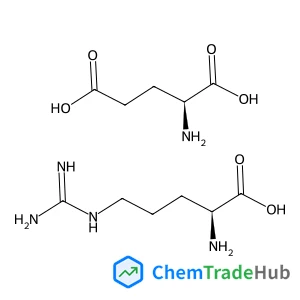
Simple transformation of crystalline chiral natural anions to liquid medium and their use to induce chirality
Luís C. Branco, Pedro M. P. Gois, Nuno M. T. Lourenço, Vanya B. Kurteva, Carlos A. M. Afonso
2006-05-10
Communication
DOI: 10.1039/B600816J
High energy density materials from azido cyclophosphazenes
K. Muralidharan, Bamidele A. Omotowa, Brendan Twamley, Crystal Piekarski, Jean′ne M. Shreeve
2005-09-20
Communication
DOI: 10.1039/B510924H
Direction of unusual mixed-ligand metal–organic frameworks: a new type of 3-D polythreading involving 1-D and 2-D structural motifs and a 2-fold interpenetrating porous network
Miao Du, Xiu-Juan Jiang, Xiao-Jun Zhao
2005-10-07
Communication
DOI: 10.1039/B509875K
Effect of residual monomer on the spectroscopic properties of polythiophenes
Yu Wang, Ashley A. Mills, William B. Euler, Brett L. Lucht
2006-04-11
Communication
DOI: 10.1039/B600793G
Sandwich-shaped silver(i) metallomacrocycles encapsulating a XF62− (X = Si, Ge and Sn) anion
Masahiko Maekawa, Susumu Kitagawa, Takayoshi Kuroda-Sowa, Megumu Munakata
2006-03-17
Communication
DOI: 10.1039/B518411H
You might also like
Compound Q&A
What are the main uses of 1H-Indazole-6-carbonitrile (CAS: 141290-59-7)?
1H-Indazole-6-carbonitrile finds applications in pharmaceuticals, where it serve...
141290-59-71H-Indazole-6-carbon...
Compound Q&A
How should waste containing Dioctyl (2E)-2-butenedioate (CAS: 2997-85-5) be handled?
Waste containing Dioctyl (2E)-2-butenedioate (CAS: 2997-85-5) should be collecte...
2997-85-5Dioctyl (2E)-2-buten...
Compound Q&A
What industries use Sodium [(1,2-benzoxazol-3-ylmethyl)sulfonyl]azanide (CAS: 68291-98-5)?
Sodium [(1,2-benzoxazol-3-ylmethyl)sulfonyl]azanide is primarily used in pharmac...
68291-98-5Sodium [(1,2-benzoxa...
Compound Q&A
Are there alternatives to Dimethyl 4-(4,4,5,5-tetramethyl-1,3,2-dioxaborolan-2-yl)-2,6-pyridinedicarboxylate (CAS: 741709-66-0) in synthesis?
Dimethyl 4-(4,4,5,5-tetramethyl-1,3,2-dioxaborolan-2-yl)-2,6-pyridinedicarboxyla...
741709-66-0Dimethyl 4-(4,4,5,5-...
Compound Q&A
How should waste containing 2-Fluoro-6-hydrazinopyridine (CAS: 80714-39-2) be handled?
Waste containing 2-Fluoro-6-hydrazinopyridine (CAS: 80714-39-2) should be manage...
80714-39-22-Fluoro-6-hydrazino...
Compound Q&A
What is 6-Formyl-2-pyridinecarboxylic acid (CAS: 499214-11-8)?
6-Formyl-2-pyridinecarboxylic acid is an organic compound with the molecular for...
499214-11-86-Formyl-2-pyridinec...
Compound Q&A
What is the market or research trend for 3-(3,4-dimethoxyphenyl)-2,5-dimethyl-N-(2-morpholin-4-ylethyl)pyrazolo[1,5-a]pyrimidin-7-amine (CAS: 900874-91-1)?
Research trends for this compound indicate a focus on its potential applications...
900874-91-13-(3,4-dimethoxyphen...
Compound Q&A
How is 9H-Tribenzo[b,d,f]azepine (CAS: 29875-73-8) typically synthesized?
9H-Tribenzo[b,d,f]azepine is typically synthesized via a multi-step process invo...
29875-73-89H-Tribenzo[b,d,f]az...
Compound Q&A
How is 1-Cyclopropyl-7-ethoxy-6-fluoro-8-methoxy-4-oxo-1,4-dihydro-3-quinolinecarboxylic acid (CAS: 1797982-51-4) typically synthesized?
1-Cyclopropyl-7-ethoxy-6-fluoro-8-methoxy-4-oxo-1,4-dihydro-3-quinolinecarboxyli...
1797982-51-41-Cyclopropyl-7-etho...
Compound Q&A
How should waste containing Methyl 3-oxo-1,2,3,4-tetrahydro-6-quinoxalinecarboxylate (CAS: 671820-52-3) be handled?
Waste containing Methyl 3-oxo-1,2,3,4-tetrahydro-6-quinoxalinecarboxylate (CAS: ...
671820-52-3Methyl 3-oxo-1,2,3,4...
Source Journal
Physical Chemistry Chemical Physics

CiteScore:
5.5
Self-citation Rate:
10.3%
Articles per Year:
3036
Physical Chemistry Chemical Physics (PCCP) is an international journal co-owned by 19 physical chemistry and physics societies from around the world. This journal publishes original, cutting-edge research in physical chemistry, chemical physics and biophysical chemistry. To be suitable for publication in PCCP, articles must include significant innovation and/or insight into physical chemistry; this is the most important criterion that reviewers and Editors will judge against when evaluating submissions. The journal has a broad scope and welcomes contributions spanning experiment, theory, computation and data science. Topical coverage includes spectroscopy, dynamics, kinetics, statistical mechanics, thermodynamics, electrochemistry, catalysis, surface science, quantum mechanics, quantum computing and machine learning. Interdisciplinary research areas such as polymers and soft matter, materials, nanoscience, energy, surfaces/interfaces, and biophysical chemistry are welcomed if they demonstrate significant innovation and/or insight into physical chemistry. Joined experimental/theoretical studies are particularly appreciated when complementary and based on up-to-date approaches.
Recommended Compounds
![Sodium 3-[(E)-(4-anilinophenyl)diazenyl]benzenesulfonate structure](https://static.chemtradehub.com/structs/587/587-98-4-035f.webp "Sodium 3-[(E)-(4-anilinophenyl)diazenyl]benzenesulfonate structure")
Sodium 3-[(E)-(4-anilinophenyl)diazenyl]benzenesulfonate
CAS Number:
587-98-4
Molecular Formula:
C18H14N3NaO3S

Recommended Suppliers




Disclaimer
This page provides academic journal information for reference and research purposes only. We are not affiliated with any journal publishers and do not handle publication submissions. For publication-related inquiries, please contact the respective journal publishers directly.
If you notice any inaccuracies in the information displayed, please contact us at support@chemtradehub.com. We will promptly review and address your concerns.