


Defect enabled formation of multilayered funnel from isolated graphene nanoring
Literature Information
Publication Date
2016-10-24
DOI
10.1039/C6CP06739E
Impact Factor
3.676
Authors
Lijie Zhong, Shuqiong Xu, Hongjin Fu, Zhaoxin Lu, Danhui Zhang
View Original
Abstract
Molecular dynamics simulations demonstrate that the cut defect can induce and guide the self-assembly of an isolated graphene nanoring (GNR) to form multi-layered funnel morphology. The vdW force is the driving force; the tangent component drives the self-assembly of GNR and the normal component adjusts and maintains the vertical distance between graphene layers, which is two times of the vdW radius. Moreover, the offset π–π stacking aids the adjacent layers to achieve the lowest energy of AB stacking. With different diameters of the annular GNRs, the final configurations experience multilayered cone, funnel and tube-shaped structures. It also illustrates the influence of temperature in the funnel-forming process. The wide gap with two edges beyond the cutoff distance of vdW force can utilize fullerenes to help and induce the assembly of the GNR. Cutting defect fissure would be a new way to induce the self-assembly of isolated graphene to design and fabricate new carbon nanostructures without impurities.
Recommended Journals

Pure and Applied Chemistry

Proceedings of the National Academy of Sciences of the United States of America

Science Progress

Kinetics and Catalysis

Journal of Medicinal Chemistry

Fibre Chemistry

Journal of Heterocyclic Chemistry

Israel Journal of Chemistry

Journal of Physics and Chemistry of Solids

Helvetica Chimica Acta
Related Literature
Electric-double-layer field-effect transistors with ionic liquids
Takuya Fujimoto
2013-04-05
Perspective
DOI: 10.1039/C3CP50755F
Preparation and characterization of titania-entrapped silica hollow particles: effective dye removal and evidence of selectivity
Kritapas Laohhasurayotin, Duangkamon Viboonratanasri
2013-04-05
Paper
DOI: 10.1039/C3CP50872B
Monolayer patterning using ketone dipoles
Min Kyoung Kim, Yi Xue, Tereza Pašková, Matthew B. Zimmt
2013-04-09
Paper
DOI: 10.1039/C3CP50808K
High performance thylakoid bio-solar cell using laccase enzymatic biocathodes
Michelle Rasmussen, Alexander Shrier, Shelley D. Minteer
2013-05-13
Communication
DOI: 10.1039/C3CP51813B
Radially aligned microchannels prepared from ordered arrays of cracks on colloidal films
Hongmin Ma, Picheng Gao, Dawei Fan, Guobao Li, Dan Wu, Bin Du, Qin Wei
2013-04-22
Paper
DOI: 10.1039/C3CP50341K
The effect of dimensionality of nanostructured carbon on the architecture of organic–inorganic hybrid materials
R. D. K. Misra, D. Depan, J. Shah
2013-06-07
Paper
DOI: 10.1039/C3CP51236C
Dependence on the structure and surface polarity of ZnS photocatalytic activities of water splitting: first-principles calculations
Hai Xiao, Xiaohong Wen, William A. Goddard III, Song Li, Gaowu Qin
2013-04-22
Paper
DOI: 10.1039/C3CP50330E
Green synthesis of TiO2nanocrystals with improved photocatalytic activity by ionic-liquid assisted hydrothermal method
Lingju Guo, Meng He, Tao He
2013-04-08
Paper
DOI: 10.1039/C3CP50862E
Mechanism of NO2 storage in ceria studied using combined in situ Raman/FT-IR spectroscopy
Anastasia Filtschew, Dominic Stranz, Christian Hess
2013-04-26
Communication
DOI: 10.1039/C3CP51441B
You might also like
Compound Q&A
How is Ethyl 4-chlorothieno[2,3-b]pyridine-5-carboxylate (CAS: 59713-58-5) typically synthesized?
Ethyl 4-chlorothieno[2,3-b]pyridine-5-carboxylate (CAS: 59713-58-5) can be synth...
59713-58-5Ethyl 4-chlorothieno...
Compound Q&A
What regulatory guidelines apply to 5-Methyl-1H-indole-3-carbaldehyde (CAS: 52562-50-2)?
5-Methyl-1H-indole-3-carbaldehyde (CAS: 52562-50-2) is subject to various regula...
52562-50-25-Methyl-1H-indole-3...
Compound Q&A
What are the physical and chemical properties of (1,3-Dimethyl-2,4-dioxo-1,2,3,4-tetrahydro-5-pyrimidinyl)boronic acid (CAS: 223418-73-3)?
(1,3-Dimethyl-2,4-dioxo-1,2,3,4-tetrahydro-5-pyrimidinyl)boronic acid is a white...
223418-73-3(1,3-Dimethyl-2,4-di...
Compound Q&A
How should waste containing Sulfocostunolide A (CAS: 1016983-51-9) be handled?
Waste containing Sulfocostunolide A (CAS: 1016983-51-9) should be handled with c...
1016983-51-9Sulfocostunolide A
Compound Q&A
What precautions should be taken when handling Murraxocin (CAS: 88478-44-8)?
When handling Murraxocin (CAS: 88478-44-8), ensure proper personal protective eq...
88478-44-8Murraxocin
Compound Q&A
What are the physical and chemical properties of Formvar (CAS: 63148-64-1)?
Formvar (CAS: 63148-64-1) is an alkyd resin characterized by a high molecular we...
63148-64-1Formvar(R)
Compound Q&A
Is (S)-4-benzyl-2-((benzyloxy)methyl)morpholine (CAS: 205242-66-6) safe?
(S)-4-benzyl-2-((benzyloxy)methyl)morpholine is generally safe when handled with...
205242-66-6(S)-4-benzyl-2-((ben...
Compound Q&A
What industries use Methyl 1-(5-bromo-2-pyrimidinyl)cyclopropanecarboxylate (CAS: 1447607-69-3)?
Methyl 1-(5-bromo-2-pyrimidinyl)cyclopropanecarboxylate (CAS: 1447607-69-3) is p...
1447607-69-3Methyl 1-(5-bromo-2-...
Compound Q&A
Is 2-Methyl-1-phenyl-1-propanamine hydrochloride (CAS: 24290-47-9) safe?
2-Methyl-1-phenyl-1-propanamine hydrochloride (CAS: 24290-47-9) is generally con...
24290-47-92-Methyl-1-phenyl-1-...
Compound Q&A
How is 3-(4-Bromophenyl)-2-methylpropanoic acid (CAS: 66735-01-1) typically synthesized?
3-(4-Bromophenyl)-2-methylpropanoic acid is synthesized through a multi-step pro...
66735-01-13-(4-Bromophenyl)-2-...
Source Journal
Physical Chemistry Chemical Physics

CiteScore:
5.5
Self-citation Rate:
10.3%
Articles per Year:
3036
Physical Chemistry Chemical Physics (PCCP) is an international journal co-owned by 19 physical chemistry and physics societies from around the world. This journal publishes original, cutting-edge research in physical chemistry, chemical physics and biophysical chemistry. To be suitable for publication in PCCP, articles must include significant innovation and/or insight into physical chemistry; this is the most important criterion that reviewers and Editors will judge against when evaluating submissions. The journal has a broad scope and welcomes contributions spanning experiment, theory, computation and data science. Topical coverage includes spectroscopy, dynamics, kinetics, statistical mechanics, thermodynamics, electrochemistry, catalysis, surface science, quantum mechanics, quantum computing and machine learning. Interdisciplinary research areas such as polymers and soft matter, materials, nanoscience, energy, surfaces/interfaces, and biophysical chemistry are welcomed if they demonstrate significant innovation and/or insight into physical chemistry. Joined experimental/theoretical studies are particularly appreciated when complementary and based on up-to-date approaches.
Recommended Compounds
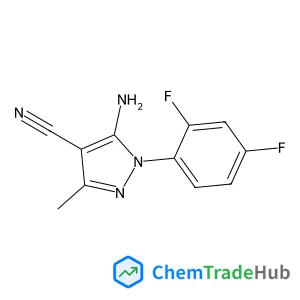
5-Amino-1-(2,4-difluorophenyl)-3-methyl-1H-pyrazole-4-carbonitrile
CAS Number:
1020057-92-4
Molecular Formula:
C11H8F2N4
Recommended Suppliers





Disclaimer
This page provides academic journal information for reference and research purposes only. We are not affiliated with any journal publishers and do not handle publication submissions. For publication-related inquiries, please contact the respective journal publishers directly.
If you notice any inaccuracies in the information displayed, please contact us at support@chemtradehub.com. We will promptly review and address your concerns.