












A ZnS nanocrystal/reduced graphene oxide composite anode with enhanced electrochemical performances for lithium-ion batteries
Literature Information
Publication Date
2016-10-10
DOI
10.1039/C6CP06609G
Impact Factor
3.676
Authors
Yuliang Zhang, Yuzhen Wei, Xiangyun Song, Yanbo Fu, Vincent S. Battaglia
View Original
Abstract
A simple route for the preparation of ZnS nanocrystal/reduced graphene oxide (ZnS/RGO) by a hydrothermal synthesis process was achieved. The chemical composition, morphology, and structural characterization reveal that the ZnS/RGO composite is composed of sphalerite-phased ZnS nanocrystals uniformly dispersed on functional RGO sheets with a high specific surface area. The ZnS/RGO composite was utilized as an anode in the construction of a high-performance lithium-ion battery. The ZnS/RGO composite with appropriate RGO content exhibits a high reversible specific capacity (780 mA h g−1), excellent cycle stability over 100 cycles (71.3% retention), and good rate performance at 2C (51.2% of its capacity when measured at a 0.1C rate). To further investigate this ZnS/RGO anode for practical use in full Li-ion cells, we tested the electrochemical performance of the ZnS/RGO anode at different cut-off voltages for the first time. The presence of RGO plays an important role in providing high conductivity as well as a substrate with a high surface area. This helps alleviate the typically problems associated with volume expansion and shrinkage during prolonged cycling. Additionally, the RGO provides multiple nucleation points that result in a uniformly dispersed film of nanosized ZnS that covers its surface. Thus, the high surface area RGO enables high electronic conductivity and fast charge transfer kinetics for ZnS lithiation/delithiation.
Related Literature
Electric charge of nanopatterned silica surfaces
H. Gokberk Ozcelik, Murat Barisik
2019-03-13
Paper
DOI: 10.1039/C9CP00706G
Modeling of a fast-response magnetic-sensitive hydrogel for dynamic control of microfluidic flow
Qimin Liu, Hua Li, K. Y. Lam
2018-12-19
Paper
DOI: 10.1039/C8CP06556J
De novo prediction of cross-effect efficiency for magic angle spinning dynamic nuclear polarization
Anne-Laure Barra, Johan van Tol, Sabine Hediger, Daniel Lee, Gaël De Paëpe
2019-01-03
Paper
DOI: 10.1039/C8CP06819D
Electrokinetic ion transport in an asymmetric double-gated nanochannel with a pH-tunable zwitterionic surface
Yu-Min Chen, Chih-Yuan Lin, Shiojenn Tseng
2019-03-18
Paper
DOI: 10.1039/C9CP00266A
Dissociative photodetachment vs. photodissociation of aromatic carboxylates: the benzoate and naphthoate anions
Juan P. Aranguren-Abrate, Claude Dedonder-Lardeux, Christophe Jouvet
2018-12-26
Paper
DOI: 10.1039/C8CP07162D
DFT calculations of the synergistic effect of λ-MnO2/graphene composites for electrochemical adsorption of lithium ions
Huixin Zhang, Xiao Du, Shengqi Ding, Qiang Wang, Lutong Chang, Xuli Ma, Xiaogang Hao, Changjun Pen
2019-03-25
Paper
DOI: 10.1039/C9CP00714H
Thermochemistry of germanium and organogermanium compounds
Rosa Becerra, Robin Walsh
2018-11-28
Perspective
DOI: 10.1039/C8CP06208K
Computational models explain how copper binding to amyloid-β peptide oligomers enhances oxidative pathways
2019-04-02
Paper
DOI: 10.1039/C9CP00293F
Symmetry-breaking induced large piezoelectricity in Janus tellurene materials
Yu Chen, Junyi Liu, Jiabing Yu
2018-11-16
Paper
DOI: 10.1039/C8CP04669G
Influence of chelate ring type on chelate–chelate and chelate–aryl stacking: the case of nickel bis(dithiolene)
Dušan Ž. Veljković, Michael B. Hall, Edward N. Brothers
2018-11-28
Paper
DOI: 10.1039/C8CP06312E
You might also like
Compound Q&A
Are there alternatives to 1-(4-Chlorophenyl)-N-hydroxymethanimine (CAS: 3848-36-0) in synthesis?
When considering alternatives to 1-(4-Chlorophenyl)-N-hydroxymethanimine (CAS: 3...
3848-36-01-(4-Chlorophenyl)-N...
Compound Q&A
How should (1R,9S,10S,12S,14E,16S,19R,20R,21S,22R)-3,9,21-Trihydroxy-5,10,12,14,16,20,22-heptamethyl-23,24-dioxatetracyclo[17.3.1.1~6,9~.0~2,7~]tetracosa-2,5,7,14-tetraen-4-one (CAS: 183202-73-5) be stored?
This compound should be stored in a cool, dry place away from direct sunlight. I...
183202-73-5(1R,9S,10S,12S,14E,1...
Compound Q&A
How is 3-(4-Bromophenyl)-5-(2-fluorophenyl)-1,2,4-oxadiazole (CAS: 419553-16-5) typically synthesized?
3-(4-Bromophenyl)-5-(2-fluorophenyl)-1,2,4-oxadiazole is synthesized through a m...
419553-16-53-(4-Bromophenyl)-5-...
Compound Q&A
How is 5-Chloro-2-(4-chlorophenyl)-4-methyl-6-[3-(1-piperidinyl)propoxy]pyrimidine (CAS: 1639220-19-1) typically synthesized?
5-Chloro-2-(4-chlorophenyl)-4-methyl-6-[3-(1-piperidinyl)propoxy]pyrimidine (CAS...
1639220-19-15-Chloro-2-(4-chloro...
Compound Q&A
What industries use 2-Chloro-4-(difluoromethoxy)pyridine (CAS: 1206978-15-5)?
2-Chloro-4-(difluoromethoxy)pyridine is used in the pharmaceutical industry for ...
1206978-15-52-Chloro-4-(difluoro...
Compound Q&A
What regulatory guidelines apply to 3-Chloro-6-methylpyridazine (CAS: 1121-79-5)?
3-Chloro-6-methylpyridazine (CAS: 1121-79-5) is classified under the Globally Ha...
1121-79-53-Chloro-6-methylpyr...
Compound Q&A
Are there alternatives to Methyl 4,5-dimethyl-2-nitrobenzoate in synthesis?
Several alternatives can be used in the synthesis of Methyl 4,5-dimethyl-2-nitro...
90922-74-0Methyl 4,5-dimethyl-...
Compound Q&A
Are there alternatives to (2E,2'E)-3,3'-(1,4-Phenylene)bisacrylaldehyde in synthesis?
Alternatives to (2E,2'E)-3,3'-(1,4-Phenylene)bisacrylaldehyde include other acry...
63405-68-5(2E,2'E)-3,3'-(1,4-P...
Compound Q&A
What is 3-Amino-5-chloropyridin-2-ol hydrochloride (CAS: 1261906-29-9)?
3-Amino-5-chloropyridin-2-ol hydrochloride is an organic compound with the CAS n...
1261906-29-93-Amino-5-chloropyri...
Compound Q&A
What precautions should be taken when handling 6,7-Difluoro-2,3-dihydro-4H-chromen-4-one (CAS: 1092349-93-3)?
When handling 6,7-Difluoro-2,3-dihydro-4H-chromen-4-one, it is essential to wear...
1092349-93-36,7-Difluoro-2,3-dih...
Source Journal
Physical Chemistry Chemical Physics

CiteScore:
5.5
Self-citation Rate:
10.3%
Articles per Year:
3036
Physical Chemistry Chemical Physics (PCCP) is an international journal co-owned by 19 physical chemistry and physics societies from around the world. This journal publishes original, cutting-edge research in physical chemistry, chemical physics and biophysical chemistry. To be suitable for publication in PCCP, articles must include significant innovation and/or insight into physical chemistry; this is the most important criterion that reviewers and Editors will judge against when evaluating submissions. The journal has a broad scope and welcomes contributions spanning experiment, theory, computation and data science. Topical coverage includes spectroscopy, dynamics, kinetics, statistical mechanics, thermodynamics, electrochemistry, catalysis, surface science, quantum mechanics, quantum computing and machine learning. Interdisciplinary research areas such as polymers and soft matter, materials, nanoscience, energy, surfaces/interfaces, and biophysical chemistry are welcomed if they demonstrate significant innovation and/or insight into physical chemistry. Joined experimental/theoretical studies are particularly appreciated when complementary and based on up-to-date approaches.
Recommended Compounds
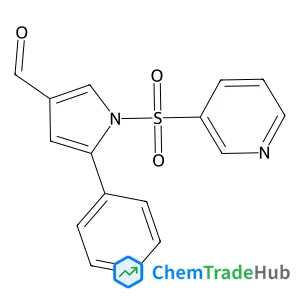
5-Phenyl-1-(pyridin-3-ylsulfonyl)-1H-pyrrole-3-carbaldehyde
CAS Number:
881676-90-0
Molecular Formula:
C16H12N2O3S
Recommended Suppliers





Disclaimer
This page provides academic journal information for reference and research purposes only. We are not affiliated with any journal publishers and do not handle publication submissions. For publication-related inquiries, please contact the respective journal publishers directly.
If you notice any inaccuracies in the information displayed, please contact us at support@chemtradehub.com. We will promptly review and address your concerns.