












Dichlorophosphanyl isocyanate – spectroscopy, conformation and molecular structure in the gas phase and the solid state
Literature Information
Publication Date
2016-09-01
DOI
10.1039/C6CP05377G
Impact Factor
3.676
Authors
Dingqing Li, Jan Schwabedissen, Hans-Georg Stammler, Norbert W. Mitzel, Helge Willner, Xiaoqing Zeng
View Original
Abstract
Dichlorophosphanyl isocyanate, Cl2PNCO, was synthesized and characterized by IR, Raman and 31P NMR spectroscopy. The conformational properties and molecular structures were studied by using gas electron diffraction (GED), X-ray crystallography and quantum-chemical calculations. Extensive DFT and ab initio calculations show that the potential energy surface of Cl2PNCO upon rotating the P–N bond is rather flat; three conformers, namely syn, anti and gauche between the NCO group and the bisector of the ClPCl angle, were theoretically predicted. Experimentally, only one conformer was indicated by gas-phase IR spectroscopy and the preference for a gauche conformation in both gas phase and solid state was unambiguously ascertained by gas electron diffraction and X-ray crystallographic data. In the solid state, the Cl2PNCO molecules adopt a gauche conformation with two distinct dihedral angles Cl–P–N–C of −121.3(2) and 137.4(2)° and form polymeric chains through weak intermolecular C⋯O contacts. Additionally, the dynamic character of the position of the isocyanate group of Cl2PNCO was examined in the gas phase.
Related Literature
Metal–organic framework (MOF) aerogels with high micro- and macroporosity
Martin R. Lohe, Marcus Rose, Stefan Kaskel
2009-08-25
Communication
DOI: 10.1039/B910175F
Charge photogeneration in polythiophene–perylene diimide blend films
Safa Shoaee, Zesheng An, Xuan Zhang, Stephen Barlow, Seth R. Marder, Warren Duffy, James R. Durrant
2009-07-29
Communication
DOI: 10.1039/B909071A
Vertically oriented arrays of polyaniline nanorods and their super electrochemical properties
Biplab K. Kuila, Bhanu Nandan, Marcus Böhme, Andreas Janke, Manfred Stamm
2009-08-07
Communication
DOI: 10.1039/B912513B
Self-standing, metal nanoparticle embedded transparent films from multi-armed cardanol conjugates through in situ synthesis
Kuthanapillil Jyothish, Praveen Kumar Vemula, Swapnil R. Jadhav, Lynn C. Francesconi, George John
2009-06-08
Communication
DOI: 10.1039/B900208A
Polyoxometalate-based {MnIII2}–Schiff base composite materials exhibiting single-molecule magnet behaviour
Qiong Wu, Yang-Guang Li, Yong-Hui Wang, Ying Lu, En-Bo Wang
2009-09-03
Communication
DOI: 10.1039/B909246C
Efficient synthesis of dendrimersvia a thiol–yne and esterification process and their potential application in the delivery of platinum anti-cancer drugs
Gaojian Chen, Jatin Kumar, Andrew Gregory, Martina H. Stenzel
2009-09-04
Communication
DOI: 10.1039/B910340F
Modulation of nanotube packing through the controlled self-assembly of tris-p-carboxylatocalix[4]arenes
Stuart Kennedy, Scott J. Dalgarno
2009-07-21
Communication
DOI: 10.1039/B909456C
Polythiophene derivatives by step-growth polymerizationvia photoinduced electron transfer reactions
Binnur Aydogan, Ali Senol Gundogan, Turan Ozturk, Yusuf Yagci
2009-09-07
Communication
DOI: 10.1039/B914953H
Recent development of reactions with α-diazocarbonyl compounds as nucleophiles
2009-07-22
Feature Article
DOI: 10.1039/B908378B
Reversible uptake of HgCl2 in a porous coordination polymer based on the dual functions of carboxylate and thioether
Xiao-Ping Zhou, Zhengtao Xu, Matthias Zeller, Allen D. Hunter
2009-08-05
Communication
DOI: 10.1039/B910265E
You might also like
Compound Q&A
What precautions should be taken when handling lithium chloride hydrate (1:1:1) (CAS: 16712-20-2)?
When handling lithium chloride hydrate (1:1:1) (CAS: 16712-20-2), it is importan...
16712-20-2Lithium chloride hyd...
Compound Q&A
Is 4-(4H-1,2,4-Triazol-4-yl)piperidine (CAS: 690261-92-8) safe?
4-(4H-1,2,4-Triazol-4-yl)piperidine is generally considered safe for use in phar...
690261-92-84-(4H-1,2,4-Triazol-...
Compound Q&A
How should waste containing 1,3-Thiazole-2-carboxamide (CAS: 16733-85-0) be handled?
Waste containing 1,3-Thiazole-2-carboxamide (CAS: 16733-85-0) should be collecte...
16733-85-01,3-Thiazole-2-carbo...
Compound Q&A
What regulatory guidelines apply to 5-(Difluoromethyl)-2-fluorobenzonitrile (CAS: 934175-58-3)?
5-(Difluoromethyl)-2-fluorobenzonitrile (CAS: 934175-58-3) is subject to regulat...
934175-58-35-(Difluoromethyl)-2...
Compound Q&A
How is Methyl 3-acetamido-2-thiophenecarboxylate (CAS: 22288-79-5) typically synthesized?
Methyl 3-acetamido-2-thiophenecarboxylate can be synthesized by the reaction of ...
22288-79-5Methyl 3-acetamido-2...
Compound Q&A
What is 4-Isoquinolinecarbonitrile (CAS: 34846-65-6)?
4-Isoquinolinecarbonitrile is a chemical compound with the CAS number 34846-65-6...
34846-65-64-Isoquinolinecarbon...
Compound Q&A
How should Methyl 1H-1,2,3-triazole-4-carboxylate (CAS: 877309-59-6) be stored?
Store Methyl 1H-1,2,3-triazole-4-carboxylate (CAS: 877309-59-6) in a cool, dry p...
877309-59-6Methyl 1H-1,2,3-tria...
Compound Q&A
What regulatory guidelines apply to 6-Bromo[1,3]thiazolo[5,4-b]pyridin-2-amine (CAS: 1160791-13-8)?
6-Bromo[1,3]thiazolo[5,4-b]pyridin-2-amine (CAS: 1160791-13-8) is subject to the...
1160791-13-86-Bromo[1,3]thiazolo...
Compound Q&A
Is (2S,3S)-2-Ammonio-3-(3,4-dihydroxyphenyl)-3-hydroxypropanoate (CAS: 23651-95-8) safe?
(2S,3S)-2-Ammonio-3-(3,4-dihydroxyphenyl)-3-hydroxypropanoate (CAS: 23651-95-8) ...
23651-95-8(2S,3S)-2-Ammonio-3-...
Compound Q&A
What are the physical and chemical properties of 7-bromo-3-methyl-3,4-dihydroquinazolin-4-one (CAS: 1293987-84-4)?
7-Bromo-3-methyl-3,4-dihydroquinazolin-4-one is a solid with a crystalline form....
1293987-84-47-bromo-3-methyl-3,4...
Source Journal
Physical Chemistry Chemical Physics

CiteScore:
5.5
Self-citation Rate:
10.3%
Articles per Year:
3036
Physical Chemistry Chemical Physics (PCCP) is an international journal co-owned by 19 physical chemistry and physics societies from around the world. This journal publishes original, cutting-edge research in physical chemistry, chemical physics and biophysical chemistry. To be suitable for publication in PCCP, articles must include significant innovation and/or insight into physical chemistry; this is the most important criterion that reviewers and Editors will judge against when evaluating submissions. The journal has a broad scope and welcomes contributions spanning experiment, theory, computation and data science. Topical coverage includes spectroscopy, dynamics, kinetics, statistical mechanics, thermodynamics, electrochemistry, catalysis, surface science, quantum mechanics, quantum computing and machine learning. Interdisciplinary research areas such as polymers and soft matter, materials, nanoscience, energy, surfaces/interfaces, and biophysical chemistry are welcomed if they demonstrate significant innovation and/or insight into physical chemistry. Joined experimental/theoretical studies are particularly appreciated when complementary and based on up-to-date approaches.
Recommended Compounds
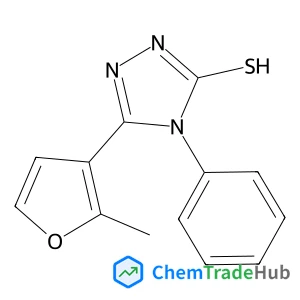
5-(2-Methyl-3-furyl)-4-phenyl-2,4-dihydro-3H-1,2,4-triazole-3-thione
CAS Number:
346464-59-3
Molecular Formula:
C13H11N3OS

![N-[2-(2-Pyridinyl)ethyl]-1-propanamine structure](https://static.chemtradehub.com/structs/554/55496-57-6-22b4.webp "N-[2-(2-Pyridinyl)ethyl]-1-propanamine structure")
Recommended Suppliers





Disclaimer
This page provides academic journal information for reference and research purposes only. We are not affiliated with any journal publishers and do not handle publication submissions. For publication-related inquiries, please contact the respective journal publishers directly.
If you notice any inaccuracies in the information displayed, please contact us at support@chemtradehub.com. We will promptly review and address your concerns.