












Characterization of step-edge barrier crossing of para-sexiphenyl on the ZnO (100) surface
Literature Information
Publication Date
2016-08-12
DOI
10.1039/C6CP05251G
Impact Factor
3.676
Authors
Philipp Herrmann, Georg Heimel
View Original
Abstract
Mass transport processes of conjugated organic molecules (COMs) on inorganic surfaces are essential elements in thin film deposition for hybrid optoelectronic devices. Defects and in particular surface step-edges dictate the molecular nucleation and growth morphology, which itself determine many physical properties of the resulting hybrid interface. Here, we explore the detailed molecular kinetics and transport rates of a single physisorbed para-sexiphenyl (p-6P) molecule crossing a step-edge (a “hetero-Ehrlich–Schwoebel barrier”) on the inorganic ZnO (100) surface by a combination of all-atom molecular dynamics simulations and passage time theory. We determine temperature- and charge-dependent (free) energy landscapes, position-dependent diffusion coefficients, and ultimately the mean first passage time over the step-edges. We find two completely different step-edge crossing mechanisms, the occurrence and rates of which simultaneously depend on both electrostatic and thermal molecule-surface coupling. In weakly coupled systems, the molecule crosses the step relatively quickly (in nanoseconds) by log-roll mechanisms while for strongly coupled systems, it crosses relatively slowly (in microseconds) in a strictly perpendicular fashion. In the latter process, “internal friction” from intramolecular bending and torsional degrees of freedom contribute a significant corrugation to the overall crossing barrier. Furthermore, we show that crossing pathways can also change qualitatively with step-edge height. The great complexity in hetero-barrier crossing of COMs (in contrast to simple atoms) revealed in this study has implications on the interpretation and possible control of nucleation and growth mechanisms at surface defects in hybrid systems.
Related Literature
Copper-catalyzed enantioselectivecarbenoidinsertion into S–H bonds‡
Yong-Zhen Zhang, Shou-Fei Zhu, Yan Cai, Hong-Xiang Mao, Qi-Lin Zhou
2009-08-11
Communication
DOI: 10.1039/B911670B
Hierarchical γ-Al2O3 monoliths with highly ordered 2D hexagonal mesopores in macroporous walls
Le-Le Li, Wen-Tao Duan, Quan Yuan, Zhen-Xing Li, Hao-Hong Duan, Chun-Hua Yan
2009-09-10
Communication
DOI: 10.1039/B912495K
The solid-state Ag/AgCl process as a highly sensitive detection mechanism for an electrochemical immunosensor
Boon Ping Ting, Jie Zhang, Majad Khan, Yi Yan Yang, Jackie Y. Ying
2009-09-01
Communication
DOI: 10.1039/B910730D
A novel Kolbe reaction pathway for a selective one- and two-electron reduction of azo compounds
Huifang-Jie Li, De-Hui Wang, Liang-Jun Zhou, Li Li, Xin Gan, Quan-Qing Xu, Hai-Bin Song
2009-08-19
Communication
DOI: 10.1039/B906910K
Hybrid functional mesostructured thin films with photo-oxidative properties in the visible range
Philippe Saint-Cricq, Thierry Pigot, Lionel Nicole, Clément Sanchez, Sylvie Lacombe
2009-07-22
Communication
DOI: 10.1039/B911742C
pH-Responsive mechanised nanoparticles gated by semirotaxanes
Niveen M. Khashab, Matthew E. Belowich, Ali Trabolsi, Douglas C. Friedman, Cory Valente, Yuen Lau, Hussam A. Khatib, Jeffrey I. Zink, J. Fraser Stoddart
2009-08-18
Communication
DOI: 10.1039/B910431C
Reversible uptake of HgCl2 in a porous coordination polymer based on the dual functions of carboxylate and thioether
Xiao-Ping Zhou, Zhengtao Xu, Matthias Zeller, Allen D. Hunter
2009-08-05
Communication
DOI: 10.1039/B910265E
Terphenyl crowns: a new family of receptors containing ethereal canopies that direct potassium cation onto benzenoid platforms for cation–π interactions
Ruchi Shukla, Sergey V. Lindeman, Rajendra Rathore
2009-08-20
Communication
DOI: 10.1039/B912796H
You might also like
Compound Q&A
What precautions should be taken when handling lithium chloride hydrate (1:1:1) (CAS: 16712-20-2)?
When handling lithium chloride hydrate (1:1:1) (CAS: 16712-20-2), it is importan...
16712-20-2Lithium chloride hyd...
Compound Q&A
Is 4-(4H-1,2,4-Triazol-4-yl)piperidine (CAS: 690261-92-8) safe?
4-(4H-1,2,4-Triazol-4-yl)piperidine is generally considered safe for use in phar...
690261-92-84-(4H-1,2,4-Triazol-...
Compound Q&A
How should waste containing 1,3-Thiazole-2-carboxamide (CAS: 16733-85-0) be handled?
Waste containing 1,3-Thiazole-2-carboxamide (CAS: 16733-85-0) should be collecte...
16733-85-01,3-Thiazole-2-carbo...
Compound Q&A
What regulatory guidelines apply to 5-(Difluoromethyl)-2-fluorobenzonitrile (CAS: 934175-58-3)?
5-(Difluoromethyl)-2-fluorobenzonitrile (CAS: 934175-58-3) is subject to regulat...
934175-58-35-(Difluoromethyl)-2...
Compound Q&A
How is Methyl 3-acetamido-2-thiophenecarboxylate (CAS: 22288-79-5) typically synthesized?
Methyl 3-acetamido-2-thiophenecarboxylate can be synthesized by the reaction of ...
22288-79-5Methyl 3-acetamido-2...
Compound Q&A
What is 4-Isoquinolinecarbonitrile (CAS: 34846-65-6)?
4-Isoquinolinecarbonitrile is a chemical compound with the CAS number 34846-65-6...
34846-65-64-Isoquinolinecarbon...
Compound Q&A
How should Methyl 1H-1,2,3-triazole-4-carboxylate (CAS: 877309-59-6) be stored?
Store Methyl 1H-1,2,3-triazole-4-carboxylate (CAS: 877309-59-6) in a cool, dry p...
877309-59-6Methyl 1H-1,2,3-tria...
Compound Q&A
What regulatory guidelines apply to 6-Bromo[1,3]thiazolo[5,4-b]pyridin-2-amine (CAS: 1160791-13-8)?
6-Bromo[1,3]thiazolo[5,4-b]pyridin-2-amine (CAS: 1160791-13-8) is subject to the...
1160791-13-86-Bromo[1,3]thiazolo...
Compound Q&A
Is (2S,3S)-2-Ammonio-3-(3,4-dihydroxyphenyl)-3-hydroxypropanoate (CAS: 23651-95-8) safe?
(2S,3S)-2-Ammonio-3-(3,4-dihydroxyphenyl)-3-hydroxypropanoate (CAS: 23651-95-8) ...
23651-95-8(2S,3S)-2-Ammonio-3-...
Compound Q&A
What are the physical and chemical properties of 7-bromo-3-methyl-3,4-dihydroquinazolin-4-one (CAS: 1293987-84-4)?
7-Bromo-3-methyl-3,4-dihydroquinazolin-4-one is a solid with a crystalline form....
1293987-84-47-bromo-3-methyl-3,4...
Source Journal
Physical Chemistry Chemical Physics

CiteScore:
5.5
Self-citation Rate:
10.3%
Articles per Year:
3036
Physical Chemistry Chemical Physics (PCCP) is an international journal co-owned by 19 physical chemistry and physics societies from around the world. This journal publishes original, cutting-edge research in physical chemistry, chemical physics and biophysical chemistry. To be suitable for publication in PCCP, articles must include significant innovation and/or insight into physical chemistry; this is the most important criterion that reviewers and Editors will judge against when evaluating submissions. The journal has a broad scope and welcomes contributions spanning experiment, theory, computation and data science. Topical coverage includes spectroscopy, dynamics, kinetics, statistical mechanics, thermodynamics, electrochemistry, catalysis, surface science, quantum mechanics, quantum computing and machine learning. Interdisciplinary research areas such as polymers and soft matter, materials, nanoscience, energy, surfaces/interfaces, and biophysical chemistry are welcomed if they demonstrate significant innovation and/or insight into physical chemistry. Joined experimental/theoretical studies are particularly appreciated when complementary and based on up-to-date approaches.
Recommended Compounds
![1-[4-(4-Methyl-1H-imidazol-1-yl)phenyl]ethanone structure](https://static.chemtradehub.com/structs/142/142161-53-3-7f55.webp "1-[4-(4-Methyl-1H-imidazol-1-yl)phenyl]ethanone structure")
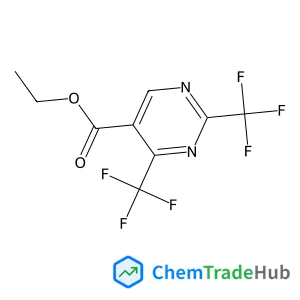
Ethyl 2,4-bis(trifluoromethyl)-5-pyrimidinecarboxylate
CAS Number:
188781-15-9
Molecular Formula:
C9H6F6N2O2
![8-Bromo-6-fluoro[1,2,4]triazolo[1,5-a]pyridin-2-amine structure](https://static.chemtradehub.com/structs/125/1257705-51-3-9f4a.webp "8-Bromo-6-fluoro[1,2,4]triazolo[1,5-a]pyridin-2-amine structure")
8-Bromo-6-fluoro[1,2,4]triazolo[1,5-a]pyridin-2-amine
CAS Number:
1257705-51-3
Molecular Formula:
C6H4BrFN4
![[(2R)-6,6-Dimethyl-2-morpholinyl]methanol hydrochloride (1:1) structure](https://static.chemtradehub.com/structs/141/1416444-88-6-e06a.webp "[(2R)-6,6-Dimethyl-2-morpholinyl]methanol hydrochloride (1:1) structure")
[(2R)-6,6-Dimethyl-2-morpholinyl]methanol hydrochloride (1:1)
CAS Number:
1416444-88-6
Molecular Formula:
C7H16ClNO2
Recommended Suppliers







Disclaimer
This page provides academic journal information for reference and research purposes only. We are not affiliated with any journal publishers and do not handle publication submissions. For publication-related inquiries, please contact the respective journal publishers directly.
If you notice any inaccuracies in the information displayed, please contact us at support@chemtradehub.com. We will promptly review and address your concerns.