












Molecular ring rotation in poly(vinylferrocene)
Literature Information
Publication Date
2016-10-11
DOI
10.1039/C6CP05156A
Impact Factor
3.676
Authors
Bernhard Frick, Johannes Elbert, Markus Gallei, Bernd Stühn
View Original
Abstract
We investigate the ring rotation dynamics in poly(vinylferrocene) (PVFc) using incoherent neutron spectroscopy. PVFc contains ferrocene units laterally attached to a polymer backbone, allowing for one cyclopentadienyl ring of the organometallic sandwich structure of ferrocene to undergo rotational jump diffusion. The barrier of rotation is found to be broadly distributed, but the dynamics can be well described using a rotation rate distribution model which is well known from the description of methyl group rotation in glassy polymers. As necessary information for the analysis of quasielastic scattering data, we measure the static structure factor of the polymer using polarized neutron diffraction. Neutron time-of-flight and backscattering data are then combined and consistently modeled over the large temperature range from 80 K to 350 K yielding an Arrhenius behavior of the jump rate distribution. The mean value of potential barrier distribution is found to be 〈EA〉 = 9.61(2) kJ mol−1 with a root mean square width of σE = 3.12(1) kJ mol−1, being the result of superposition of constant intramolecular and heterogeneous intermolecular rotational barriers.
Related Literature
Crossover in the inelastic electron tunneling spectra of conjugated molecules with direct Au–C links
Enrique Montes, Giuseppe Foti, Héctor Vázquez
2019-01-08
Paper
DOI: 10.1039/C8CP06290K
Phase stability of intercalated V2O5 battery cathodes elucidated through the Goldschmidt tolerance factor
Kit McColl, Furio Corà
2019-02-12
Paper
DOI: 10.1039/C9CP00170K
Quantum cutting using organic molecules
Michael D. LaCount, Mark T. Lusk
2019-03-26
Paper
DOI: 10.1039/C9CP00329K
Uncovering the role of the stationary points in the dynamics of the F− + CH3I reaction
Balázs Olasz, Gábor Czakó
2018-12-21
Paper
DOI: 10.1039/C8CP06207B
The impact on the ring related vibrational frequencies of pyridine of hydrogen bonds with haloforms – a topology perspective
Kamila Akhmetova, Haiyan Fan
2018-12-19
Paper
DOI: 10.1039/C8CP04789H
DFT calculations of the synergistic effect of λ-MnO2/graphene composites for electrochemical adsorption of lithium ions
Huixin Zhang, Xiao Du, Shengqi Ding, Qiang Wang, Lutong Chang, Xuli Ma, Xiaogang Hao, Changjun Pen
2019-03-25
Paper
DOI: 10.1039/C9CP00714H
Electronic and magnetic properties of the one-dimensional interfaces of two-dimensional lateral GeC/BP heterostructures
Hao Wang, Wei Wei, Fengping Li, Baibiao Huang, Ying Dai
2019-04-02
Paper
DOI: 10.1039/C9CP01196J
Unraveling the molecular mechanisms of color expression in anthocyanins
Luca Grisanti, Sara Laporte, Marco Micciarelli, Marta Rosa, Rebecca J. Robbins, Tom Collins, Alessandra Magistrato
2019-03-18
Paper
DOI: 10.1039/C9CP00747D
Pyruvic acid proton and hydrogen transfer reactions in clusters
Milan Ončák, Andriy Pysanenko, Michal Fárník
2019-01-15
Paper
DOI: 10.1039/C8CP07008C
You might also like
Compound Q&A
Are there alternatives to 1-(4-Chlorophenyl)-N-hydroxymethanimine (CAS: 3848-36-0) in synthesis?
When considering alternatives to 1-(4-Chlorophenyl)-N-hydroxymethanimine (CAS: 3...
3848-36-01-(4-Chlorophenyl)-N...
Compound Q&A
How should (1R,9S,10S,12S,14E,16S,19R,20R,21S,22R)-3,9,21-Trihydroxy-5,10,12,14,16,20,22-heptamethyl-23,24-dioxatetracyclo[17.3.1.1~6,9~.0~2,7~]tetracosa-2,5,7,14-tetraen-4-one (CAS: 183202-73-5) be stored?
This compound should be stored in a cool, dry place away from direct sunlight. I...
183202-73-5(1R,9S,10S,12S,14E,1...
Compound Q&A
How is 3-(4-Bromophenyl)-5-(2-fluorophenyl)-1,2,4-oxadiazole (CAS: 419553-16-5) typically synthesized?
3-(4-Bromophenyl)-5-(2-fluorophenyl)-1,2,4-oxadiazole is synthesized through a m...
419553-16-53-(4-Bromophenyl)-5-...
Compound Q&A
How is 5-Chloro-2-(4-chlorophenyl)-4-methyl-6-[3-(1-piperidinyl)propoxy]pyrimidine (CAS: 1639220-19-1) typically synthesized?
5-Chloro-2-(4-chlorophenyl)-4-methyl-6-[3-(1-piperidinyl)propoxy]pyrimidine (CAS...
1639220-19-15-Chloro-2-(4-chloro...
Compound Q&A
What industries use 2-Chloro-4-(difluoromethoxy)pyridine (CAS: 1206978-15-5)?
2-Chloro-4-(difluoromethoxy)pyridine is used in the pharmaceutical industry for ...
1206978-15-52-Chloro-4-(difluoro...
Compound Q&A
What regulatory guidelines apply to 3-Chloro-6-methylpyridazine (CAS: 1121-79-5)?
3-Chloro-6-methylpyridazine (CAS: 1121-79-5) is classified under the Globally Ha...
1121-79-53-Chloro-6-methylpyr...
Compound Q&A
Are there alternatives to Methyl 4,5-dimethyl-2-nitrobenzoate in synthesis?
Several alternatives can be used in the synthesis of Methyl 4,5-dimethyl-2-nitro...
90922-74-0Methyl 4,5-dimethyl-...
Compound Q&A
Are there alternatives to (2E,2'E)-3,3'-(1,4-Phenylene)bisacrylaldehyde in synthesis?
Alternatives to (2E,2'E)-3,3'-(1,4-Phenylene)bisacrylaldehyde include other acry...
63405-68-5(2E,2'E)-3,3'-(1,4-P...
Compound Q&A
What is 3-Amino-5-chloropyridin-2-ol hydrochloride (CAS: 1261906-29-9)?
3-Amino-5-chloropyridin-2-ol hydrochloride is an organic compound with the CAS n...
1261906-29-93-Amino-5-chloropyri...
Compound Q&A
What precautions should be taken when handling 6,7-Difluoro-2,3-dihydro-4H-chromen-4-one (CAS: 1092349-93-3)?
When handling 6,7-Difluoro-2,3-dihydro-4H-chromen-4-one, it is essential to wear...
1092349-93-36,7-Difluoro-2,3-dih...
Source Journal
Physical Chemistry Chemical Physics

CiteScore:
5.5
Self-citation Rate:
10.3%
Articles per Year:
3036
Physical Chemistry Chemical Physics (PCCP) is an international journal co-owned by 19 physical chemistry and physics societies from around the world. This journal publishes original, cutting-edge research in physical chemistry, chemical physics and biophysical chemistry. To be suitable for publication in PCCP, articles must include significant innovation and/or insight into physical chemistry; this is the most important criterion that reviewers and Editors will judge against when evaluating submissions. The journal has a broad scope and welcomes contributions spanning experiment, theory, computation and data science. Topical coverage includes spectroscopy, dynamics, kinetics, statistical mechanics, thermodynamics, electrochemistry, catalysis, surface science, quantum mechanics, quantum computing and machine learning. Interdisciplinary research areas such as polymers and soft matter, materials, nanoscience, energy, surfaces/interfaces, and biophysical chemistry are welcomed if they demonstrate significant innovation and/or insight into physical chemistry. Joined experimental/theoretical studies are particularly appreciated when complementary and based on up-to-date approaches.
Recommended Compounds
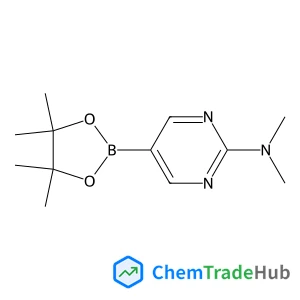
N,N-Dimethyl-5-(4,4,5,5-tetramethyl-1,3,2-dioxaborolan-2-yl)-2-pyrimidinamine
CAS Number:
1032759-30-0
Molecular Formula:
C12H20BN3O2
Recommended Suppliers





Disclaimer
This page provides academic journal information for reference and research purposes only. We are not affiliated with any journal publishers and do not handle publication submissions. For publication-related inquiries, please contact the respective journal publishers directly.
If you notice any inaccuracies in the information displayed, please contact us at support@chemtradehub.com. We will promptly review and address your concerns.