












Permselectivity and thickness-dependent ion transport properties of overoxidized polyaniline: a mechanistic investigation
Literature Information
Publication Date
2016-10-17
DOI
10.1039/C6CP04975C
Impact Factor
3.676
Authors
Subrata Mondal, M. V. Sangaranarayanan
View Original
Abstract
We report here the permselectivity of overoxidized polyaniline obtained using anodic polarization of polyaniline on glassy carbon electrodes. The contrasting redox behavior of overoxidized polyaniline coated electrodes towards [Fe(CN)6]3− and [Ru(NH3)6]3+ has been analyzed using cyclic voltammetry, hydrodynamic voltammetry and electrochemical impedance spectroscopy. This permselectivity vis a vis anion exclusivity arises from the incorporation of counter anions rather than by the formation of new functional groups in the polymer upon overoxidation – as inferred from FT Raman and UV-Visible spectral data. The surface charges of the polymeric films are also deduced from the zeta potential analysis. The thickness-dependent anion exclusion behavior of overoxidized polyaniline is quantitatively interpreted using diffusion coefficient measurements with rotating disc electrodes. The mechanism pertaining to the non-trivial role of film thickness in influencing anion exclusion is confirmed by additional impedance spectroscopy carried out during the overoxidation of polyaniline.
Recommended Journals
Related Literature
Thermochemistry of germanium and organogermanium compounds
Rosa Becerra, Robin Walsh
2018-11-28
Perspective
DOI: 10.1039/C8CP06208K
Destructive role of oxygen in growth of molybdenum disulfide determined by secondary ion mass spectrometry
Paweł Piotr Michałowski, Piotr Knyps, Paweł Ciepielewski, Piotr Caban, Ewa Dumiszewska, Jacek Baranowski
2019-04-03
Paper
DOI: 10.1039/C9CP00613C
The dramatic effect of N-methylimidazole on trans axial ligand binding to ferric heme: experiment and theory
Mohammad Aarabi, Reza Omidyan, Satchin Soorkia, Gilles Grégoire, Maria-Elisa Crestoni, Aurélien de la Lande, Benoît Soep, Niloufar Shafizadeh
2018-12-20
Paper
DOI: 10.1039/C8CP06210B
A single boron atom doped boron nitride edge as a metal-free catalyst for N2 fixation
Xin Mao, Cheng Yan, Zhonghua Zhu, Aijun Du
2018-12-11
Paper
DOI: 10.1039/C8CP07064D
Correction: 3T1R model and tuning of thermoluminescence intensity by optimization of dopant concentration in monoclinic Gd2O3:Er3+;Yb3+ co-doped phosphor
Raunak Kumar Tamrakar, Kanchan Upadhyay, D. P. Bisen
2019-01-11
Correction
DOI: 10.1039/C9CP90011J
A single-atom catalyst of cobalt supported on a defective two-dimensional boron nitride material as a promising electrocatalyst for the oxygen reduction reaction: a DFT study
Rongxing He, Wei Shen, Ming Li, Tao Zhang
2019-03-02
Paper
DOI: 10.1039/C9CP00452A
Thermodynamics of adsorption of lysozyme on gold nanoparticles from second harmonic light scattering
Kamini Mishra, Puspendu K. Das
2019-03-13
Paper
DOI: 10.1039/C8CP07299J
Modeling of a fast-response magnetic-sensitive hydrogel for dynamic control of microfluidic flow
Qimin Liu, Hua Li, K. Y. Lam
2018-12-19
Paper
DOI: 10.1039/C8CP06556J
Electronic and magnetic properties of the one-dimensional interfaces of two-dimensional lateral GeC/BP heterostructures
Hao Wang, Wei Wei, Fengping Li, Baibiao Huang, Ying Dai
2019-04-02
Paper
DOI: 10.1039/C9CP01196J
You might also like
Compound Q&A
Are there alternatives to 1-(4-Chlorophenyl)-N-hydroxymethanimine (CAS: 3848-36-0) in synthesis?
When considering alternatives to 1-(4-Chlorophenyl)-N-hydroxymethanimine (CAS: 3...
3848-36-01-(4-Chlorophenyl)-N...
Compound Q&A
How should (1R,9S,10S,12S,14E,16S,19R,20R,21S,22R)-3,9,21-Trihydroxy-5,10,12,14,16,20,22-heptamethyl-23,24-dioxatetracyclo[17.3.1.1~6,9~.0~2,7~]tetracosa-2,5,7,14-tetraen-4-one (CAS: 183202-73-5) be stored?
This compound should be stored in a cool, dry place away from direct sunlight. I...
183202-73-5(1R,9S,10S,12S,14E,1...
Compound Q&A
How is 3-(4-Bromophenyl)-5-(2-fluorophenyl)-1,2,4-oxadiazole (CAS: 419553-16-5) typically synthesized?
3-(4-Bromophenyl)-5-(2-fluorophenyl)-1,2,4-oxadiazole is synthesized through a m...
419553-16-53-(4-Bromophenyl)-5-...
Compound Q&A
How is 5-Chloro-2-(4-chlorophenyl)-4-methyl-6-[3-(1-piperidinyl)propoxy]pyrimidine (CAS: 1639220-19-1) typically synthesized?
5-Chloro-2-(4-chlorophenyl)-4-methyl-6-[3-(1-piperidinyl)propoxy]pyrimidine (CAS...
1639220-19-15-Chloro-2-(4-chloro...
Compound Q&A
What industries use 2-Chloro-4-(difluoromethoxy)pyridine (CAS: 1206978-15-5)?
2-Chloro-4-(difluoromethoxy)pyridine is used in the pharmaceutical industry for ...
1206978-15-52-Chloro-4-(difluoro...
Compound Q&A
What regulatory guidelines apply to 3-Chloro-6-methylpyridazine (CAS: 1121-79-5)?
3-Chloro-6-methylpyridazine (CAS: 1121-79-5) is classified under the Globally Ha...
1121-79-53-Chloro-6-methylpyr...
Compound Q&A
Are there alternatives to Methyl 4,5-dimethyl-2-nitrobenzoate in synthesis?
Several alternatives can be used in the synthesis of Methyl 4,5-dimethyl-2-nitro...
90922-74-0Methyl 4,5-dimethyl-...
Compound Q&A
Are there alternatives to (2E,2'E)-3,3'-(1,4-Phenylene)bisacrylaldehyde in synthesis?
Alternatives to (2E,2'E)-3,3'-(1,4-Phenylene)bisacrylaldehyde include other acry...
63405-68-5(2E,2'E)-3,3'-(1,4-P...
Compound Q&A
What is 3-Amino-5-chloropyridin-2-ol hydrochloride (CAS: 1261906-29-9)?
3-Amino-5-chloropyridin-2-ol hydrochloride is an organic compound with the CAS n...
1261906-29-93-Amino-5-chloropyri...
Compound Q&A
What precautions should be taken when handling 6,7-Difluoro-2,3-dihydro-4H-chromen-4-one (CAS: 1092349-93-3)?
When handling 6,7-Difluoro-2,3-dihydro-4H-chromen-4-one, it is essential to wear...
1092349-93-36,7-Difluoro-2,3-dih...
Source Journal
Physical Chemistry Chemical Physics

CiteScore:
5.5
Self-citation Rate:
10.3%
Articles per Year:
3036
Physical Chemistry Chemical Physics (PCCP) is an international journal co-owned by 19 physical chemistry and physics societies from around the world. This journal publishes original, cutting-edge research in physical chemistry, chemical physics and biophysical chemistry. To be suitable for publication in PCCP, articles must include significant innovation and/or insight into physical chemistry; this is the most important criterion that reviewers and Editors will judge against when evaluating submissions. The journal has a broad scope and welcomes contributions spanning experiment, theory, computation and data science. Topical coverage includes spectroscopy, dynamics, kinetics, statistical mechanics, thermodynamics, electrochemistry, catalysis, surface science, quantum mechanics, quantum computing and machine learning. Interdisciplinary research areas such as polymers and soft matter, materials, nanoscience, energy, surfaces/interfaces, and biophysical chemistry are welcomed if they demonstrate significant innovation and/or insight into physical chemistry. Joined experimental/theoretical studies are particularly appreciated when complementary and based on up-to-date approaches.
Recommended Compounds
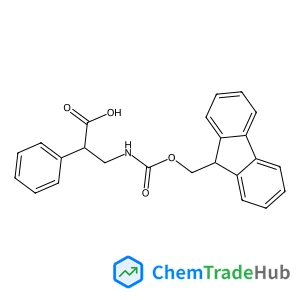
(S)-3-((((9H-Fluoren-9-yl)methoxy)carbonyl)amino)-2-phenylpropanoic acid
CAS Number:
1217663-60-9
Molecular Formula:
C24H21NO4
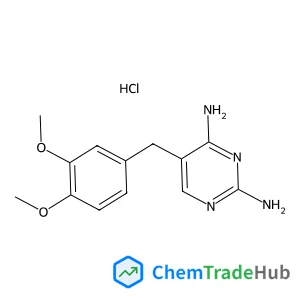
5-(3,4-Dimethoxybenzyl)-2,4-pyrimidinediamine hydrochloride (1:1)
CAS Number:
2507-23-5
Molecular Formula:
C13H17ClN4O2
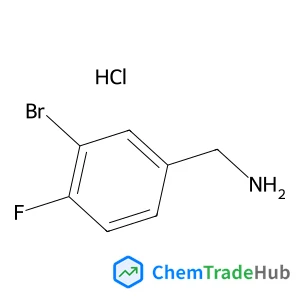
1-(3-Bromo-4-fluorophenyl)methanamine hydrochloride (1:1)
CAS Number:
202865-68-7
Molecular Formula:
C7H8BrClFN
Recommended Suppliers




Disclaimer
This page provides academic journal information for reference and research purposes only. We are not affiliated with any journal publishers and do not handle publication submissions. For publication-related inquiries, please contact the respective journal publishers directly.
If you notice any inaccuracies in the information displayed, please contact us at support@chemtradehub.com. We will promptly review and address your concerns.