












A Grotthuss-like proton shuttle in the anomalous C2H3+ carbocation: energetic and vibrational properties for isotopologues
Literature Information
Publication Date
2016-09-07
DOI
10.1039/C6CP04450F
Impact Factor
3.676
Authors
Junjie Li, Alexander B. Pacheco, Krishnan Raghavachari, Srinivasan S. Iyengar
View Original
Abstract
We probe the structure, stability and vibrational properties of the fundamental C2H3+ carbocation that exists with preference in a bridged hydrogen conformation. Our computational study includes electronic structure treatment, incorporation of nuclear motion through classical and quantum paradigms, the effect of temperature, and the associated sampling of the potential surface, and the effect of single H/D isotopic substitution (i.e., C2H2D+). We find that while the non-classical, “Bridged” isomer is most stable, the “Classical” form does have a small presence under ambient conditions since the zero point level straddles the barrier between the Classical and Bridged isomers in a reduced dimensional analysis of the Bridged ↔ Classical transfer coordinate. But the probability of the classical structure is too low and hence may remain undetected from the vibrational properties of the system. For the deuterated counterpart, the deuterium preferentially occupies the terminal instead of bridge position, in the more stable bridged isomeric structure. This preference is noted from nuclear dynamics. In all cases, at higher temperatures, an orbiting phenomenon is observed where the hydrogen atom density is distributed as an oblate ellipsoid surrounding the carbon–carbon bond. This is not observed at lower temperatures and the orbiting phenomenon is probed here by computing two-dimensional, time–frequency vibrational spectra, which show the spectral evolution in time and temperature, and the development of the system from one kind of isomer to another. New experiments that may probe this isomeric multiplicity are suggested, and these involve a combination of infra-red multiple photon dissociation (IRMPD) and argon-tagged action spectroscopy.
Related Literature
Stepping stones in the electron transport from cells to electrodes in Geobacter sulfurreducens biofilms
Pablo Sebastián Bonanni, Diego Massazza, Juan Pablo Busalmen
2013-05-01
Perspective
DOI: 10.1039/C3CP50411E
C72: gaudiene, a hollow and aromatic all-carbon molecule
Dage Sundholm
2013-04-18
Communication
DOI: 10.1039/C3CP51042E
Size-dependent Auger spectra and two-hole Coulomb interaction of small supported Cu-clusters
M. Al-Hada
2013-04-15
Paper
DOI: 10.1039/C3CP00109A
Structures of hydrogen bond networks formed by a few tens of methanol molecules in the gas phase: size-selective infrared spectroscopy of neutral and protonated methanol clusters
Tomohiro Kobayashi, Ryunosuke Shishido, Kenta Mizuse, Asuka Fujii, Jer-Lai Kuo
2013-04-12
Paper
DOI: 10.1039/C3CP50985K
Supramolecular H-bonded porous networks at surfaces: exploiting primary and secondary interactions in a bi-component melamine–xanthine system‡
Artur Ciesielski, Sébastien Haar, Gábor Paragi, Zoltán Kupihár, Zoltán Kele, Stefano Masiero, Célia Fonseca Guerra, Gian Piero Spada, Lajos Kovács, Paolo Samorì
2013-03-15
Communication
DOI: 10.1039/C3CP50891A
Periodic mesoporous organosilicas functionalized with a wide variety of amines for CO2 adsorption
Els De Canck, Isabelle Ascoop, Abdelhamid Sayari, Pascal Van Der Voort
2013-04-22
Paper
DOI: 10.1039/C3CP50393C
STM tip-assisted single molecule chemistry
Aidi Zhao, Shijing Tan, Bin Li, Bing Wang, Jinlong Yang, J. G. Hou
2013-05-20
Perspective
DOI: 10.1039/C3CP51446C
You might also like
Compound Q&A
How is Ethyl 4-chlorothieno[2,3-b]pyridine-5-carboxylate (CAS: 59713-58-5) typically synthesized?
Ethyl 4-chlorothieno[2,3-b]pyridine-5-carboxylate (CAS: 59713-58-5) can be synth...
59713-58-5Ethyl 4-chlorothieno...
Compound Q&A
What regulatory guidelines apply to 5-Methyl-1H-indole-3-carbaldehyde (CAS: 52562-50-2)?
5-Methyl-1H-indole-3-carbaldehyde (CAS: 52562-50-2) is subject to various regula...
52562-50-25-Methyl-1H-indole-3...
Compound Q&A
What are the physical and chemical properties of (1,3-Dimethyl-2,4-dioxo-1,2,3,4-tetrahydro-5-pyrimidinyl)boronic acid (CAS: 223418-73-3)?
(1,3-Dimethyl-2,4-dioxo-1,2,3,4-tetrahydro-5-pyrimidinyl)boronic acid is a white...
223418-73-3(1,3-Dimethyl-2,4-di...
Compound Q&A
How should waste containing Sulfocostunolide A (CAS: 1016983-51-9) be handled?
Waste containing Sulfocostunolide A (CAS: 1016983-51-9) should be handled with c...
1016983-51-9Sulfocostunolide A
Compound Q&A
What precautions should be taken when handling Murraxocin (CAS: 88478-44-8)?
When handling Murraxocin (CAS: 88478-44-8), ensure proper personal protective eq...
88478-44-8Murraxocin
Compound Q&A
What are the physical and chemical properties of Formvar (CAS: 63148-64-1)?
Formvar (CAS: 63148-64-1) is an alkyd resin characterized by a high molecular we...
63148-64-1Formvar(R)
Compound Q&A
Is (S)-4-benzyl-2-((benzyloxy)methyl)morpholine (CAS: 205242-66-6) safe?
(S)-4-benzyl-2-((benzyloxy)methyl)morpholine is generally safe when handled with...
205242-66-6(S)-4-benzyl-2-((ben...
Compound Q&A
What industries use Methyl 1-(5-bromo-2-pyrimidinyl)cyclopropanecarboxylate (CAS: 1447607-69-3)?
Methyl 1-(5-bromo-2-pyrimidinyl)cyclopropanecarboxylate (CAS: 1447607-69-3) is p...
1447607-69-3Methyl 1-(5-bromo-2-...
Compound Q&A
Is 2-Methyl-1-phenyl-1-propanamine hydrochloride (CAS: 24290-47-9) safe?
2-Methyl-1-phenyl-1-propanamine hydrochloride (CAS: 24290-47-9) is generally con...
24290-47-92-Methyl-1-phenyl-1-...
Compound Q&A
How is 3-(4-Bromophenyl)-2-methylpropanoic acid (CAS: 66735-01-1) typically synthesized?
3-(4-Bromophenyl)-2-methylpropanoic acid is synthesized through a multi-step pro...
66735-01-13-(4-Bromophenyl)-2-...
Source Journal
Physical Chemistry Chemical Physics

CiteScore:
5.5
Self-citation Rate:
10.3%
Articles per Year:
3036
Physical Chemistry Chemical Physics (PCCP) is an international journal co-owned by 19 physical chemistry and physics societies from around the world. This journal publishes original, cutting-edge research in physical chemistry, chemical physics and biophysical chemistry. To be suitable for publication in PCCP, articles must include significant innovation and/or insight into physical chemistry; this is the most important criterion that reviewers and Editors will judge against when evaluating submissions. The journal has a broad scope and welcomes contributions spanning experiment, theory, computation and data science. Topical coverage includes spectroscopy, dynamics, kinetics, statistical mechanics, thermodynamics, electrochemistry, catalysis, surface science, quantum mechanics, quantum computing and machine learning. Interdisciplinary research areas such as polymers and soft matter, materials, nanoscience, energy, surfaces/interfaces, and biophysical chemistry are welcomed if they demonstrate significant innovation and/or insight into physical chemistry. Joined experimental/theoretical studies are particularly appreciated when complementary and based on up-to-date approaches.
Recommended Compounds
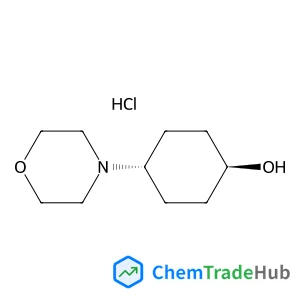
trans-4-(4-Morpholinyl)cyclohexanol hydrochloride (1:1)
CAS Number:
1588441-09-1
Molecular Formula:
C10H20ClNO2
![Sodium 6-amino-3-[(E)-{4-[(E)-(4-aminophenyl)diazenyl]-2-methoxy-5-methylphenyl}diazenyl]-4-hydroxy-2-naphthalenesulfonate structure](https://static.chemtradehub.com/structs/294/2945-96-2-092f.webp "Sodium 6-amino-3-[(E)-{4-[(E)-(4-aminophenyl)diazenyl]-2-methoxy-5-methylphenyl}diazenyl]-4-hydroxy-2-naphthalenesulfonate structure")
Sodium 6-amino-3-[(E)-{4-[(E)-(4-aminophenyl)diazenyl]-2-methoxy-5-methylphenyl}diazenyl]-4-hydroxy-2-naphthalenesulfonate
CAS Number:
2945-96-2
Molecular Formula:
C24H21N6NaO5S
![2-Methyl-2-propanyl 1,6-diazaspiro[3.4]octane-6-carboxylate structure](https://static.chemtradehub.com/structs/115/1158749-79-1-81ee.webp "2-Methyl-2-propanyl 1,6-diazaspiro[3.4]octane-6-carboxylate structure")
2-Methyl-2-propanyl 1,6-diazaspiro[3.4]octane-6-carboxylate
CAS Number:
1158749-79-1
Molecular Formula:
C11H20N2O2
Recommended Suppliers





Disclaimer
This page provides academic journal information for reference and research purposes only. We are not affiliated with any journal publishers and do not handle publication submissions. For publication-related inquiries, please contact the respective journal publishers directly.
If you notice any inaccuracies in the information displayed, please contact us at support@chemtradehub.com. We will promptly review and address your concerns.