












Electrical control of cell density gradients on a conducting polymer surface
Literature Information
Publication Date
2009-07-21
DOI
10.1039/B911130A
Impact Factor
6.222
Authors
Alwin M. D. Wan, Daniel J. Brooks, Abdurrahman Gumus, Claudia Fischbach, George G. Malliaras
View Original
Abstract
We describe a conducting polymer device that can induce electrically controlled density gradients of normal and cancerous cell lines, and hence can be used as a tool for the study of cell窶田ell interactions.
Related Literature
Ligand-free iron-based electrochemically mediated atom transfer radical polymerization of methyl methacrylate
Jirong Wang, Mengying Tian, Shaoqiao Li, Rui Wang, Feipeng Du, Zhigang Xue
2018-08-01
Paper
DOI: 10.1039/C8PY00933C
RAFT iniferter polymerization in miniemulsion using visible light
Kenward Jung, Per B. Zetterlund
2017-06-23
Communication
DOI: 10.1039/C7PY00939A
Direct optical observations of vesicular self-assembly in large-scale polymeric structures during photocontrolled biphasic polymerization
Jan K. Szymański
2016-11-14
Communication
DOI: 10.1039/C6PY01497F
Photo-responsive thiol–ene networks for the design of switchable polymer patterns
S. V. Radl, C. Schipfer, S. Kaiser, A. Moser, B. Kaynak, S. Schlögl
2017-01-31
Paper
DOI: 10.1039/C7PY00055C
Traceless switch organocatalysis enables multiblock ring-opening copolymerizations of lactones, carbonates, and lactides: by a one plus one approach in one pot
Xin Wang, Jiaqi Liu, Songquan Xu, Jiaxi Xu, Xianfu Pan, Jingjing Liu, Saide Cui, Zhenjiang Li, Kai Guo
2016-08-22
Paper
DOI: 10.1039/C6PY01107A
Pillar[5]arene-based amphiphilic supramolecular brush copolymers: fabrication, controllable self-assembly and application in self-imaging targeted drug delivery
Run Zhao, Dan Wu, Fuwu Zhang, Li Shao, Jiong Zhou, Jie Yang, Guping Tang, Xiaoyuan Chen, Feihe Huang
2016-09-01
Paper
DOI: 10.1039/C6PY01402J
RAFT polymerization to form stimuli-responsive polymers
2016-11-22
Review Article
DOI: 10.1039/C6PY01849A
Temperature and pH dual-responsive poly(vinyl lactam) copolymers functionalized with amine side groups via RAFT polymerization
2016-07-13
Paper
DOI: 10.1039/C6PY00885B
You might also like
Compound Q&A
What precautions should be taken when handling lithium chloride hydrate (1:1:1) (CAS: 16712-20-2)?
When handling lithium chloride hydrate (1:1:1) (CAS: 16712-20-2), it is importan...
16712-20-2Lithium chloride hyd...
Compound Q&A
Is 4-(4H-1,2,4-Triazol-4-yl)piperidine (CAS: 690261-92-8) safe?
4-(4H-1,2,4-Triazol-4-yl)piperidine is generally considered safe for use in phar...
690261-92-84-(4H-1,2,4-Triazol-...
Compound Q&A
How should waste containing 1,3-Thiazole-2-carboxamide (CAS: 16733-85-0) be handled?
Waste containing 1,3-Thiazole-2-carboxamide (CAS: 16733-85-0) should be collecte...
16733-85-01,3-Thiazole-2-carbo...
Compound Q&A
What regulatory guidelines apply to 5-(Difluoromethyl)-2-fluorobenzonitrile (CAS: 934175-58-3)?
5-(Difluoromethyl)-2-fluorobenzonitrile (CAS: 934175-58-3) is subject to regulat...
934175-58-35-(Difluoromethyl)-2...
Compound Q&A
How is Methyl 3-acetamido-2-thiophenecarboxylate (CAS: 22288-79-5) typically synthesized?
Methyl 3-acetamido-2-thiophenecarboxylate can be synthesized by the reaction of ...
22288-79-5Methyl 3-acetamido-2...
Compound Q&A
What is 4-Isoquinolinecarbonitrile (CAS: 34846-65-6)?
4-Isoquinolinecarbonitrile is a chemical compound with the CAS number 34846-65-6...
34846-65-64-Isoquinolinecarbon...
Compound Q&A
How should Methyl 1H-1,2,3-triazole-4-carboxylate (CAS: 877309-59-6) be stored?
Store Methyl 1H-1,2,3-triazole-4-carboxylate (CAS: 877309-59-6) in a cool, dry p...
877309-59-6Methyl 1H-1,2,3-tria...
Compound Q&A
What regulatory guidelines apply to 6-Bromo[1,3]thiazolo[5,4-b]pyridin-2-amine (CAS: 1160791-13-8)?
6-Bromo[1,3]thiazolo[5,4-b]pyridin-2-amine (CAS: 1160791-13-8) is subject to the...
1160791-13-86-Bromo[1,3]thiazolo...
Compound Q&A
Is (2S,3S)-2-Ammonio-3-(3,4-dihydroxyphenyl)-3-hydroxypropanoate (CAS: 23651-95-8) safe?
(2S,3S)-2-Ammonio-3-(3,4-dihydroxyphenyl)-3-hydroxypropanoate (CAS: 23651-95-8) ...
23651-95-8(2S,3S)-2-Ammonio-3-...
Compound Q&A
What are the physical and chemical properties of 7-bromo-3-methyl-3,4-dihydroquinazolin-4-one (CAS: 1293987-84-4)?
7-Bromo-3-methyl-3,4-dihydroquinazolin-4-one is a solid with a crystalline form....
1293987-84-47-bromo-3-methyl-3,4...
Source Journal
Chemical Communications

CiteScore:
8.6
Self-citation Rate:
4.7%
Articles per Year:
2458
ChemComm publishes urgent research which is of outstanding significance and interest to experts in the field, while also appealing to the journal’s broad chemistry readership. Our communication format is ideally suited to short, urgent studies that are of such importance that they require accelerated publication. Our scope covers all topics in chemistry, and research at the interface of chemistry and other disciplines (such as materials science, nanoscience, physics, engineering and biology) where there is a significant novelty in the chemistry aspects. Major topic areas covered include: Analytical Chemistry Catalysis Chemical Biology and medicinal chemistry Computational Chemistry and Machine Learning Energy and sustainable chemistry Environmental Chemistry Green Chemistry Inorganic Chemistry Materials Chemistry Nanoscience Organic Chemistry Physical Chemistry Polymer Chemistry Supramolecular Chemistry
Recommended Compounds
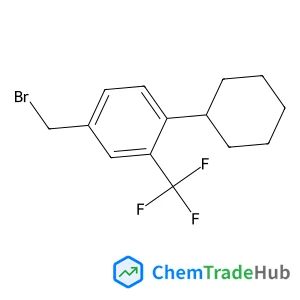
4-(Bromomethyl)-1-cyclohexyl-2-(trifluoromethyl)benzene
CAS Number:
800381-60-6
Molecular Formula:
C14H16BrF3
Recommended Suppliers





Disclaimer
This page provides academic journal information for reference and research purposes only. We are not affiliated with any journal publishers and do not handle publication submissions. For publication-related inquiries, please contact the respective journal publishers directly.
If you notice any inaccuracies in the information displayed, please contact us at support@chemtradehub.com. We will promptly review and address your concerns.