


![19-[Chloro(dideuterio)methyl]-19-deuterio-20,20-dideuteriooxyoctatriacontane-18,21-dione structure](https://static.chemtradehub.com/structs/124/1246818-85-8-6244.webp "19-[Chloro(dideuterio)methyl]-19-deuterio-20,20-dideuteriooxyoctatriacontane-18,21-dione structure")
19-[Chloro(dideuterio)methyl]-19-deuterio-20,20-dideuteriooxyoctatriacontane-18,21-dione
CAS Number:
1246818-85-8
Molecular Formula:
C39H75ClO4
Feiyu Diao, FengHui Tian, Wenshuang Liang, Honglei Feng, Yiqian Wang
The photocatalytic mechanism of a Cu2O/CuO hybrid system is disclosed in detail by density functional theory (DFT) calculations. The synergistic relationship of the two counterparts is confirmed by hydrogen peroxide (H2O2) formation on the CuO nanowires and dissociation on the Cu2O nanoparticles; this enables the system to self-sufficiently produce hydroxyl radicals, which is highly efficient in the photocatalytic degradation of methyl orange. The exposed surfaces are found to be crucial in the cooperative photocatalytic system, especially the Cu2O(111) surface, in the dissociation of H2O2. The distinct positions of the conduction band minimum and valence band maximum for CuO and Cu2O and synergic surface reactions enable the effective utilization of the electrons and holes generated by visible-light irradiation. Our results will contribute to a greater understanding of the specific mechanism of photodegradation catalyzed by Cu2O/CuO heterostructures, which may lead to promising directions in structure optimization for photocatalysts with high photocatalytic efficiency.

Chemical Communications

Russian Journal of General Chemistry

Acta Materialia

Russian Chemical Bulletin

Crystallography Reports

Organic Process Research & Development

Chemistry Education Research and Practice

Russian Journal of Organic Chemistry

Journal of Saudi Chemical Society

Russian Journal of Bioorganic Chemistry
Greg T. Dunning, Thomas J. Preston, Andrew J. Orr-Ewing, Stuart J. Greaves, Gregory M. Greetham, Ian P. Clark, Michael Towrie
DOI: 10.1039/C4CP01854K
L. L. Zou, M. Nadeem, S. C. Su, Z. L. Wang, W. Anwand, A. Wagner, J. H. Hao, C. W. Leung, R. Lortz, F. C. C. Ling
DOI: 10.1039/C4CP00951G
Venkata Vasiraju, Yongmin Kang
DOI: 10.1039/C4CP01988A
Chuan Fei Guo, Jianming Zhang
DOI: 10.1039/C4CP04520C
David C. Bock
DOI: 10.1039/C4CP04819A
Linqiang Hua, Munetaka Iwamura
DOI: 10.1039/C4CP03843F
Mirco Zerbetto, Diego Frezzato
DOI: 10.1039/C4CP03815K
Zhiyong Fu, Wei Shen, Rongxing He, Xiaorui Liu, Huili Sun, Wanqiang Yin, Ming Li
DOI: 10.1039/C4CP04103H
Guilherme J. Maximo, Mariana C. Costa, Antonio J. A. Meirelles
DOI: 10.1039/C4CP01529K
Kavita Garg, Chiranjib Majumder, Sandip K. Nayak, Dinesh K. Aswal, Shiv K. Gupta, Subrata Chattopadhyay
DOI: 10.1039/C4CP04044A
2-(2-Chloroacetamido)-3-phenylpropanoic acid (CAS: 7765-11-9) is generally consi...
2-(Benzyloxy)-5-bromobenzoic acid can be handled safely if appropriate precautio...
(4-Methyl-1,2,5-oxadiazol-3-yl)methanamine hydrochloride is a chemical compound ...
2-(5-Hexylthiophen-2-yl)-4,4,5,5-tetramethyl-1,3,2-dioxaborolane (CAS: 917985-54...
While 4-(8-Methyl-9H-1,3-dioxolo[4,5-h][2,3]benzodiazepin-5-yl)benzenamine (CAS:...
The market for tert-butyl 3-hydroxy-4,5,7,8-tetrahydro-2H-pyrazolo[3,4-d]azepine...
Waste containing 3,5-Diamino-1H-pyrazole-4-carbonitrile (CAS: 6844-58-2) should ...
(6-Fluoro-3-pyridinyl)boronic acid can be synthesized through the reaction of 6-...
Dibenzyl carbonimidoylbiscarbamate (CAS: 10065-79-9) finds applications in vario...
The market for (beta,beta,2,3,4,5,6-~2~H_7_)Phenylalanine (CAS: 74228-83-4) is g...

Physical Chemistry Chemical Physics (PCCP) is an international journal co-owned by 19 physical chemistry and physics societies from around the world. This journal publishes original, cutting-edge research in physical chemistry, chemical physics and biophysical chemistry. To be suitable for publication in PCCP, articles must include significant innovation and/or insight into physical chemistry; this is the most important criterion that reviewers and Editors will judge against when evaluating submissions. The journal has a broad scope and welcomes contributions spanning experiment, theory, computation and data science. Topical coverage includes spectroscopy, dynamics, kinetics, statistical mechanics, thermodynamics, electrochemistry, catalysis, surface science, quantum mechanics, quantum computing and machine learning. Interdisciplinary research areas such as polymers and soft matter, materials, nanoscience, energy, surfaces/interfaces, and biophysical chemistry are welcomed if they demonstrate significant innovation and/or insight into physical chemistry. Joined experimental/theoretical studies are particularly appreciated when complementary and based on up-to-date approaches.
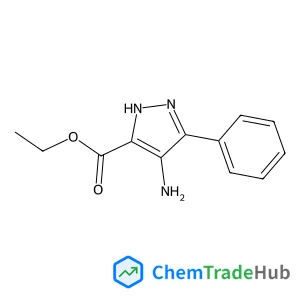
![(1R)-N-((1R)-1-Phenylethyl)-1-[4-(tert-butyldimethylsilyloxymethyl)cyclohexyl]ethan-1-amine structure](https://static.chemtradehub.com/structs/672/672314-45-3-47ef.webp "(1R)-N-((1R)-1-Phenylethyl)-1-[4-(tert-butyldimethylsilyloxymethyl)cyclohexyl]ethan-1-amine structure")
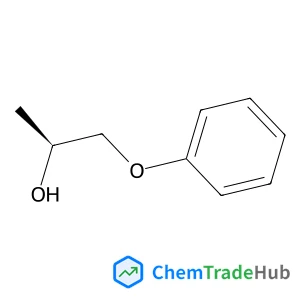
![(3S,4aS,8aS)-2-[(2R,3S)-3-Amino-2-hydroxy-4-phenylbutyl]-N-(2-methyl-2-propanyl)decahydro-3-isoquinolinecarboxamide structure](https://static.chemtradehub.com/structs/136/136522-17-3-4d77.webp "(3S,4aS,8aS)-2-[(2R,3S)-3-Amino-2-hydroxy-4-phenylbutyl]-N-(2-methyl-2-propanyl)decahydro-3-isoquinolinecarboxamide structure")




