













Molecular mechanics of the cooperative adsorption of a Pro-Hyp-Gly tripeptide on a hydroxylated rutile TiO2(110) surface mediated by calcium ions
Literature Information
Publication Date
2016-06-27
DOI
10.1039/C6CP03046G
Impact Factor
3.676
Authors
Chunya Wu, Mingjun Chen, Yu Zhang, Peter T. Cummings
View Original
Abstract
The interaction of amino acids with inorganic materials at interfaces plays an important role in enhancing the biocompatibility of titanium-based alloys. The adsorption of a tripeptide, i.e. Pro-Hyp-Gly, on the hydroxylated rutile TiO2(110) surface was investigated by the MD simulations. The changes in free energy during the adsorption of both the tripeptide and calcium ions were calculated by using the PMF method in order to obtain the adsorption strength. The results suggested that the adsorption of the tripeptide on the TiO2 surface through the carboxyl groups in glycine residues can be more stable compared with other binding conformations. Special attention was focused on the cooperative adsorption of the tripeptide with the assistance of calcium ions. Calcium ions preferred to absorb at the tetradentate or monodentate sites on the negatively charged TiO2 surface. As a result of the strong attraction between the carboxyl group and calcium ions, the tripeptide can be pulled down to the surface by following the trajectory of the calcium ions, forming an indirect interaction with a sandwich structure of peptide–cation–TiO2. However, this indirect interaction could eventually transform to the direct adsorption of the tripeptide on the TiO2 surface with higher binding energy. The results may help to interpret the adsorption of peptides on inorganic materials in aqueous solution with ions.
Recommended Journals
Related Literature
Ligand strain and conformations in a family of Fe(ii) spin crossover hexadentate complexes involving the 2-pyridylmethyl-amino moiety: DFT modelling
Galina S. Matouzenko, Serguei A. Borshch, Volker Schünemann, Juliusz A. Wolny
2013-03-22
Paper
DOI: 10.1039/C3CP44570D
Comparing molecular photofragmentation dynamics in the gas and liquid phases
Stephanie J. Harris, Daniel Murdock, Yuyuan Zhang, Thomas A. A. Oliver, Michael P. Grubb, Andrew J. Orr-Ewing, Gregory M. Greetham, Ian P. Clark, Michael Towrie, Stephen E. Bradforth, Michael N. R. Ashfold
2013-03-19
Perspective
DOI: 10.1039/C3CP50756D
Analysis of visible-light-active Sn(ii)–TiO2 photocatalysts
Venkata Bharat Ram Boppana, Feng Jiao, Dave Newby, Jr., Jude Laverock, Kevin E. Smith, Jean Claude Jumas, Greg Hutchings, Raul F. Lobo
2013-03-13
Communication
DOI: 10.1039/C3CP44635B
Changed reactivity of the 1-bromo-4-nitrobenzene radical anion in a room temperature ionic liquid
Sven Ernst, Kristopher R. Ward, Sarah E. Norman, Christopher Hardacre, Richard G. Compton
2013-03-15
Paper
DOI: 10.1039/C3CP51004B
Stable and high-rate overcharge protection for rechargeable lithium batteries
Bin Wang, Thomas J. Richardson, Guoying Chen
2013-04-02
Paper
DOI: 10.1039/C3CP50992C
Interaction of CO2 with oxygen adatoms on rutile TiO2(110)
Xiao Lin, Zhi-Tao Wang, Igor Lyubinetsky, Bruce D. Kay, Zdenek Dohnálek
2013-01-10
Paper
DOI: 10.1039/C3CP44040K
Experimental evidence for surface freezing in supercooled n-alkane nanodroplets
Viraj P. Modak, Harshad Pathak, Mitchell Thayer, Sherwin J. Singer
2013-03-05
Paper
DOI: 10.1039/C3CP44490B
Linking interfacial chemistry of CO2 to surface structures of hydrated metal oxide nanoparticles: hematite
Irina V. Chernyshova, Sathish Ponnurangam, Ponisseril Somasundaran
2013-03-18
Paper
DOI: 10.1039/C3CP44264K
Staying hydrated: the molecular journey of gaseous sulfur dioxide to a water surface
Eric S. Shamay, Nicholas A. Valley, Frederick G. Moore, Geraldine L. Richmond
2013-03-18
Paper
DOI: 10.1039/C3CP50609F
Understanding multi-quantum NMR through secular approximation
Deepansh Srivastava, R. Venkata SubbaRao, Ramesh Ramachandran
2013-02-15
Paper
DOI: 10.1039/C3CP44296A
You might also like
Compound Q&A
What precautions should be taken when handling 4-(2-Furylmethyl)thiomorpholine 1,1-dioxide (CAS: 79206-94-3)?
When handling 4-(2-Furylmethyl)thiomorpholine 1,1-dioxide (CAS: 79206-94-3), it ...
79206-94-34-(2-Furylmethyl)thi...
Compound Q&A
What precautions should be taken when handling 4-Chloro-N-[2-(4-morpholinyl)ethyl]benzamide (CAS: 71320-77-9)?
When handling 4-Chloro-N-[2-(4-morpholinyl)ethyl]benzamide (CAS: 71320-77-9), it...
71320-77-94-Chloro-N-[2-(4-mor...
Compound Q&A
How should waste containing 2-[2-(2-Methoxyethoxy)ethoxy]ethyl 4-methylbenzenesulfonate (CAS: 62921-74-8) be handled?
Waste containing this compound (CAS: 62921-74-8) should be handled according to ...
62921-74-82-[2-(2-Methoxyethox...
Compound Q&A
How should waste containing (S)-Methyl 2-amino-3-cyclohexylpropanoate be handled?
Waste containing (S)-Methyl 2-amino-3-cyclohexylpropanoate should be collected i...
40056-18-6(S)-Methyl 2-amino-3...
Compound Q&A
How is 5-({4-[(2S,4R)-4-Hydroxy-2-methyltetrahydro-2H-pyran-4-yl]-2-thienyl}sulfanyl)-1-methyl-1,3-dihydro-2H-indol-2-one (CAS: 166882-70-8) typically synthesized?
This compound can be synthesized using a multi-step process involving the conjug...
166882-70-85-({4-[(2S,4R)-4-Hyd...
Compound Q&A
Are there alternatives to (2E)-3-(3,4-Dichlorophenyl)acrylic acid (CAS: 7312-27-8) in synthesis?
There are several alternatives to (2E)-3-(3,4-Dichlorophenyl)acrylic acid in syn...
7312-27-8(2E)-3-(3,4-Dichloro...
Compound Q&A
How should Ethyl 6-(2-nitrophenyl)imidazo[2,1-b][1,3]thiazole-3-carboxylate (CAS: 925437-84-9) be stored?
Ethyl 6-(2-nitrophenyl)imidazo[2,1-b][1,3]thiazole-3-carboxylate (CAS: 925437-84...
925437-84-9Ethyl 6-(2-nitrophen...
Compound Q&A
How should waste containing 2-(1,3-Thiazol-2-yl)ethanamine (CAS: 18453-07-1) be handled?
Waste containing 2-(1,3-Thiazol-2-yl)ethanamine (CAS: 18453-07-1) should be coll...
18453-07-12-(1,3-Thiazol-2-yl)...
Compound Q&A
How is Methyl 5-iodo-2-methylbenzoate (CAS: 103440-54-6) typically synthesized?
Methyl 5-iodo-2-methylbenzoate can be synthesized through the iodination of meth...
103440-54-6Methyl 5-iodo-2-meth...
Compound Q&A
How is 5-Chloro[1,2,4]triazolo[1,5-a]pyridine (CAS: 1427399-34-5) typically synthesized?
5-Chloro[1,2,4]triazolo[1,5-a]pyridine is commonly synthesized via the condensat...
1427399-34-55-Chloro[1,2,4]triaz...
Source Journal
Physical Chemistry Chemical Physics

CiteScore:
5.5
Self-citation Rate:
10.3%
Articles per Year:
3036
Physical Chemistry Chemical Physics (PCCP) is an international journal co-owned by 19 physical chemistry and physics societies from around the world. This journal publishes original, cutting-edge research in physical chemistry, chemical physics and biophysical chemistry. To be suitable for publication in PCCP, articles must include significant innovation and/or insight into physical chemistry; this is the most important criterion that reviewers and Editors will judge against when evaluating submissions. The journal has a broad scope and welcomes contributions spanning experiment, theory, computation and data science. Topical coverage includes spectroscopy, dynamics, kinetics, statistical mechanics, thermodynamics, electrochemistry, catalysis, surface science, quantum mechanics, quantum computing and machine learning. Interdisciplinary research areas such as polymers and soft matter, materials, nanoscience, energy, surfaces/interfaces, and biophysical chemistry are welcomed if they demonstrate significant innovation and/or insight into physical chemistry. Joined experimental/theoretical studies are particularly appreciated when complementary and based on up-to-date approaches.
Recommended Compounds
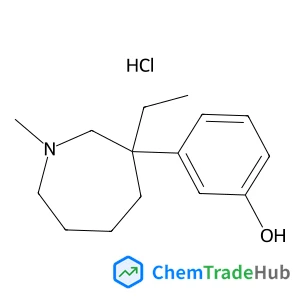
3-(3-Ethyl-1-methyl-3-azepanyl)phenol hydrochloride (1:1)
CAS Number:
59263-76-2
Molecular Formula:
C15H24ClNO

Recommended Suppliers





Disclaimer
This page provides academic journal information for reference and research purposes only. We are not affiliated with any journal publishers and do not handle publication submissions. For publication-related inquiries, please contact the respective journal publishers directly.
If you notice any inaccuracies in the information displayed, please contact us at support@chemtradehub.com. We will promptly review and address your concerns.