












Internal conversion and intersystem crossing pathways in UV excited, isolated uracils and their implications in prebiotic chemistry
Literature Information
Publication Date
2016-05-10
DOI
10.1039/C6CP01790H
Impact Factor
3.676
Authors
Hui Yu, Jose A. Sanchez-Rodriguez, Marvin Pollum, Carlos E. Crespo-Hernández, Sebastian Mai, Philipp Marquetand, Leticia González, Susanne Ullrich
View Original
Abstract
The photodynamic properties of molecules determine their ability to survive in harsh radiation environments. As such, the photostability of heterocyclic aromatic compounds to electromagnetic radiation is expected to have been one of the selection pressures influencing the prebiotic chemistry on early Earth. In the present study, the gas-phase photodynamics of uracil, 5-methyluracil (thymine) and 2-thiouracil—three heterocyclic compounds thought to be present during this era—are assessed in the context of their recently proposed intersystem crossing pathways that compete with internal conversion to the ground state. Specifically, time-resolved photoelectron spectroscopy measurements evidence femtosecond to picosecond timescales for relaxation of the singlet 1ππ* and 1nπ* states as well as for intersystem crossing to the triplet manifold. Trapping in the excited triplet state and intersystem crossing back to the ground state are investigated as potential factors contributing to the susceptibility of these molecules to ultraviolet photodamage.
Related Literature
A highly efficient and recyclable ligand-free protocol for the Suzuki coupling reaction of potassium aryltrifluoroborates in water
Leifang Liu, Yan Dong, Nana Tang
2014-01-06
Paper
DOI: 10.1039/C3GC42182A
Direct conversion of chitin into a N-containing furan derivative
Xi Chen, Shu Ling Chew, Francesca M. Kerton, Ning Yan
2014-01-07
Paper
DOI: 10.1039/C3GC42436G
Catalyst-free chemo-/regio-/stereo-selective amination of alk-3-ynones. Synthesis of 1,5-benzodiazepines and 3-amino-2-alkenones
Agnes Solan, Bilal Nişanci, Miranda Belcher, Jonathon Young, Christian Schäfer, Kraig A. Wheeler, Béla Török, Roman Dembinski
2013-12-19
Communication
DOI: 10.1039/C3GC41898G
Clean and efficient assembly of functionalized benzofuro[2,3-c]pyridines via metal-free one-pot domino reactions
Yin Rao, Zhexian Li, Guodong Yin
2014-01-10
Paper
DOI: 10.1039/C3GC42234H
The ionic liquid [EMIM]OAc as a solvent to fabricate stable polybenzimidazole membranes for organic solvent nanofiltration
Sui Yung Chan, Tai-Shung Chung
2013-11-26
Paper
DOI: 10.1039/C3GC41634H
Facile and efficient gold-catalyzed aerobic oxidative esterification of activated alcohols
Lianyue Wang, Jun Li, Ying Lv, Yi Zhang, Shuang Gao
2013-12-04
Paper
DOI: 10.1039/C3GC42075B
A PDMS membrane with high pervaporation performance for the separation of furfural and its potential in industrial application
Fan Qin, Shufeng Li, Peiyong Qin, M. Nazmul Karim, Tianwei Tan
2013-11-05
Paper
DOI: 10.1039/C3GC41867G
Synthesis of soluble core cross-linked polystyrene star polymer by application of acrylate-nitrile oxide ‘click chemistry’ using metal-free reagents
Rakesh Banerjee, Saikat Maiti, Dibakar Dhara
2013-11-04
Paper
DOI: 10.1039/C3GC41722K
Selective production of cyclohexanol and methanol from guaiacol over Ru catalyst combined with MgO
Yoshinao Nakagawa, Momoko Ishikawa, Masazumi Tamura, Keiichi Tomishige
2014-01-07
Paper
DOI: 10.1039/C3GC42322K
Asymmetric hydrogenation of unprotected indoles using iridium complexes derived from P–OP ligands and (reusable) Brønsted acids
José Luis Núñez-Rico, Héctor Fernández-Pérez
2013-12-19
Communication
DOI: 10.1039/C3GC42132E
You might also like
Compound Q&A
What precautions should be taken when handling 4-Methyl-6-(trifluoromethyl)quinoline (CAS: 40716-16-3)?
When handling 4-Methyl-6-(trifluoromethyl)quinoline (CAS: 40716-16-3), safety go...
40716-16-34-Methyl-6-(trifluor...
Compound Q&A
What is 4-(3,5-Difluorophenyl)aniline (CAS: 405058-00-6)?
4-(3,5-Difluorophenyl)aniline is an aromatic organic compound with the CAS numbe...
405058-00-64-(3,5-Difluoropheny...
Compound Q&A
How is 5-{[4-(Trifluoromethyl)phenyl]sulfanyl}-1,2,3-thiadiazole-4-carboxylic acid (CAS: 338982-07-3) typically synthesized?
5-{[4-(Trifluoromethyl)phenyl]sulfanyl}-1,2,3-thiadiazole-4-carboxylic acid can ...
338982-07-35-{[4-(Trifluorometh...
Compound Q&A
What is the market or research trend for 4-Benzylaniline hydrochloride (CAS: 6317-57-3)?
The market for 4-Benzylaniline hydrochloride (CAS: 6317-57-3) is steadily growin...
6317-57-34-Benzylaniline hydr...
Compound Q&A
Is [3-(Diethylsulfamoyl)phenyl]boronic acid (CAS: 871329-58-7) safe?
[3-(Diethylsulfamoyl)phenyl]boronic acid is generally considered safe when handl...
871329-58-7[3-(Diethylsulfamoyl...
Compound Q&A
What are the main uses of 3-Bromo-2,5-dimethoxyaniline (CAS: 115929-62-9)?
3-Bromo-2,5-dimethoxyaniline is mainly used in the pharmaceutical and chemical i...
115929-62-93-Bromo-2,5-dimethox...
Compound Q&A
What regulatory guidelines apply to N-Methyl-1-(5-methyl-1H-indol-3-yl)methanamine (CAS: 915922-67-7)?
N-Methyl-1-(5-methyl-1H-indol-3-yl)methanamine (CAS: 915922-67-7) is subject to ...
915922-67-7N-Methyl-1-(5-methyl...
Compound Q&A
What industries use Carbamic acid, N-[(5S)-5,6-diamino-6-oxohexyl]-, 1,1-dimethylethyl ester (CAS: 24828-96-4)?
This compound is primarily used in the pharmaceutical industry for the synthesis...
24828-96-4Carbamic acid, N-[(5...
Compound Q&A
How should 2-Methyl-2-propanyl [(1S,3R)-3-aminocyclohexyl]carbamate (CAS: 1298101-47-9) be stored?
2-Methyl-2-propanyl [(1S,3R)-3-aminocyclohexyl]carbamate (CAS: 1298101-47-9) sho...
1298101-47-92-Methyl-2-propanyl ...
Compound Q&A
What industries use Ethyl 2-bromo-4,4,4-trifluorobutanoate (CAS: 367-33-9)?
Ethyl 2-bromo-4,4,4-trifluorobutanoate (CAS: 367-33-9) is utilized in the pharma...
367-33-9Ethyl 2-bromo-4,4,4-...
Source Journal
Physical Chemistry Chemical Physics

CiteScore:
5.5
Self-citation Rate:
10.3%
Articles per Year:
3036
Physical Chemistry Chemical Physics (PCCP) is an international journal co-owned by 19 physical chemistry and physics societies from around the world. This journal publishes original, cutting-edge research in physical chemistry, chemical physics and biophysical chemistry. To be suitable for publication in PCCP, articles must include significant innovation and/or insight into physical chemistry; this is the most important criterion that reviewers and Editors will judge against when evaluating submissions. The journal has a broad scope and welcomes contributions spanning experiment, theory, computation and data science. Topical coverage includes spectroscopy, dynamics, kinetics, statistical mechanics, thermodynamics, electrochemistry, catalysis, surface science, quantum mechanics, quantum computing and machine learning. Interdisciplinary research areas such as polymers and soft matter, materials, nanoscience, energy, surfaces/interfaces, and biophysical chemistry are welcomed if they demonstrate significant innovation and/or insight into physical chemistry. Joined experimental/theoretical studies are particularly appreciated when complementary and based on up-to-date approaches.
Recommended Compounds
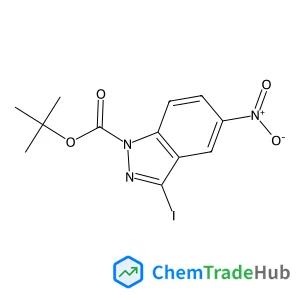
Tert-butyl 3-iodo-5-nitro-1H-indazole-1-carboxylate
CAS Number:
459133-69-8
Molecular Formula:
C12H12IN3O4
![6,7-Dihydro-5H-pyrrolo[1,2-a]imidazole-6-carboxylic acid structure](https://static.chemtradehub.com/structs/136/1369160-12-2-6524.webp "6,7-Dihydro-5H-pyrrolo[1,2-a]imidazole-6-carboxylic acid structure")
6,7-Dihydro-5H-pyrrolo[1,2-a]imidazole-6-carboxylic acid
CAS Number:
1369160-12-2
Molecular Formula:
C7H8N2O2
Recommended Suppliers





Disclaimer
This page provides academic journal information for reference and research purposes only. We are not affiliated with any journal publishers and do not handle publication submissions. For publication-related inquiries, please contact the respective journal publishers directly.
If you notice any inaccuracies in the information displayed, please contact us at support@chemtradehub.com. We will promptly review and address your concerns.