












Fullerenol C60(OH)16 prevents amyloid fibrillization of Aβ40 – in vitro and in silico approach
Literature Information
Publication Date
2016-06-20
DOI
10.1039/C6CP00901H
Impact Factor
3.676
Authors
Maria-Magdalena Mocanu, Diana Fedunova, Mai Suan Li
View Original
Abstract
The generation of Aβ amyloid aggregates in the form of senile plaques in the brain is one of the pathological hallmarks of Alzheimer's disease (AD). There is no cure for AD and one of the recent treatment strategies is focused on the inhibition of amyloid fibrillization of Aβ peptide. Fullerene C60 has been proposed as a candidate for destroying Aβ aggregates but it is not soluble in water and its toxicity to cells remains largely ambiguous. To overcome these drawbacks, we synthesized and studied the effect of water-soluble fullerenol C60(OH)16 (fullerene C60 carrying 16 hydroxyl groups) on the amyloid fibrillization of Aβ40 peptide in vitro. Using a Thioflavin T fluorescent assay and atomic force microscopy it was found that C60(OH)16 effectively reduces the formation of amyloid fibrils. The IC50 value is in the low range (μg ml−1) suggesting that fullerenol interferes with Aβ40 aggregation at stoichiometric concentrations. The in silico calculations supported the experimental data. It was revealed that fullerenol tightly binds to monomer Aβ40 and polar, negatively charged amino acids play a key role. Electrostatic interactions dominantly contribute to the binding propensity via interaction of the oxygen atoms from the COO− groups of side chains of polar, negatively charged amino acids with the OH groups of fullerenol. This stabilizes contact with either the D23 or K28 of the salt bridge. Due to the lack of a well-defined binding pocket fullerenol is also inclined to locate near the central hydrophobic region of Aβ40 and can bind to the hydrophobic C-terminal of the peptide. Upon fullerenol binding the salt bridge becomes flexible, inhibiting Aβ aggregation. In order to assess the toxicity of fullerenol, we found that exposure of neuroblastoma SH-SY5Y cells to fullerenol caused no significant changes in viability after 24 h of treatment. These results suggest that fullerenol C60(OH)16 represents a promising candidate as a therapeutic for Alzheimer's disease.
Related Literature
Novel high-temperature ferroelectric domain morphology in PbTiO3 ultrathin films
Dorothy M. Duffy
2017-01-13
Paper
DOI: 10.1039/C6CP08157F
A new approach to distance measurements between two spin labels in the >10 nm range
2017-01-27
Paper
DOI: 10.1039/C6CP07597E
Temperature dependence of X-ray absorption and nuclear magnetic resonance spectra: probing quantum vibrations of light elements in oxides
Christel Gervais, Christian Brouder, Nicolas Trcera, Amélie Bordage, Cristina Coelho-Diogo, Pierre Florian, Aydar Rakhmatullin, Lorenzo Paulatto, Michele Lazzeri, Delphine Cabaret
2017-01-30
Paper
DOI: 10.1039/C6CP08393E
Exploring experimental fitness landscapes for chemical synthesis and property optimization
Katharine Moore Tibbetts, Xiao-Jiang Feng, Herschel Rabitz
2017-01-18
Paper
DOI: 10.1039/C6CP06187G
The crucial role of Mn spiral spin order in stabilizing the Dy–Mn exchange striction in multiferroic DyMnO3
H. W. Wang, C. L. Li, S. L. Yuan, J. F. Wang, C. L. Lu, J.-M. Liu
2017-01-04
Paper
DOI: 10.1039/C6CP06369A
Effect of Ag and Pd promotion on CH4 selectivity in Fe(100) Fischer–Tröpsch catalysis
Jennifer Wilcox, David W. Ball
2017-01-23
Paper
DOI: 10.1039/C6CP07116C
Engineering the electronic and optoelectronic properties of InX (X = S, Se, Te) monolayers via strain
Hao Jin, Jianwei Li, Ying Dai, Yadong Wei
2017-01-09
Paper
DOI: 10.1039/C6CP08158D
On the multi-reference nature of plutonium oxides: PuO22+, PuO2, PuO3 and PuO2(OH)2
Florent Réal, Paweł Tecmer, André Severo Pereira Gomes, Örs Legeza, Paul W. Ayers, Valérie Vallet
2017-01-13
Paper
DOI: 10.1039/C6CP05429C
Charge transport in organic donor–acceptor mixed-stack crystals: the role of nonlocal electron–phonon couplings
Lingyun Zhu, Hua Geng, Yuanping Yi, Zhixiang Wei
2017-01-06
Paper
DOI: 10.1039/C6CP07417K
Influence of Zn on the photoluminescence of colloidal (AgIn)xZn2(1−x)S2 nanocrystals
Dharmendar Kumar Sharma, Shuzo Hirata, Lukasz Bujak, Vasudevanpillai Biju, Tatsuya Kameyama, Marino Kishi, Tsukasa Torimoto, Martin Vacha
2017-01-05
Paper
DOI: 10.1039/C6CP07550A
You might also like
Compound Q&A
What precautions should be taken when handling 4-(2-Furylmethyl)thiomorpholine 1,1-dioxide (CAS: 79206-94-3)?
When handling 4-(2-Furylmethyl)thiomorpholine 1,1-dioxide (CAS: 79206-94-3), it ...
79206-94-34-(2-Furylmethyl)thi...
Compound Q&A
What precautions should be taken when handling 4-Chloro-N-[2-(4-morpholinyl)ethyl]benzamide (CAS: 71320-77-9)?
When handling 4-Chloro-N-[2-(4-morpholinyl)ethyl]benzamide (CAS: 71320-77-9), it...
71320-77-94-Chloro-N-[2-(4-mor...
Compound Q&A
How should waste containing 2-[2-(2-Methoxyethoxy)ethoxy]ethyl 4-methylbenzenesulfonate (CAS: 62921-74-8) be handled?
Waste containing this compound (CAS: 62921-74-8) should be handled according to ...
62921-74-82-[2-(2-Methoxyethox...
Compound Q&A
How should waste containing (S)-Methyl 2-amino-3-cyclohexylpropanoate be handled?
Waste containing (S)-Methyl 2-amino-3-cyclohexylpropanoate should be collected i...
40056-18-6(S)-Methyl 2-amino-3...
Compound Q&A
How is 5-({4-[(2S,4R)-4-Hydroxy-2-methyltetrahydro-2H-pyran-4-yl]-2-thienyl}sulfanyl)-1-methyl-1,3-dihydro-2H-indol-2-one (CAS: 166882-70-8) typically synthesized?
This compound can be synthesized using a multi-step process involving the conjug...
166882-70-85-({4-[(2S,4R)-4-Hyd...
Compound Q&A
Are there alternatives to (2E)-3-(3,4-Dichlorophenyl)acrylic acid (CAS: 7312-27-8) in synthesis?
There are several alternatives to (2E)-3-(3,4-Dichlorophenyl)acrylic acid in syn...
7312-27-8(2E)-3-(3,4-Dichloro...
Compound Q&A
How should Ethyl 6-(2-nitrophenyl)imidazo[2,1-b][1,3]thiazole-3-carboxylate (CAS: 925437-84-9) be stored?
Ethyl 6-(2-nitrophenyl)imidazo[2,1-b][1,3]thiazole-3-carboxylate (CAS: 925437-84...
925437-84-9Ethyl 6-(2-nitrophen...
Compound Q&A
How should waste containing 2-(1,3-Thiazol-2-yl)ethanamine (CAS: 18453-07-1) be handled?
Waste containing 2-(1,3-Thiazol-2-yl)ethanamine (CAS: 18453-07-1) should be coll...
18453-07-12-(1,3-Thiazol-2-yl)...
Compound Q&A
How is Methyl 5-iodo-2-methylbenzoate (CAS: 103440-54-6) typically synthesized?
Methyl 5-iodo-2-methylbenzoate can be synthesized through the iodination of meth...
103440-54-6Methyl 5-iodo-2-meth...
Compound Q&A
How is 5-Chloro[1,2,4]triazolo[1,5-a]pyridine (CAS: 1427399-34-5) typically synthesized?
5-Chloro[1,2,4]triazolo[1,5-a]pyridine is commonly synthesized via the condensat...
1427399-34-55-Chloro[1,2,4]triaz...
Source Journal
Physical Chemistry Chemical Physics

CiteScore:
5.5
Self-citation Rate:
10.3%
Articles per Year:
3036
Physical Chemistry Chemical Physics (PCCP) is an international journal co-owned by 19 physical chemistry and physics societies from around the world. This journal publishes original, cutting-edge research in physical chemistry, chemical physics and biophysical chemistry. To be suitable for publication in PCCP, articles must include significant innovation and/or insight into physical chemistry; this is the most important criterion that reviewers and Editors will judge against when evaluating submissions. The journal has a broad scope and welcomes contributions spanning experiment, theory, computation and data science. Topical coverage includes spectroscopy, dynamics, kinetics, statistical mechanics, thermodynamics, electrochemistry, catalysis, surface science, quantum mechanics, quantum computing and machine learning. Interdisciplinary research areas such as polymers and soft matter, materials, nanoscience, energy, surfaces/interfaces, and biophysical chemistry are welcomed if they demonstrate significant innovation and/or insight into physical chemistry. Joined experimental/theoretical studies are particularly appreciated when complementary and based on up-to-date approaches.
Recommended Compounds
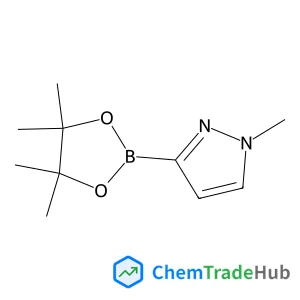
1-Methyl-3-(4,4,5,5-tetramethyl-1,3,2-dioxaborolan-2-yl)-1H-pyrazole
CAS Number:
1020174-04-2
Molecular Formula:
C10H17BN2O2
Recommended Suppliers





Disclaimer
This page provides academic journal information for reference and research purposes only. We are not affiliated with any journal publishers and do not handle publication submissions. For publication-related inquiries, please contact the respective journal publishers directly.
If you notice any inaccuracies in the information displayed, please contact us at support@chemtradehub.com. We will promptly review and address your concerns.