












Electrochemical properties of a thermally expanded magnetic graphene composite with a conductive polymer
Literature Information
Publication Date
2016-03-14
DOI
10.1039/C6CP00311G
Impact Factor
3.676
Authors
Mahmoud M. M. Ahmed
View Original
Abstract
A magnetic graphene composite derived from stage-1 FeCl3–graphite intercalation compounds was thermally treated for up to 75 min at 400 °C or for 2 min at high temperatures up to 900 °C. These heat-treatments of the magnetic graphene composite gave rise to the cubical expansion of graphene with the enlargement of inter-graphene distances. The specific capacitance of the magnetic graphene composite increased upon heating and reached 42 F g−1 at a scan rate of 5 mV s−1 in 1.0 M NaCl, after being treated for 2 min at 900 °C. This value corresponds to 840% increase in the capacitance activity superior to that (5 F g−1) of the pristine magnetic graphene composite before heat-treatment. This capacitance enhancement can play a significant role in the increase of the surface area that reached 17.2 m2 g−1 during the non-defective inter-graphene exfoliation. Moreover, the magnetic graphene composite heated at 900 °C was hybridized with polyaniline by in situ polymerization of aniline to reach a specific capacitance of 253 F g−1 at 5 mV s−1. The current procedure of heat-treatment and hybridization with a conductive polymer can be an effective method for attaining a well-expanded magnetic graphene composite possessing an enhanced electrochemical activity with a relatively high energy density (141 W h kg−1 in 1.0 M NaCl) and an excellent stability (99% after 9000 cycles of 20 A g−1).
Related Literature
On the electron-induced isotope fractionation in low temperature 32O2/36O2 ices—ozone as a case study
B. Sivaraman, A. M. Mebel, N. J. Mason, D. Babikov
2010-11-15
Communication
DOI: 10.1039/C0CP00448K
Modelling the influence of hydrogen bond network on chemical shielding tensors description. GIAO-DFT study of WALP23 transmembrane α-helix as a test case
2010-05-12
Paper
DOI: 10.1039/B923883B
Measurements of the wavelength dependent extinction of aerosols by cavity ring down spectroscopy
Rachael E. H. Miles, Svemir Rudić, Andrew J. Orr-Ewing, Jonathan P. Reid
2010-02-23
Paper
DOI: 10.1039/B923758E
Spin relaxation of a short-lived radical in zero magnetic field
Iain McKenzie
2010-11-15
Paper
DOI: 10.1039/C0CP01216E
Supramolecular assembly of a biomineralizing antimicrobial peptide in coarse-grained Monte Carlo simulations
Glenn R. Johnson, Barry L. Farmer, Ras B. Pandey
2010-11-12
Paper
DOI: 10.1039/C0CP01364A
Selective decomposition of nucleic acids by laser irradiation on probe-tethered gold nanoparticles in solution
Yoshihiro Takeda, Tamotsu Kondow, Fumitaka Mafuné
2010-11-01
Paper
DOI: 10.1039/C0CP00770F
Temperature-resolved thermal analysis of cisplatin by means of Li+ ion attachment mass spectrometry
Seiji Takahashi, Yuki Kitahara, Megumi Nakamura, Yoshiro Shiokawa, Toshihiro Fujii
2010-02-24
Paper
DOI: 10.1039/B923454C
A natural missing link between activated and downhill protein folding scenarios
Feng Liu, Caroline Maynard, Gregory Scott, Artem Melnykov, Kathleen B. Hall
2010-02-11
Paper
DOI: 10.1039/B925033F
You might also like
Compound Q&A
What is 1-(2,4,6-Trifluorophenyl)ethanol (CAS: 1250113-83-7)?
1-(2,4,6-Trifluorophenyl)ethanol is an organic compound with the CAS number 1250...
1250113-83-71-(2,4,6-Trifluoroph...
Compound Q&A
Is 1-(2,4-Dimethoxybenzyl)-4-(hydroxymethyl)-2-pyrrolidinone (CAS: 919111-34-5) safe?
1-(2,4-Dimethoxybenzyl)-4-(hydroxymethyl)-2-pyrrolidinone (CAS: 919111-34-5) is ...
919111-34-51-(2,4-Dimethoxybenz...
Compound Q&A
What are the physical and chemical properties of (7S,15R)-6β,15-Diacetoxy-7α,20-epoxy-7-hydroxykaura-2,16-dien-1-one (CAS: 51419-51-3)?
(7S,15R)-6β,15-Diacetoxy-7α,20-epoxy-7-hydroxykaura-2,16-dien-1-one is a crystal...
51419-51-3(7S,15R)-6β,15-Diace...
Compound Q&A
What regulatory guidelines apply to rac-ethyl (1r,4r)-4-hydroxycyclohexane-1-carboxylate, trans (CAS: 3618-04-0)?
The compound rac-ethyl (1r,4r)-4-hydroxycyclohexane-1-carboxylate, trans (CAS: 3...
3618-04-0rac-ethyl (1r,4r)-4-...
Compound Q&A
What is the market or research trend for 2-(2,4-Difluorophenoxy)-3-nitropyridine (CAS: 175135-62-3)?
The market for 2-(2,4-Difluorophenoxy)-3-nitropyridine (CAS: 175135-62-3) is cur...
175135-62-32-(2,4-Difluoropheno...
Compound Q&A
What are the main uses of 6-Diazo-5-oxo-L-norleucine (CAS: 157-03-9)?
The main uses of 6-Diazo-5-oxo-L-norleucine (CAS: 157-03-9) include research in ...
157-03-96-Diazo-5-oxo-L-norl...
Compound Q&A
What precautions should be taken when handling 2-Aminoethyl-mono-amide-DOTA-tris(tBu ester) (CAS: 173308-19-5)?
When handling 2-Aminoethyl-mono-amide-DOTA-tris(tBu ester) (CAS: 173308-19-5), i...
173308-19-52-Aminoethyl-mono-am...
Compound Q&A
How is 5-Methylimidazo[1,2-a]pyridine-3-carbaldehyde (CAS: 178488-37-4) typically synthesized?
5-Methylimidazo[1,2-a]pyridine-3-carbaldehyde (CAS: 178488-37-4) can be synthesi...
178488-37-45-Methylimidazo[1,2-...
Compound Q&A
Are there alternatives to 2,4,6-Trihydroxyisophthalaldehyde (CAS: 4396-13-8) in synthesis?
There are alternative reagents that can be used in the synthesis of 2,4,6-Trihyd...
4396-13-82,4,6-Trihydroxyisop...
Compound Q&A
What is (2Z)-3-(5-Fluoro-1H-indol-3-yl)-2-sulfanylacrylic acid (CAS: 179461-52-0)?
(2Z)-3-(5-Fluoro-1H-indol-3-yl)-2-sulfanylacrylic acid is a chemical compound wi...
179461-52-0(2Z)-3-(5-Fluoro-1H-...
Source Journal
Physical Chemistry Chemical Physics

CiteScore:
5.5
Self-citation Rate:
10.3%
Articles per Year:
3036
Physical Chemistry Chemical Physics (PCCP) is an international journal co-owned by 19 physical chemistry and physics societies from around the world. This journal publishes original, cutting-edge research in physical chemistry, chemical physics and biophysical chemistry. To be suitable for publication in PCCP, articles must include significant innovation and/or insight into physical chemistry; this is the most important criterion that reviewers and Editors will judge against when evaluating submissions. The journal has a broad scope and welcomes contributions spanning experiment, theory, computation and data science. Topical coverage includes spectroscopy, dynamics, kinetics, statistical mechanics, thermodynamics, electrochemistry, catalysis, surface science, quantum mechanics, quantum computing and machine learning. Interdisciplinary research areas such as polymers and soft matter, materials, nanoscience, energy, surfaces/interfaces, and biophysical chemistry are welcomed if they demonstrate significant innovation and/or insight into physical chemistry. Joined experimental/theoretical studies are particularly appreciated when complementary and based on up-to-date approaches.
Recommended Compounds
![2-Methyl-2-propanyl 1,6-diazaspiro[3.4]octane-6-carboxylate structure](https://static.chemtradehub.com/structs/115/1158749-79-1-81ee.webp "2-Methyl-2-propanyl 1,6-diazaspiro[3.4]octane-6-carboxylate structure")
2-Methyl-2-propanyl 1,6-diazaspiro[3.4]octane-6-carboxylate
CAS Number:
1158749-79-1
Molecular Formula:
C11H20N2O2
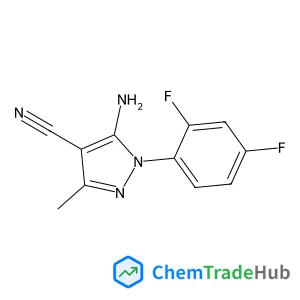
5-Amino-1-(2,4-difluorophenyl)-3-methyl-1H-pyrazole-4-carbonitrile
CAS Number:
1020057-92-4
Molecular Formula:
C11H8F2N4
Recommended Suppliers




Disclaimer
This page provides academic journal information for reference and research purposes only. We are not affiliated with any journal publishers and do not handle publication submissions. For publication-related inquiries, please contact the respective journal publishers directly.
If you notice any inaccuracies in the information displayed, please contact us at support@chemtradehub.com. We will promptly review and address your concerns.