












Going from strength to strength
Literature Information
Publication Date
2010-11-26
DOI
10.1039/C0CP90135K
Impact Factor
3.676
Authors
View Original
Abstract
Happy New Year from PCCP and welcome to the first issue of 2011! In this Editorial we will update you with our recent developments and would like to also share with you some of our highlights from the past year.
Related Literature
Direct access to benzofuro[2,3-b]quinoline and 6H-chromeno[3,4-b]quinoline cores through gold-catalyzed annulation of anthranils with arenoxyethynes and aryl propargyl ethers
Manoj D. Patil, Rai-Shung Liu
2019-04-09
Communication
DOI: 10.1039/C9OB00468H
Selectfluor-promoted regioselective chlorination/bromination of 2-aminopyridines and 2-aminodiazines using LiCl/LiBr
Jiao Hu, Gang Zhou, Yawei Tian, Xiaoming Zhao
2019-05-30
Communication
DOI: 10.1039/C9OB00972H
Enzymatic synthesis of N-acetyllactosamine from lactose enabled by recombinant β1,4-galactosyltransferases
Kun Huang, Fabio Parmeggiani, Helene Ledru, Kristian Hollingsworth, Jordi Mas Pons, Andrea Marchesi, Peter Both, Ashley P. Mattey, Edward Pallister, Gregory S. Bulmer, Jolanda M. van Munster, W. Bruce Turnbull, M. Carmen Galan, Sabine L. Flitsch
2019-05-30
Communication
DOI: 10.1039/C9OB01089K
Transition-metal free oxidative C–H etherification of acylanilines with alcohols through a radical pathway
Zhengzhou Chu, Chengcai Xia
2019-06-12
Communication
DOI: 10.1039/C9OB01224A
Late stage functionalization of heterocycles using hypervalent iodine(iii) reagents
Rajnish Budhwan, Suman Yadav, Sandip Murarka
2019-06-10
Review Article
DOI: 10.1039/C9OB00694J
Elevated reaction order of 1,3,5-tri-tert-butylbenzene bromination as evidence of a clustered polybromide transition state: a combined kinetic and computational study
Alexander M. Genaev, Vyacheslav G. Shubin, Henry S. Rzepa
2019-03-20
Paper
DOI: 10.1039/C9OB00607A
Synthesis of macrocyclic peptidomimetics via the Ugi-click-strategy
Elena A. Zakharova, Olga I. Shmatova, Irina V. Kutovaya, Valentine G. Nenajdenko
2019-03-04
Paper
DOI: 10.1039/C9OB00229D
Improvement of the versatility of an arabinofuranosidase against galactofuranose for the synthesis of galactofuranoconjugates
Quentin Pavic, Aline Pillot, Olivier Tasseau, Laurent Legentil, Sylvain Tranchimand
2019-06-24
Paper
DOI: 10.1039/C9OB01162E
Mechanistic investigation and further optimization of the aqueous Glaser−Hay bioconjugation
Christopher R. Travis, Lauren E. Mazur, Emily M. Peairs, Gillian H. Gaunt, Douglas D. Young
2019-03-06
Paper
DOI: 10.1039/C9OB00327D
You might also like
Compound Q&A
What is 1-(2,4,6-Trifluorophenyl)ethanol (CAS: 1250113-83-7)?
1-(2,4,6-Trifluorophenyl)ethanol is an organic compound with the CAS number 1250...
1250113-83-71-(2,4,6-Trifluoroph...
Compound Q&A
Is 1-(2,4-Dimethoxybenzyl)-4-(hydroxymethyl)-2-pyrrolidinone (CAS: 919111-34-5) safe?
1-(2,4-Dimethoxybenzyl)-4-(hydroxymethyl)-2-pyrrolidinone (CAS: 919111-34-5) is ...
919111-34-51-(2,4-Dimethoxybenz...
Compound Q&A
What are the physical and chemical properties of (7S,15R)-6β,15-Diacetoxy-7α,20-epoxy-7-hydroxykaura-2,16-dien-1-one (CAS: 51419-51-3)?
(7S,15R)-6β,15-Diacetoxy-7α,20-epoxy-7-hydroxykaura-2,16-dien-1-one is a crystal...
51419-51-3(7S,15R)-6β,15-Diace...
Compound Q&A
What regulatory guidelines apply to rac-ethyl (1r,4r)-4-hydroxycyclohexane-1-carboxylate, trans (CAS: 3618-04-0)?
The compound rac-ethyl (1r,4r)-4-hydroxycyclohexane-1-carboxylate, trans (CAS: 3...
3618-04-0rac-ethyl (1r,4r)-4-...
Compound Q&A
What is the market or research trend for 2-(2,4-Difluorophenoxy)-3-nitropyridine (CAS: 175135-62-3)?
The market for 2-(2,4-Difluorophenoxy)-3-nitropyridine (CAS: 175135-62-3) is cur...
175135-62-32-(2,4-Difluoropheno...
Compound Q&A
What are the main uses of 6-Diazo-5-oxo-L-norleucine (CAS: 157-03-9)?
The main uses of 6-Diazo-5-oxo-L-norleucine (CAS: 157-03-9) include research in ...
157-03-96-Diazo-5-oxo-L-norl...
Compound Q&A
What precautions should be taken when handling 2-Aminoethyl-mono-amide-DOTA-tris(tBu ester) (CAS: 173308-19-5)?
When handling 2-Aminoethyl-mono-amide-DOTA-tris(tBu ester) (CAS: 173308-19-5), i...
173308-19-52-Aminoethyl-mono-am...
Compound Q&A
How is 5-Methylimidazo[1,2-a]pyridine-3-carbaldehyde (CAS: 178488-37-4) typically synthesized?
5-Methylimidazo[1,2-a]pyridine-3-carbaldehyde (CAS: 178488-37-4) can be synthesi...
178488-37-45-Methylimidazo[1,2-...
Compound Q&A
Are there alternatives to 2,4,6-Trihydroxyisophthalaldehyde (CAS: 4396-13-8) in synthesis?
There are alternative reagents that can be used in the synthesis of 2,4,6-Trihyd...
4396-13-82,4,6-Trihydroxyisop...
Compound Q&A
What is (2Z)-3-(5-Fluoro-1H-indol-3-yl)-2-sulfanylacrylic acid (CAS: 179461-52-0)?
(2Z)-3-(5-Fluoro-1H-indol-3-yl)-2-sulfanylacrylic acid is a chemical compound wi...
179461-52-0(2Z)-3-(5-Fluoro-1H-...
Source Journal
Physical Chemistry Chemical Physics

CiteScore:
5.5
Self-citation Rate:
10.3%
Articles per Year:
3036
Physical Chemistry Chemical Physics (PCCP) is an international journal co-owned by 19 physical chemistry and physics societies from around the world. This journal publishes original, cutting-edge research in physical chemistry, chemical physics and biophysical chemistry. To be suitable for publication in PCCP, articles must include significant innovation and/or insight into physical chemistry; this is the most important criterion that reviewers and Editors will judge against when evaluating submissions. The journal has a broad scope and welcomes contributions spanning experiment, theory, computation and data science. Topical coverage includes spectroscopy, dynamics, kinetics, statistical mechanics, thermodynamics, electrochemistry, catalysis, surface science, quantum mechanics, quantum computing and machine learning. Interdisciplinary research areas such as polymers and soft matter, materials, nanoscience, energy, surfaces/interfaces, and biophysical chemistry are welcomed if they demonstrate significant innovation and/or insight into physical chemistry. Joined experimental/theoretical studies are particularly appreciated when complementary and based on up-to-date approaches.
Recommended Compounds
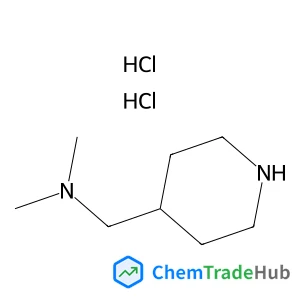
N,N-dimethyl(piperidin-4-yl)methanamine hydrochloride
CAS Number:
172281-72-0
Molecular Formula:
C8H20Cl2N2
Recommended Suppliers






Disclaimer
This page provides academic journal information for reference and research purposes only. We are not affiliated with any journal publishers and do not handle publication submissions. For publication-related inquiries, please contact the respective journal publishers directly.
If you notice any inaccuracies in the information displayed, please contact us at support@chemtradehub.com. We will promptly review and address your concerns.